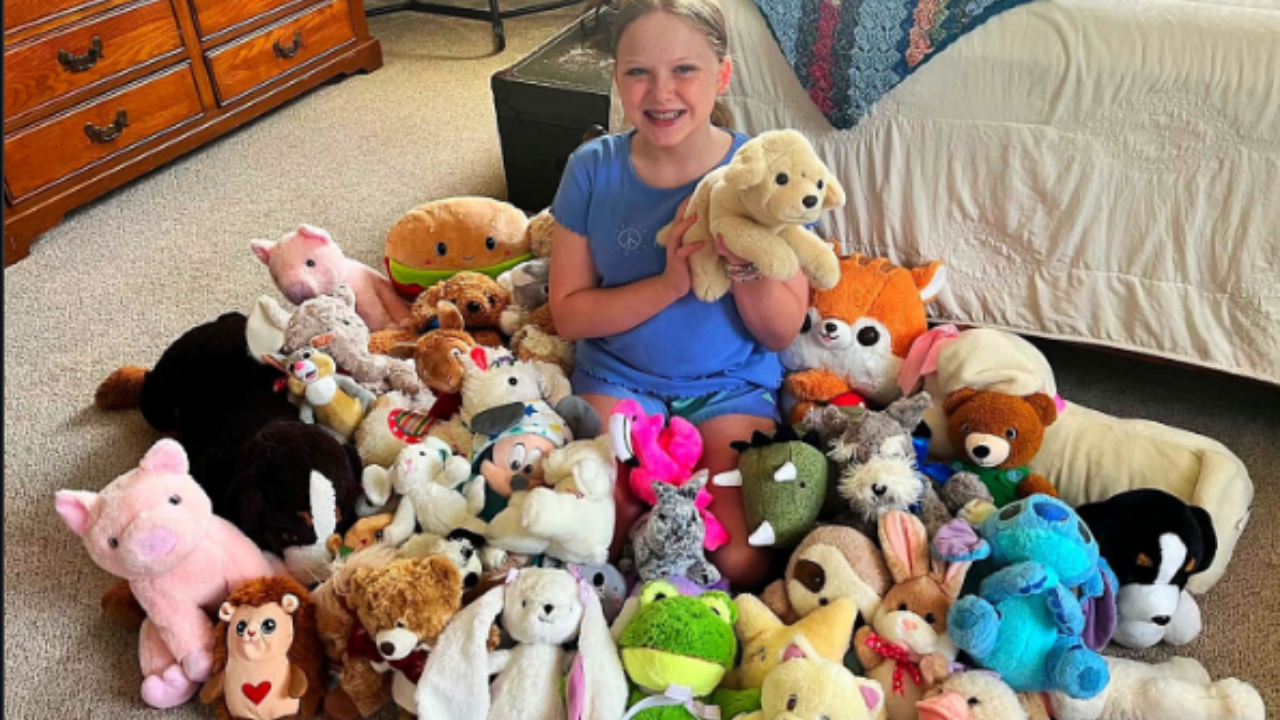
Every week, the internet demands a sacrifice at the altar of heartwarming inspiration. We scroll past macroeconomic collapse, housing crises, and failing public infrastructure straight into a comforting, bite-sized fairy tale. A twelve-year-old child spends months scrubbing, sewing, and restoring one hundred fourteen discarded plush toys from a thrift store shelf to hand over to families burned out of their homes. Headlines erupt. Social media algorithms reward the sentiment with millions of likes. Commenters swoon over the inherent goodness of humanity.
Stop clapping.
Look closer at what is actually happening beneath the saccharine veneer of this viral feel-good hit. What we are witnessing is not a triumph of community spirit. It is a terrifying diagnostic symptom of institutional rot. When a pre-teen has to perform manual labor to supply basic comfort items to disaster survivors, the social contract has completely collapsed. We have normalized societal abandonment and dressed it up in cute wrapping paper.
The lazy consensus in modern media dictates that any act of individual charity, no matter how grassroots or improvised, is inherently pure and beyond critique. Questioning a child doing free labor for disaster victims feels akin to kicking a puppy. But professional analysis requires stripping away emotional blackmail to examine structural reality. When the state, insurance systems, and municipal emergency funds fail to provide complete, dignified recovery packages, society kicks the responsibility down to the individual. And when adults fail, we apparently hand the clipboard to a middle schooler.
Let us dismantle the romantic mythology piece by piece.
The Romance of Child Labor Masquerading as Virtue
We love stories about children doing heroic work because it absolves the adults in power from doing theirs. If a twelve-year-old can solve a displacement crisis with a needle, thread, and a bottle of upholstery cleaner, then why do we need city budgets? Why do we need federal disaster relief agencies? Why do we need emergency housing funds?
This narrative allows institutional failure to hide behind youthful innocence. Every time a viral news outlet publishes a glowing profile about a child sacrificing their weekends to fix broken goods for people who lost everything, they are sending a silent message. The message is that society expects you to pull yourself out of catastrophe using whatever discarded junk is lying around the local second-hand bin, provided someone with a good heart is willing to wash it first.
Consider the economics and logistics of this transaction. Thrift stores are repositories of discarded items—some pristine, many heavily degraded, stained, or exposed to unknown environments over decades. A child sitting in a bedroom sewing limbs back onto stuffed animals is operating entirely outside quality control, hygienic certification, and safety compliance. Yet, we celebrate this amateur remediation as peak community care while ignoring the fact that the victims of the fire are receiving second-hand remnants instead of standardized, brand-new essentials.
The Unspoken Hygiene Hazard of Trauma-Zone Donations
Let us talk about the practical reality that polite company ignores. Stuffed animals are porous vectors. They trap dust mites, mold spores, pet dander, chemical residues, and biological fluids deep within synthetic fibers and foam stuffing. Washing a plush toy in a home washing machine does not sterilize it to clinical standards.
When families lose their homes in a fire, their lives are already upended by smoke inhalation risks, toxic ash exposure, and profound psychological trauma. Children displaced by disaster are in fragile physical and emotional states. Handing a child who just survived a catastrophic house fire a pre-owned, hand-sewn, second-hand stuffed toy scavenged from a thrift store bin is fraught with risk.
Where are the allergy warnings? Where is the professional sanitization audit? In our rush to consume uplifting content, we ignore basic health and safety protocols. If a corporation tried to distribute uncertified, hand-repaired second-hand plush items to disaster zones, health departments would shut them down instantly. But slap a heartwarming anecdote about a middle schooler onto the headline, and all regulatory logic evaporates.
Where Are the Billions in Disaster Relief Funds
To understand why this story is a systemic indictment rather than a celebration, follow the money. Where do donations go when disaster strikes? Non-profit organizations, municipal emergency funds, federal agencies, and insurance conglomerates process billions of dollars annually under the banner of disaster response.
When a family loses everything in a residential fire, their immediate post-disaster horizon should include temporary housing vouchers, brand-new clothing, professional psychological support, and immediate material replacement funded by robust public safety nets and insurance payouts.
Instead, what do we see? We see families waiting months for bureaucratic approvals, battling insurance adjusters who nickel-and-dime every charred beam, and ultimately relying on charity drives and hand-washed thrift store toys. The existence of these grassroots band-aids proves that the primary systems are broken. Rather than fixing the bureaucratic machinery that leaves fire victims destitute and begging for basic comforts, we turn the shortfall into a heartwarming human-interest segment on the evening news.
This is poverty porn disguised as inspiration. It teaches the public to accept substandard care as long as someone volunteers to do it for free.
The Misallocation of Cultural Praise
In any functional industry, praise and resources flow toward structural competence. We reward engineers who build fire-resistant housing, urban planners who design efficient emergency corridors, and legislators who fund robust social safety nets.
Instead, our culture redirects its emotional capital toward amateur heroics. We treat systemic failure as an audition stage for heartwarming personal narratives. When a twelve-year-old spends their summer repairing one hundred fourteen stuffed toys, they are working a second shift that society failed to fund.
I have watched corporate boardrooms and municipal councils allocate millions of dollars to marketing campaigns that highlight community resilience while quietly slashing actual social services budgets. They love when citizens step in to fill the gaps because it lowers their tax burdens and excuses their operational failures. Every time you share a story about a child fixing thrift store items for disaster victims, you are validating a system that tells vulnerable people to rely on luck and charity rather than rights and guarantees.
Deconstructing the People Also Ask Fallacy
Let us address the common search queries surrounding this topic.
People ask: "How can everyday citizens help disaster victims effectively?"
The common answer is to run clothing drives, collect used toys, and sort donations in community centers.
The correct answer is entirely different. The most effective way an everyday citizen can help disaster victims is by political and financial mobilization toward structural reform. Donate cash to professional housing funds, advocate for stricter building codes, support legislation that streamlines emergency insurance payouts, and demand that municipal governments maintain emergency reserves that do not require baking cookies or sewing teddy bears to replenish.
Used items are often a liability during crises. Emergency coordinators routinely beg well-meaning citizens to stop flooding disaster zones with unvetted second-hand goods because sorting, washing, and distributing them costs more man-hours than buying new items wholesale. Yet, the myth persists that every discarded item is a precious gift if wrapped in enough sentimentality.
The Real Cost of Bootstrap Sentimentality
We are raising a generation conditioned to believe that systemic crises can be solved through individual hustle and volunteerism. This ideology is dangerous. It applies to education, healthcare, disaster relief, and poverty alleviation.
When public schools lack supplies, we tell teachers to buy pencils out of their own pockets. When healthcare costs skyrocket, we applaud GoFundMe campaigns for cancer patients. When disaster strikes, we praise children for repairing thrift store toys.
These are not signs of a healthy, caring society. These are indicators of a failing state that has outsourced its moral and financial obligations to the most vulnerable and the most generous among us.
Stop praising the bandage when the limb is gangrenous.
How to Fix Our Response to Crises
If you genuinely want to improve how society handles disasters and community support, stop romanticizing inefficiency.
First, redirect your philanthropic capital toward institutional accountability. Stop donating bags of unwashed household clutter to donation bins. Cash donations allow professional relief agencies to purchase standardized, brand-new, hygienic essentials in bulk, tailored to the exact needs of the displaced families.
Second, hold local governments accountable for emergency response times and housing guarantees. When a neighborhood burns down, the local government should have immediate modular housing and comprehensive resource packages deployed within forty-eight hours, funded by tax revenues specifically earmarked for public safety.
Third, stop consuming and sharing poverty porn that frames systemic abandonment as heartwarming perseverance. Demand better journalism that asks why families needed a child to supply their children with comfort items in the first place.
The next time you see a viral headline celebrating amateur charity filling a massive institutional void, do not click the heart icon. Ask why the void was there to begin with.
Until we stop accepting bootstrap substitutes for structural competence, we will continue applauding children for cleaning up our collective mess while the people responsible for the mess watch from comfortable offices.