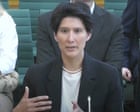
The three-week silence inside the Cabinet Office was not a clerical error. When high-level officials withheld the vetting recommendations regarding Lord Mandelson from Prime Minister Keir Starmer, they weren't just sitting on paperwork; they were managing the political oxygen of a new administration. This delay reveals a fundamental friction at the heart of the British state, where the civil service’s "duty to advise" often clashes with its instinct to gatekeep. By the time the files reached the Prime Minister’s desk, the narrative had already been shaped by those who held the keys to the information.
Vetting is rarely a binary pass-or-fail mechanism for figures of Mandelson's stature. Instead, it is a nuanced risk assessment. In this instance, the delay served as a buffer, allowing internal factions to weigh the fallout of a formal appointment against the informal influence Mandelson already exerts within the Labour hierarchy. The timeline suggests a deliberate pause to gauge the political temperature before forcing the Prime Minister to make a definitive call on one of the most polarizing figures in modern British politics.
The Mechanics of the Three Week Ghosting
To understand how a document can disappear for twenty-one days in the most connected building in London, one has to understand the hierarchy of the Cabinet Office. Information does not flow; it is filtered. When a vetting recommendation arrives, it enters a clearinghouse where senior officials determine its "readiness" for the Prime Minister.
During this specific window, the internal justification likely hinged on the need for "further context" or "due diligence." However, in the brutal reality of Westminster, time is a weapon. A three-week delay ensures that by the time the leader sees the information, the window for a clean, uncontroversial appointment has often closed. It creates a vacuum. In that vacuum, rumors thrive, opposition research is sharpened, and the eventual decision becomes a crisis management exercise rather than a standard administrative act.
The Cabinet Office acts as the guardian of the Ministerial Code, but it also functions as a shock absorber. By delaying the notification, officials essentially gave the Prime Minister "plausible deniability" for a period, but they also stripped him of the initiative. He was no longer leading the conversation on Mandelson; he was reacting to a leak that had become inevitable.
The Mandelson Factor and Civil Service Caution
Peter Mandelson is not a standard political appointee. He is a veteran of the corridors of power with a network that rivals the formal structures of government. This creates a unique headache for the permanent bureaucracy. The civil service thrives on predictability and established process. Mandelson, by contrast, operates in the gray spaces of international diplomacy and corporate consultancy.
The vetting recommendations likely flagged these external interests, not as disqualifiers, but as complexities requiring mitigation. The delay highlights a deep-seated anxiety within the civil service regarding "outsider" influence. By stalling the report, officials were signaling their discomfort with the speed at which the Starmer team wanted to integrate New Labour’s architect into the current fold.
The Risk of the Informal Advisor
There is a growing trend in modern governance toward the "informal advisor"—individuals who hold significant sway over policy without the scrutiny of a formal civil service role.
- Accountability gaps: Informal advisors don't answer to Select Committees.
- Security clearance hurdles: Formalizing a role triggers deeper financial and personal probes that many veterans prefer to avoid.
- Conflict of interest: Balancing private business interests with a public mandate is a legal minefield.
When the Cabinet Office held back the vetting report, they were highlighting the danger of this "half-in, half-out" status. If Mandelson is too controversial to be formally vetted and appointed, his informal influence becomes a liability for a Prime Minister who campaigned on a platform of integrity and "cleaning up" politics.
The Breakdown of the Number 10 and Cabinet Office Relationship
The most damaging aspect of this timeline is what it says about the trust between the Prime Minister’s Office and the permanent civil service. For a government to function, the "Sofa Government" of political aides and the "Official Machine" must be in sync. This three-week gap indicates a total decoupling of those gears.
The Cabinet Secretary, as the head of the civil service, occupies a precarious position. They must serve the Prime Minister while protecting the impartiality of the institution. If the Cabinet Office felt it could—or should—withhold critical vetting data from the Prime Minister, it suggests they no longer view Number 10 as a partner to be informed, but as a client to be managed. This is a dangerous shift. It implies that the "deep state" tropes often dismissed as conspiracy theories have a kernel of truth in the form of administrative obstructionism.
Structural Failures in the Vetting Process
The process for vetting high-level political appointments is opaque by design. While the British public sees the final result, the internal debate is a series of trade-offs.
- The Initial Screening: Standard checks on finances and associations.
- The Impact Assessment: How an appointment affects the departmental morale and public perception.
- The Mitigation Strategy: If "red flags" exist, can they be managed through blind trusts or restricted access?
In Mandelson's case, the "Impact Assessment" likely caused the logjam. Officials were not just looking at his past; they were looking at the future headlines. The delay was a manifestation of institutional paralysis. When the machine doesn't know how to handle a high-stakes decision, it defaults to silence.
The True Cost of Political Procrastination
While the three-week delay might seem like a minor procedural hiccup to the outside world, it has tangible consequences for how Keir Starmer governs. It suggests a Prime Minister who is not fully in control of his own information flow. In the high-stakes environment of international relations—where Mandelson was expected to play a role, particularly regarding US-UK ties—this perception of internal chaos is damaging.
Foreign embassies and domestic rivals alike look for these cracks. If a Prime Minister’s own staff can keep him in the dark about a sensitive vetting recommendation, it raises questions about what else is being filtered. It creates an environment where ministers start to bypass formal channels, further eroding the very institutions that were supposed to provide stability.
The "Mandelson Vetting" saga is not a story about one man’s return to power. It is a case study in how a modern bureaucracy can use its own procedural weight to slow down a political agenda it finds inconvenient. The civil service did not need to say "no" to Mandelson; they simply needed to say nothing for twenty-one days.
Reforming the Gatekeepers
To prevent this type of information bottleneck, the relationship between the Cabinet Office and the Prime Minister’s political staff needs a radical overhaul. Transparency cannot be limited to what is told to the public; it must begin with what is told to the leader.
The current system allows for too much "discretionary silence." There should be a hard-coded requirement that any vetting recommendation concerning a senior advisory role must be presented to the Prime Minister’s Chief of Staff within forty-eight hours of completion. No "refining," no "contextualizing," and no tactical delays.
Furthermore, the role of the Cabinet Secretary needs to be stripped of its political management duties. The head of the civil service should be a pure administrator, not a middleman who decides when a Prime Minister is "ready" to hear the truth. This separation would ensure that the official machine remains a tool for governance, not a shadow participant in political maneuvering.
The Mandelson delay was a test of Keir Starmer’s authority. By allowing the silence to last three weeks, the system proved it could still dictate the pace of his administration. If the Prime Minister does not address this internal obstruction, he will find that his biggest challenges come not from across the dispatch box, but from the desks just a few doors down from his own.
The Cabinet Office’s decision to sit on the Mandelson file was a calculated play for time that backfired the moment it became public knowledge. It turned a routine vetting check into a symbol of institutional friction. The lesson for the Starmer government is clear: in the absence of a proactive information strategy, the bureaucracy will fill the silence with its own agenda. To govern effectively, the Prime Minister must first ensure he is actually being told what is happening inside his own building.
The move to appoint figures with significant baggage requires a level of internal transparency that the current Cabinet Office structure seems unable or unwilling to provide. This isn't just about Peter Mandelson; it is about who really runs the country when the doors are closed and the memos are being drafted. The three-week gap was a warning shot from a civil service that knows exactly how to use its own inertia as a form of power.
The immediate task is to identify exactly who authorized the hold on the information and why. If there are no consequences for withholding critical data from the head of government, then the precedent is set. Every controversial appointment from here on will be subject to the same administrative "slow-rolling," effectively giving unelected officials a pocket veto over the Prime Minister’s personnel choices. The integrity of the democratic mandate relies on the swift and honest flow of information from the machine to the man at the top. Anything less is a managed democracy, where the elected leader is the last to know what is being done in his name.
The focus must now shift to the "why." Why was this specific recommendation deemed too sensitive for immediate disclosure? If the vetting revealed nothing new, the delay is inexplicable. If it revealed something significant, the delay is a dereliction of duty. Either way, the silence was a choice, and choices in the Cabinet Office are never accidental.
Establishing a clear protocol for the transmission of vetting data is the only way to ensure this does not happen again. The Prime Minister needs to demand a system where the "Official Channel" is a transparent pipe, not a series of valves controlled by individuals with their own institutional anxieties. Without this reform, the Starmer administration will continue to be blindsided by its own support staff.
The Mandelson affair is a symptom of a much larger malaise within the British executive. It is a system that has become too comfortable with its own opacity. Breaking that culture of secrecy is not just about one appointment; it is about reclaiming the authority of the elected government over the permanent state.
The three-week silence ended, but the damage to the relationship between the Prime Minister and his senior officials may be permanent. Trust is the currency of government, and in the Cabinet Office, the accounts are currently running a deficit.
Starmer's response to this breach of protocol will define the power dynamic of his premiership. If he accepts the "administrative error" excuse, he signals that he can be managed. If he demands a restructuring of how the Cabinet Office handles sensitive data, he asserts his role as the ultimate decision-maker. The choice is between being a Prime Minister who leads the machine, or one who is merely carried along by it.
The reality of power in Westminster is that information is the only true capital. By withholding it, officials didn't just delay a decision; they attempted to devalue the Prime Minister's primary asset. This was a sophisticated act of institutional insubordination disguised as a clerical oversight. It requires a sophisticated, and public, correction to ensure that the Prime Minister is never again the last person in the room to know the truth.
The era of the "all-powerful" civil servant who can stymie a government through strategic silence must come to an end if the current administration hopes to deliver on its promises. The Mandelson delay was a glimpse behind the curtain, revealing a machine that is still more interested in protecting itself than in serving the executive. The fix isn't more vetting; it’s more accountability for the vetters.
The next time a file lands on a senior official's desk, the fear of a three-week delay should be replaced by the urgency of a forty-eight-hour deadline. Power must reside in the hands of those who are accountable to the voters, not those who are protected by the anonymity of the Cabinet Office.
This is the hard truth of the Mandelson vetting scandal: the problem isn't the man being vetted, it’s the people doing the vetting. They have shown their hand, and now the Prime Minister must show his. Silence in the halls of power is never empty; it is always filled with the intent of those who choose not to speak. Keir Starmer must decide if he is comfortable with that silence being the soundtrack of his government.
The final action is not an inquiry, but a direct order. All vetting outcomes for Tier 1 advisors must bypass the clearinghouse and go straight to the Prime Minister’s private office. Cut the middleman out of the information chain and you cut the potential for political sabotage. This is the only way to ensure that the Prime Minister is truly in command of his own government.
Politics is the art of the possible, but in the Cabinet Office, it is often the art of the delay. By removing the ability to stall, the Prime Minister can turn the bureaucracy back into an engine of delivery rather than a brake on progress. The Mandelson incident should be the last time the "Official Machine" is allowed to treat the Prime Minister like a subordinate who needs to be protected from the facts.