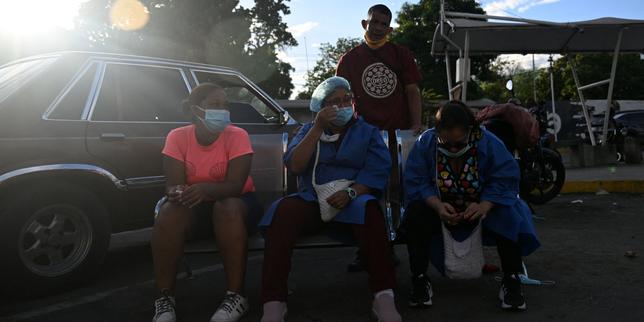
Bureaucrats love big numbers. They provide comfort. When a crisis hits, the institutional reflex is to release staggering casualty estimates and demand immediate, sweeping funding. The recent United Nations reports on the seismic activity in Venezuela follow this exact playbook, flashing headlines of thousands dead, tens of thousands missing, and a blanket demand for emergency food and shelters.
It is a narrative designed for maximum emotional impact and minimum logistical scrutiny.
Having spent over a decade auditing supply chains and structural integrity metrics in volatile regions, I have seen this exact theater play out across the globe. The lazy consensus of international aid assumes that throwing raw capital and generic supplies at a broken geography solves a crisis. It does not. In fact, flooding a collapsed infrastructure with uncoordinated supplies frequently paralyzes local recovery, distorts regional economies, and leaves the actual victims stranded while warehouses bulge with useless cargo.
We need to stop treating complex logistical disasters like simple charity drives.
The Mirage of Missing Persons Data
When an agency claims 50,000 people are missing in a concentrated geographic zone, it creates an immediate vision of a vast, unmapped wasteland of rubble. The reality of data collection in a crisis zone is far messier and far less organized.
In the immediate aftermath of a tectonic event, communication grids fail. Cell towers lose power. Families scatter across municipal borders to find relatives or secure stable ground. Standard bureaucratic registries do not account for fluid population movement.
When a central authority tallies "missing" figures, they are fundamentally counting the delta between a pre-crisis census and immediate check-ins. It is a administrative gap, not a definitive body count.
Treating that administrative gap as an active, static rescue target alters the entire deployment strategy. It shifts valuable personnel away from high-density survival zones into low-probability search operations. Resources are squandered chasing ghosts in the data because international organizations require staggering metrics to justify their fundraising cycles.
The Tyranny of Generic Relief Supplies
The standard operating procedure for global aid is to ship standard, homogenized survival packages: flour, rice, plastic tarps, and generic medical kits.
Imagine a port infrastructure that has just suffered severe structural compromise. The cranes are operating at 20% capacity. The roads leading inland are fractured by fissures and blocked by landslides. You have a finite window of throughput.
Instead of prioritizing heavy machinery, specialized engineering teams, and localized water purification assets, the supply lines are choked by shipping containers filled with grain.
- Market Cannibalization: Flooding a damaged region with free, low-grade food staples instantly bankrupts the local farmers and distributors who survived the shock. Why buy from a local vendor when a cargo truck is handing out free rations? You eliminate the existing economic fabric right when it needs stabilization.
- The Logistical Bottleneck: Warehouses require electricity and security. When thousands of tons of perishable goods arrive without cold-chain infrastructure, they rot on the tarmac.
The focus must pivot from what can we send to what can the local network absorb. If the local supply chain cannot digest the volume, the aid itself becomes an obstacle.
Strategic Cash Over Physical Cargo
The most controversial truth that institutional players refuse to acknowledge is that shipping physical goods is often the least efficient way to help a population in crisis.
Apart from specialized medical equipment and heavy search-and-rescue gear, the answer to structural devastation is direct liquidity.
Local economies are remarkably resilient. Even in a severe crisis, regional markets outside the immediate epicenter continue to function. Injecting direct financial liquidity into the hands of affected populations allows them to procure exactly what they need from nearby, functional networks.
It eliminates the immense overhead of shipping weight across oceans. It bypasses corrupt customs checkpoints. Most importantly, it keeps capital circulating within the host nation rather than enriching international logistics conglomerates.
The downside to this approach is obvious: it requires trusting the local population to manage their own recovery, and it robs major NGOs of the photo opportunities that come with branded boxes dropping from airplanes. It forces accountability back onto the ground level, which scares traditional donors who prefer the illusion of a controlled, centralized distribution pipeline.
Fix the Grid Before Feeding the Press
The premise of every standard emergency appeal is flawed. The question should not be "How do we feed 50,000 people?" The question must be "How do we restore the basic engineering baseline so the region can sustain itself?"
If a city lacks clean water because the pumping stations have lost power, sending millions of plastic water bottles is a temporary band-aid that creates a secondary plastic waste crisis. You do not fix a broken plumbing system by buying cups. You fix it by flying in industrial generators, electrical engineers, and water treatment chemistry.
Stop romanticizing the emergency drop. Demand structural intervention. Address the hard engineering realities of power, transport, and water. If the foundation remains fractured, the aid piled on top of it will simply slide into the mud.