The ink on a press pass is supposed to be permanent. It is meant to be a badge of endurance, a thin plastic shield that grants an ordinary person the extraordinary privilege of standing in rooms where history is being bent into its final shape. But ink can be wiped away with a single administrative motion.
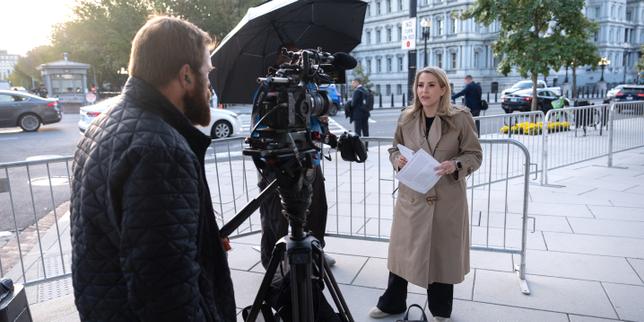
Consider the press corps reporter who arrives at the gate before dawn, the bitter morning air biting through a wool coat, boots clicking against the polished concrete of the White House driveway. For years, that click meant access. It meant a designated seat in the briefing room, an anonymous nod from the press secretary, and, when the heavy engines of Air Force One began to whine on the tarmac at Andrews Air Force Base, a narrow, cramped seat toward the back of the aircraft cabin, surrounded by the smell of stale coffee and the steady clatter of laptops. Meanwhile, you can find related events here: Why Beijing Fears a Trump Detente More Than a Trade War.
Then comes the quiet snap of a velvet rope falling into place.
The exclusion of CNN from a presidential trip and the earlier revocation of access to the White House grounds are not mere bureaucratic slaps on the wrist. They are tectonic shifts in the ancient, uneasy marriage between power and the press. When a reporter is left standing on the tarmac while the iconic blue-and-white Boeing 747 lifts off into a gray sky, taking the inner circle with it, something fundamental breaks in the machinery of public accountability. To explore the bigger picture, check out the detailed report by USA Today.
To understand why this matters, you have to look past the cable news chyron and the partisan theater. You have to look at the geometry of access.
Power hates a witness who asks questions it did not script. For generations, the traveling press pool has functioned as a floating witness stand. Journalists are there not because they are beloved by the administration of the day, but because a democracy requires a proxy. When the president travels, the public travels. When the president meets foreign leaders behind closed doors, the pool is the keyhole through which citizens peer to make sure no secret bargains are being struck in their name.
When that keyhole is painted over, the room goes dark.
The friction between this particular administration and the network was not born overnight. It was built brick by brick through sharp exchanges under the white-hot lights of the James S. Brady Press Briefing Room. A question about policy turned into an argument over tone. An argument over tone turned into a personal clash. And a personal clash metastasized into institutional punishment.
Imagine standing in that briefing room. The air smells of dry-erase markers and old wool. The reporters sit shoulder-to-shoulder, a restless, cynical pack united by a common deadline and a shared obsession with the truth. When the press secretary steps up to the podium, every muscle in the room tightens. Every pencil hovers over a notepad. When a journalist presses harder than the administration deems polite, the temperature in the room rises.
Most citizens only see the thirty-second clip on the evening news—the sharp retort, the defensive dodge, the cut to commercial. What they miss is the architecture of consequence that follows the cameras being turned off.
Excluding a major news organization from the presidential aircraft is an escalation that echoes far beyond the Beltway. It sends a chilling message to every regional reporter, every independent journalist, and every small-town editor who dares to ask an uncomfortable question. It whispers a warning: If you push too hard, you walk alone.
Access is the lifeblood of accountability. Without proximity, journalism degrades into speculation. A reporter sitting five hundred miles away in a downtown bureau cannot observe the weary slouch of a weary diplomat stepping off a plane at midnight. They cannot catch the unguarded glance between two world leaders in a receiving line. They are forced to rely on official handouts, curated press releases, and sanitized transcripts—the very instruments that powerful entities use to paint their own portraits.
When CNN was barred from covering the presidential trip, the defense offered by official channels often leaned on logistics, space limitations, or decorum. But decorum has always been a convenient velvet glove worn by power to hide an iron fist. The logistics of Air Force One are tight, yes; space is at a premium among aides, secret service agents, and the rotating pool reporters. Yet seats have always been found for dissent, for grit, for the inconvenient voice that refuses to sing in harmony.
Think about what happens when the press pool becomes a curated choir. The questions grow softer. The answers grow polished. The rough edges of governance are sanded down until the entire apparatus of the state resembles a gleaming corporate brochure rather than a living, breathing democracy wrestling with its own flaws.
The history of American journalism is written in the ink of confrontation. From the Pentagon Papers to Watergate, the Fourth Estate was never designed to be a polite houseguest. It was designed to be the sand in the gears of tyranny, the persistent itch that prevents power from falling asleep in its own comfort. When the state begins to pick and choose which chroniclers are allowed on the plane, it ceases to be a republic managing a free press and begins to resemble a court granting favors to its chroniclers.
The plane took off that morning without the familiar faces from the network. The engines roared, shaking the frosty asphalt, and lifted into the clouds. Down below, on the tarmac, the reporters who remained watched the silver shape dissolve into the white haze.
They did not pack up their notebooks. They did not walk away. Because the story of a democracy under pressure is not written inside the cabin of a presidential aircraft alone. It is written in the silence of the exclusion, in the stubborn resolve of those who are left behind, and in the quiet, dangerous realization that freedom of the press is not an entitlement granted by those in charge.
It is a right that must be claimed anew every single day, especially on the mornings when the gate is locked.


