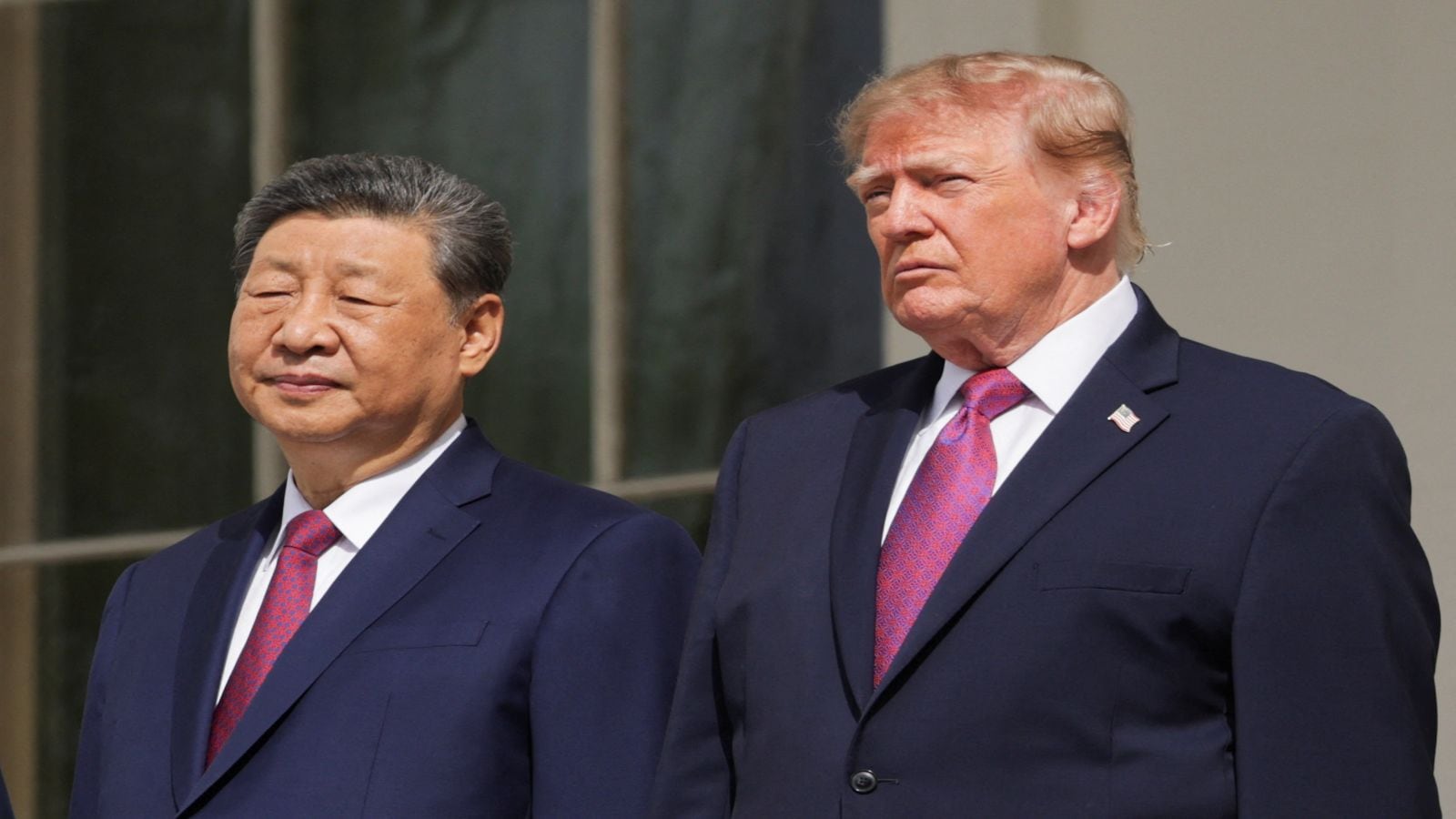
The banquet hall gleamed under thirty thousand watts of imported crystal. Outside, the night air of the metropolis hummed with the quiet anxiety of millions, but inside, the temperature was precisely controlled, the champagne was chilled to a fault, and the men in bespoke suits shook hands for the cameras.
To the world watching through glowing rectangles and morning papers, it looked like a draw. A ceasefire. A high-stakes diplomatic standoff ending in a polite shrug. The headlines called it a stalemate.
They were wrong.
In the theater of modern geopolitics, a stalemate is rarely neutral. When two unequal forces collide and the result is an agreement to freeze the clock, the party with the luxury of time has already won. The cameras captured the smiles, the synchronized nods, and the careful choreography of two leaders carving up the room. They missed the quiet, steady ticking of a clock that belonged entirely to Beijing.
Consider what actually happens when a superpower decides to pause.
In Washington, political cycles are measured in heartbeats. Every two years, the legislative floor shifts. Every four years, the entire architecture of executive power trembles. A president enters a summit room carrying the invisible weight of midterm elections, restless party members, cable news pundits, and an electorate exhausted by economic whiplash. Urgency is the air they breathe. Action must be visible, immediate, and loud.
Across the mahogany table sat a different kind of patience.
To understand why a diplomatic pause is a quiet victory for China, you have to look past the red carpets and step onto the factory floors of Guangdong, or into the sterile, humming server rooms of Shenzhen. There, the calendar looks different. Decades are the units of measurement. Five-year plans bleed into century-long ambitions. When a summit ends with no new tariffs, no sweeping structural reforms, and no immediate penalties, the state apparatus in Beijing does not exhale in relief. It simply accelerates what it was already doing.
A stalemate is a vacuum. And in statecraft, vacuums are filled by whoever has the discipline to occupy them first.
Imagine a veteran trade negotiator sitting in a windowless room in Beijing hours after the flashes faded. To the casual observer, the joint communique sounded like a muddled compromise—vague promises of future talks, vague assurances of market access, and a mutual agreement to lower the temperature. But look at the fine print of omission. What was left out of the room matters infinitely more than what was said inside it.
There were no binding enforcement mechanisms for intellectual property theft. There were no hard deadlines for structural shifts in state subsidies. There was only an agreement to talk again later.
In the lexicon of diplomacy, "later" is a gift wrapped in velvet.
For years, Western policy aimed to squeeze, to pressure, to force a fundamental rewiring of the Chinese economic engine through sudden shocks and blunt tariffs. It was noisy, disruptive, and politically costly. But it worked well enough to keep the pressure high. It forced adjustments. It created friction in boardrooms from Shanghai to Seattle.
Then came the summit. The cameras flashed. The leaders smiled. The tension evaporated into the flashbulbs.
And just like that, the pressure valve opened.
Business leaders, ever desperate for stability, took the stalemate as a green light. Supply chains that had begun the nervous, expensive process of diversification suddenly hesitated. Why spend billions moving factories to Vietnam or Mexico if the storm has passed? Why untangle decades of integrated manufacturing logistics if the two presidents are shaking hands over dessert?
Capital is lazy. It flows toward comfort. And a diplomatic stalemate is the most comfortable illusion money can buy.
This is the hidden mechanics of modern optics. You do not need to win an argument if you can simply change the subject. By turning a confrontation into a management exercise, Beijing achieved its primary objective: buying time without paying ransom.
The Western press dissected body language. Did the American president look tired? Did the Chinese counterpart smile too thinly? Pundits debated the choreography of the motorcade and the seating arrangements at the banquet. It was political sports reporting applied to the redistribution of global hegemony.
Meanwhile, back home, the structural realities marched forward undisturbed.
Let's be clear about what is at stake. The contest between the world's two largest economies is not about soybean imports or rare earth quotas, though those make tidy headlines. It is about who writes the operating system for the next century of human commerce. It is about artificial intelligence, quantum computing, semiconductor fabrication, and the financial architecture of the Global South.
Every month that passes without structural reform is a month deeper into technological self-reliance for China. Every quarter that goes by under a banner of "strategic stability" gives domestic tech champions in Shenzhen and Hangzhou more runway to scale, consolidate, and conquer overseas markets.
When you freeze a conflict while your opponent is running a marathon, you are not stopping them. You are simply letting them catch their breath while you stand still.
The tragedy of the glitzy summit lies in its theater. It looks like strength to sit across from a rival and declare an armistice. It feels like statesmanship to choose dialogue over escalation. But statesmanship without teeth is just expensive pageantry.
History rarely turns on sudden explosions. More often, it shifts in the quiet, unremarked hours when everyone agrees to pretend that the underlying problems have gone away. The diplomats pack their bags. The journalists file their final analyses. The stock markets react with a predictable, momentary sigh of relief.
And in the silence that follows, the real work continues uninterrupted.
The banquet hall lights have long since been turned off. The crystal chandeliers are dark. The red carpets have been rolled up and stored away. But the quiet architecture of tomorrow is being built right now, brick by silent brick, in rooms where no cameras are allowed to enter.
That was the gift. And the bill hasn't even arrived yet.