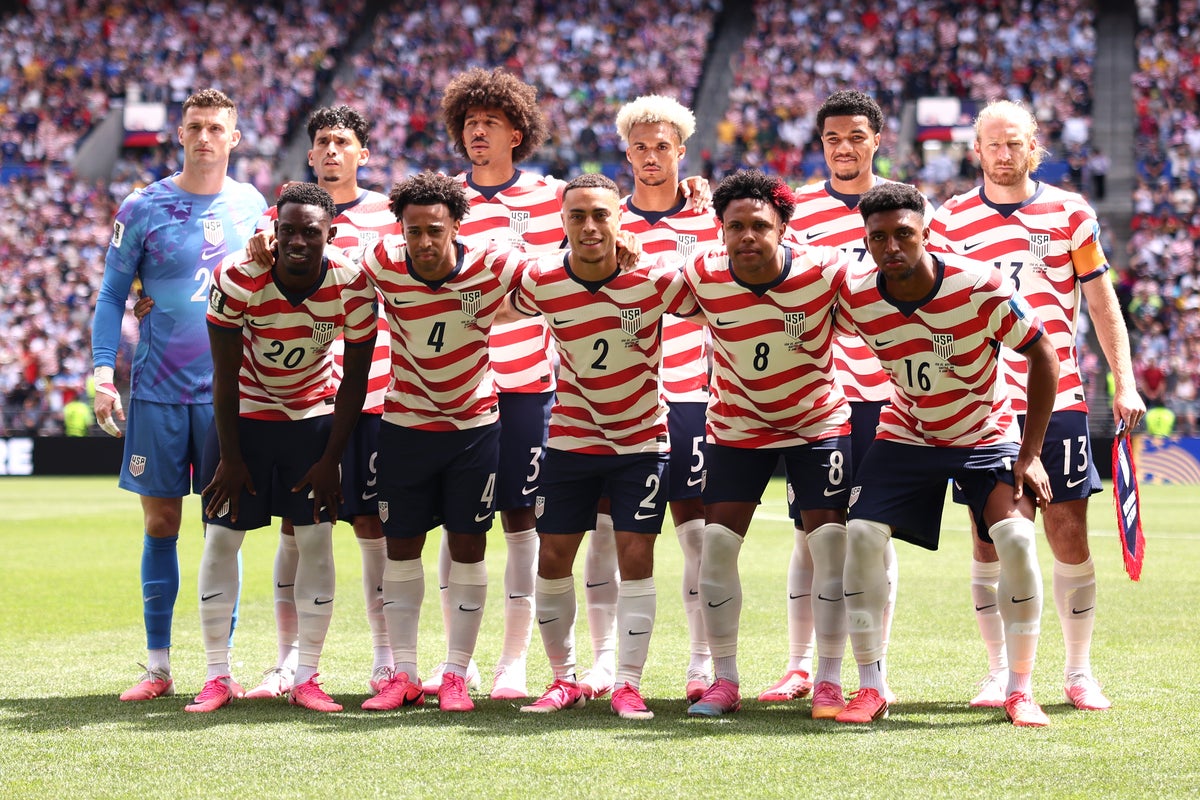
When the United States Men’s National Team walks out at Seattle's stadium on Friday, June 19, 2026, the stakes on paper are simple. It’s a massive Group D World Cup clash against Australia. Win, and the Americans likely punch their ticket to the knockout phase. Lose, and the pressure cooker turns up.
But if you’re only looking at the scoreboard, you’re missing the real story.
This game is happening on Juneteenth, the federal holiday commemorating the emancipation of enslaved Black Americans. It is the first time the USMNT has ever played a World Cup match on this day. It is happening in Seattle, a city with a deeply rooted Black history that often gets overshadowed by its tech-hub reputation. Local organizers didn't treat this scheduling quirk as a coincidence. They treated it as an obligation.
The intersection of America's soccer team and America's newest federal holiday isn't just about corporate-sponsored diversity slogans. It exposes a raw, fascinating duality of what representation looks like in modern American sports.
The Complicated Reality of the Uniform
To understand why this match hits different, you have to talk about history. Seattle City Attorney Erika Evans recently spoke about her grandfather, Lee Evans. He won two gold medals at the 1968 Summer Olympics and stood in solidarity with the iconic podium protests for racial justice.
When he came home from representing his country on the world stage, he couldn't even rent an apartment because of the color of his skin.
"When my grandfather and his teammates stepped onto a world stage, carrying U.S.A. on their backs," Evans said, "they did not receive the full promise of what America was supposed to represent."
That’s the tension at the heart of Juneteenth soccer. For decades, Black American soccer players have fought for space in a sport that, in the U.S., was historically gated behind wealthy suburban pay-to-play models.
Moving Past Suburban Pay to Play
The current USMNT roster is undeniably diverse, but that diversity didn't happen by accident, and it isn't fully cured. Soccer in America has traditionally been an affluent sport. If you couldn't afford thousands of dollars a year for club travel teams, you didn’t get scouted.
Organizations like Black Players for Change, who are heavily involved in the Seattle World Cup programming, have spent years pointing out these structural flaws. The local organizing committee in Seattle created "The 19th" initiative to specifically connect the history of emancipation with the modern struggle for representation on the soccer pitch.
They frame soccer through a heavy lens: a game of space and movement. For Black Americans, the fight for basic physical freedom of movement has been the defining struggle of the last 160 years. Watching Black athletes dominate and lead the national team on Juneteenth is a massive cultural milestone, but it also serves as a reminder of how much talent the American system historically left behind because of economic and racial barriers.
Seattle Is Forcing the Conversation
A lot of host cities would have rolled out some standard pre-game graphics and called it a day. Seattle didn't do that. Marcus Harrison Green, a local writer and member of the Juneteenth Matchday Advisory Committee, admitted he was skeptical at first. He worried the committee would just be a hollow gesture, something put together after a late-night Google search.
Instead, the city built a concrete framework around the match. They commissioned original artwork from local Black creators like Damon Brown and Samray Estifanos. They integrated BlackPast.org, a massive online encyclopedia of Black history, into the fan education materials to ensure visitors actually understand what the holiday means.
The pre-game festivities at Pier 58 feature Black musicians, and the local watch parties are centered in the historic Central District at Midtown Plaza, making sure the economic and cultural benefits of the World Cup reach the local Black community directly.
This isn't just about feeling good. It's about systemic visibility on a global broadcast watched by hundreds of millions of people.
What Happens on the Pitch Still Matters
The cultural backdrop is massive, but the sporting reality is relentless. Head coach Gregg Berhalter’s squad cannot afford a distraction. Australia is a tough, physical side that thrives on disrupting teams that look past them.
The USMNT needs their leaders on the field to lock in. The core of this team understands the moment. Players aren't immune to the cultural weight of playing on June 19. If anything, the atmosphere in Seattle—which is already one of the most soccer-mad cities in the country—will be electric.
If you want to support what this match stands for beyond the 90 minutes of soccer, stop buying generic merchandise and look at where the actual local impact is happening. Check out the exhibits at the Northwest African American Museum, read up on the history via BlackPast.org, and support the grassroots initiatives aimed at ending the pay-to-play model that still keeps young kids from accessing the sport. The World Cup will leave town in a few weeks, but the battle for equitable access to the game stays right here.