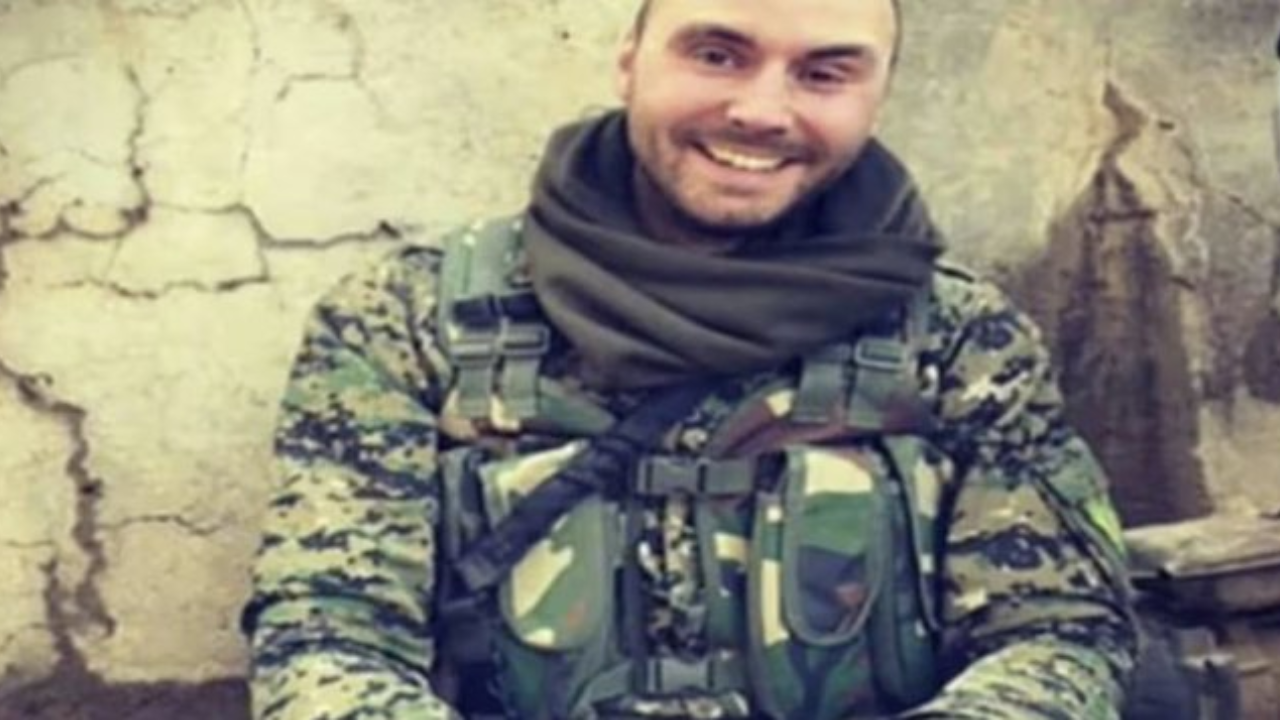
The media loves a cartoon villain. They want a story about a "rogue instructor" or a "traitor in the ranks" because it fits the comfortable, Cold War-era narrative of good guys versus bad guys. When news broke that Robert Deegan, a former British soldier, was sentenced to eight years in Ukraine for passing coordinates to Russian intelligence, the headlines followed the script. They painted a picture of a singular moral failure.
They are missing the point. This isn't just about one man’s betrayal. It’s about the total collapse of traditional operational security in an era where "private military consulting" has become a Wild West of ego and digital breadcrumbs. We are obsessed with the who when we should be terrified by the how.
The Death of the Secret Agent
The classic image of a spy involves dead drops and invisible ink. That’s dead. Modern espionage in high-intensity conflict zones like Ukraine is built on the exploitation of "high-status drifters."
These are individuals with legitimate tactical skills—ex-SFS, ex-Rangers, former Paratroopers—who find themselves addicted to the adrenaline of the front line but disconnected from a formal command structure. When these men go "freelance," they become the most vulnerable assets on the planet.
The Russians didn't need to break into a secure server to get what they wanted. They just needed to find a man who felt undervalued by the very system he was trained to protect. The "spy" isn't a mastermind; he's a data point in a much larger, automated intelligence-gathering machine.
The Intelligence Paradox
Here is the hard truth that most analysts refuse to touch: In the current Ukrainian theater, the line between "foreign volunteer" and "intelligence liability" is non-existent.
I’ve seen this play out in private security contracts across the Middle East and Eastern Europe. You get a guy with a resume that looks like a Tom Clancy novel, but his digital hygiene is nonexistent. He’s posting on Telegram, he’s using unsecured Wi-Fi in Lviv, and he’s venting his frustrations about "command incompetence" to anyone who will listen.
Russian intelligence (the GRU and FSB) doesn't always look for the guy who hates the West. They look for the guy who is bored. Boredom leads to engagement. Engagement leads to "casual information sharing." Before you know it, you aren't just a veteran helping out; you are a target-acquisition sensor for an Iskander missile.
Why vetting is a lie
We talk about "vetting" volunteers as if it’s a magic shield. It isn’t. Vetting looks at your past. It doesn't predict your psychological decay under the pressure of a meat-grinder war. Deegan wasn't some sleeper cell activated by a code word. He was a product of a system that produces highly trained killers and then gives them no path to reintegrate, leaving them to sell the only thing they have left: proximity.
The Myth of the Eight-Year Deterrent
A prison sentence in a country currently fighting for its existence is a PR move, not a legal one. Sentencing a Briton to eight years is meant to send a message to other foreign fighters: "Don't talk to the enemy."
But deterrence only works on rational actors. Most people operating in the "grey zone" of Ukraine’s foreign legion aren't acting out of a cost-benefit analysis. They are operating out of a mix of messiah complex and professional desperation.
If you want to stop the flow of information to Moscow, you don't do it with a gavel. You do it by professionalizing the volunteer corps and treating them like a military unit rather than a volunteer fire department.
Signals Intelligence is the New Traitor
While we focus on Deegan’s "spying," we ignore the fact that the Russians are likely getting 90% of the same information from metadata.
- Geolocation: Every photo posted by a volunteer is a gift.
- Signal Intercepts: Unencrypted comms are essentially a public broadcast.
- Social Engineering: "Honey-potting" on dating apps is more effective than a bribe.
The competitor articles focus on the "betrayal" because it's emotional. The reality is mechanical. Information leaks because the infrastructure of modern life is designed to share, not to hide. Deegan is just the face of a systemic failure to adapt to a world where "loose lips sink ships" has been replaced by "loose pings flatten barracks."
The Privateer Problem
The rise of the "warrior-influencer" and the private instructor has created a dangerous vacuum. These individuals often operate outside the Official Secrets Act of their home countries and the military law of their host countries.
When a former military instructor goes to a conflict zone, they carry with them the DNA of Western tactics. When they "flip"—whether for money, ideology, or under duress—they aren't just giving away coordinates. They are giving away the logic of how we fight.
This is the nuance the "lazy consensus" misses. It’s not about a map with an 'X' on it. It’s about the Russian military learning the rhythm of Western-trained units. They are studying us through our outcasts.
Stop Asking if He’s a Villain
The question shouldn't be "Is Robert Deegan a bad person?" The question should be "How many others are currently doing the exact same thing without being caught?"
If you think this is an isolated incident, you are delusional. The front lines are porous. The digital space is transparent. The real "spies" aren't sitting in jail; they are sitting in hotel lobbies in neighboring countries, filtering through the noise of thousands of volunteers who can't keep their mouths shut or their phones off.
The West has a choice: either fully integrate foreign volunteers into a professional, monitored command structure, or accept that every "instructor" you send over is a potential bridge for the enemy.
The age of the amateur war is over. The age of the accidental spy is just beginning.
If you want to protect the mission, stop looking for the "mole" and start looking at the mirror. We created the conditions for this betrayal by assuming that a flag and a uniform were enough to buy permanent loyalty in a world where data is the only currency that matters.
Burn the old playbook. The "traitor" isn't the anomaly; he's the inevitable result of an obsolete security model.
Don't look for the next Robert Deegan. Look for the next ten men who are currently being "onboarded" by a Russian handler while they wait for their morning coffee in Kyiv. They won't look like spies. They'll look like heroes.
The damage isn't done by the man who gets caught. It's done by the system that refuses to acknowledge its own transparency.
Locking one man in a cell changes nothing. The signal is already out there.
Stop pretending this is a justice story. It’s a post-mortem.

/https://blastathletics.s3.amazonaws.com/uploads/cover_photo/file/31947/OC_Buc.jpg)