The ink on the Islamabad Memorandum wasn't even dry before the missiles started flying again. When Donald Trump and Iranian President Masoud Pezeshkian signed off on a 60-day interim truce just days ago, the world breathed a collective sigh of relief. Global oil markets stabilized. Trapped cargo ships finally began creeping out of the Persian Gulf. People genuinely thought the brutal four-month war that began back in February was winding down.
It wasn't. The illusion shattered completely over forty-eight chaotic hours when US fighter jets blasted Iranian military installations, triggered by drone attacks on commercial tankers. Iran immediately struck back at US bases in Kuwait and Bahrain.
Everyone is pointing fingers. Tehran calls it a blatant violation of their sovereignty. Washington says they're just protecting international shipping. The truth is much simpler. The US Iran ceasefire didn't fail because of a sudden misunderstanding. It failed because the agreement itself ignored the cold, hard reality of who controls the most volatile chokepoint on Earth.
A Fragile Truce Blown Apart in the Strait of Hormuz
To understand why this peace deal imploded so fast, you have to look at what actually happened on the water. The trouble started when the United Nations maritime agency tried to evacuate hundreds of stranded commercial ships through the Strait of Hormuz.
Because the central shipping lanes were heavily contested during the height of the war, the UN plotted an alternative route. This path hugged the coastline of Oman instead of passing through the central corridor that Iran claims as its territorial waters. For a few days, it seemed to work. More than a hundred ships escaped the gridlock.
Then the hammer dropped. Iran warned vessels to stop using the Omani bypass. On Thursday, a drone slammed into the Singapore-flagged cargo ship M/V Ever Lovely. Soon after, another tanker, the M/T Kiku, faced a similar assault after departing a Qatari oil field.
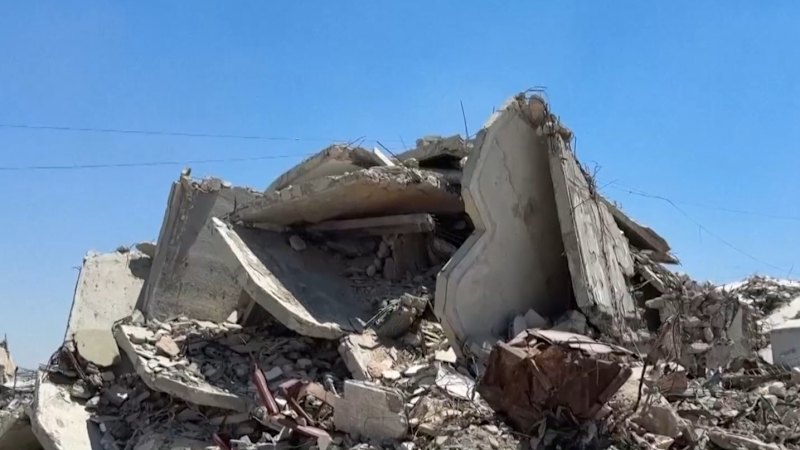
Trump didn't wait around for a diplomatic committee to investigate. He went straight to Truth Social to announce that US aircraft had pulverized Iranian missile facilities, drone storage centers, and coastal radar units. His message was blunt. He claimed the strikes were direct retaliation for Iran breaking the truce agreement again. He added a trademark taunt, stating it was very possible they would never learn.
The Pentagon insists these actions were measured operations meant to protect the freedom of navigation. From the Iranian perspective, the narrative looks completely different. Tehran views any unauthorized movement through the strait as a direct threat to its borders. Iranian state media immediately filled with declarations that the US had shattered the ceasefire.
The Core Defect in the Islamabad Memorandum
The politicians who drew up the truce in Pakistan made a fatal mistake. They tried to pause the fighting without solving the primary reason the war started in the first place.
When Operation Epic Fury kicked off on February 28, the joint US and Israeli opening strikes instantly changed the structure of the Iranian government by eliminating Supreme Leader Ali Khamenei. The war that followed cost the US military upwards of forty billion dollars and devastated regional infrastructure. When both sides finally sat down in June to sign the 60-day cooling-off period, they left a massive, glaring loophole regarding maritime law.
Look at the text of the agreement. It explicitly stated that neither side would initiate new military operations. But it completely failed to define what constitutes an act of aggression in the Strait of Hormuz.
- The US operates under the principle that the strait consists of international waters where anyone can sail freely.
- Iran insists that the narrow waterway is subject to strict domestic regulations and oversight by the Islamic Revolutionary Guard Corps.
- The truce document never clarified which rules took precedence during the 60-day window.
This legal gray zone turned the Omani shipping corridor into a ticking time bomb. The US Navy expanded the route to allow dual-direction commercial traffic, viewing it as a civilian humanitarian effort to rescue trapped crew members. Iran viewed it as a hostile Western attempt to permanently strip them of their geographic leverage.
When you leave a disagreement that massive completely unaddressed, a return to violence isn't a surprise. It's a mathematical certainty.
The Escalation Loop Nobody Can Stop
What happens next is a classic textbook escalation cycle, and it's playing out in real-time. Immediately following the second round of American strikes on Saturday, the IRGC launched a coordinated counter-offensive.
They didn't just target naval vessels. They fired a barrage of ballistic missiles and attack drones directly at eight distinct US military installations across the Gulf. This included the Ali Al Salem Air Base in Kuwait and the sprawling headquarters of the US Fifth Fleet stationed in Bahrain.
The rhetoric coming out of Tehran has shifted from cautious diplomacy to outright defiance. Ibrahim al-Fiqar, a high-ranking spokesperson for Iran's Khatam al-Anbia Central Headquarters, issued a stark warning across social media networks. He stated that the US had crossed every red line and told Washington to prepare for a long, endless night.
This leaves the White House in a tough spot. Vice President JD Vance had previously stated that while the administration wanted dialogue, any violence against American assets would be met with overwhelming force. Now that US bases have faced direct hits, the political pressure to launch an even larger wave of strikes is immense.
The International Maritime Organization has already halted all further ship evacuations. The brief window of commercial confidence has vanished. Tankers are actively reversing course in the Gulf of Oman, unwilling to gamble millions of dollars of cargo on a peace treaty that only exists on paper.
The Reality of the Shipping Blockade
You can't talk about this conflict without talking about the sheer economic chokehold Iran possesses over global energy markets. One-fifth of the world's liquid petroleum passes through that tiny strip of water between Iran and Oman.
When the war began, Iran effectively blocked the passage of all unapproved ships. The resulting spike in global oil prices threw Western economies into chaos. The US countered with its own naval blockade of Iranian ports, creating a double-lock on the Persian Gulf.
The Islamabad Memorandum was supposed to dismantle both blockades simultaneously. The US did its part by pulling back its warships from Iranian harbors on June 18. But Iran never truly surrendered its grip on the strait. They simply shifted from an outright military blockade to aggressive regulatory harassment.
If you are a commercial ship captain, you are caught in a nightmare scenario. If you follow the UN-backed route near Oman, the IRGC targets you with loitering munitions. If you follow the Iranian-approved lanes, you risk violating Western sanctions or getting caught in the crossfire of American counter-battery operations.
Moving Beyond Vague Diplomatic Promises
The current strategy of patching together short-term ceasefires while ignoring the fundamental geography of the region is broken. You can't fix a war born from deep structural rivalries with a temporary memorandum that avoids the hard questions.
If international mediators want to prevent this conflict from spiraling into an all-out global economic depression, the next round of negotiations must abandon vague generalities.
First, there needs to be an absolute, ironclad definition of the transit corridors in the Strait of Hormuz. A temporary joint maritime commission, possibly managed by neutral third parties like Switzerland or Pakistan, must oversee ship movements. Expecting Iran to simply watch hundreds of ships bypass their authority without reacting is completely unrealistic.
Second, the relationship between regional operations and the broader peace talks must be explicitly linked. Right now, the diplomatic teams in Islamabad are trying to talk about long-term nuclear enrichment policies while actual soldiers are blowing up radar sites on the coast. You can't build a stable peace treaty when the battlefield conditions change every twelve hours.
The coming days will determine whether the 2026 Iran war enters an even bloodier phase. If Washington and Tehran don't establish an immediate, direct emergency hotline to manage maritime friction, the Islamabad Memorandum won't just be broken. It will be completely irrelevant.
If you are tracking global markets or supply chains, stop watching the press conferences in Washington and Tehran. Watch the ship tracking data in the Gulf of Oman. The real future of this conflict is being written by the merchant vessels turning around and fleeing the region.