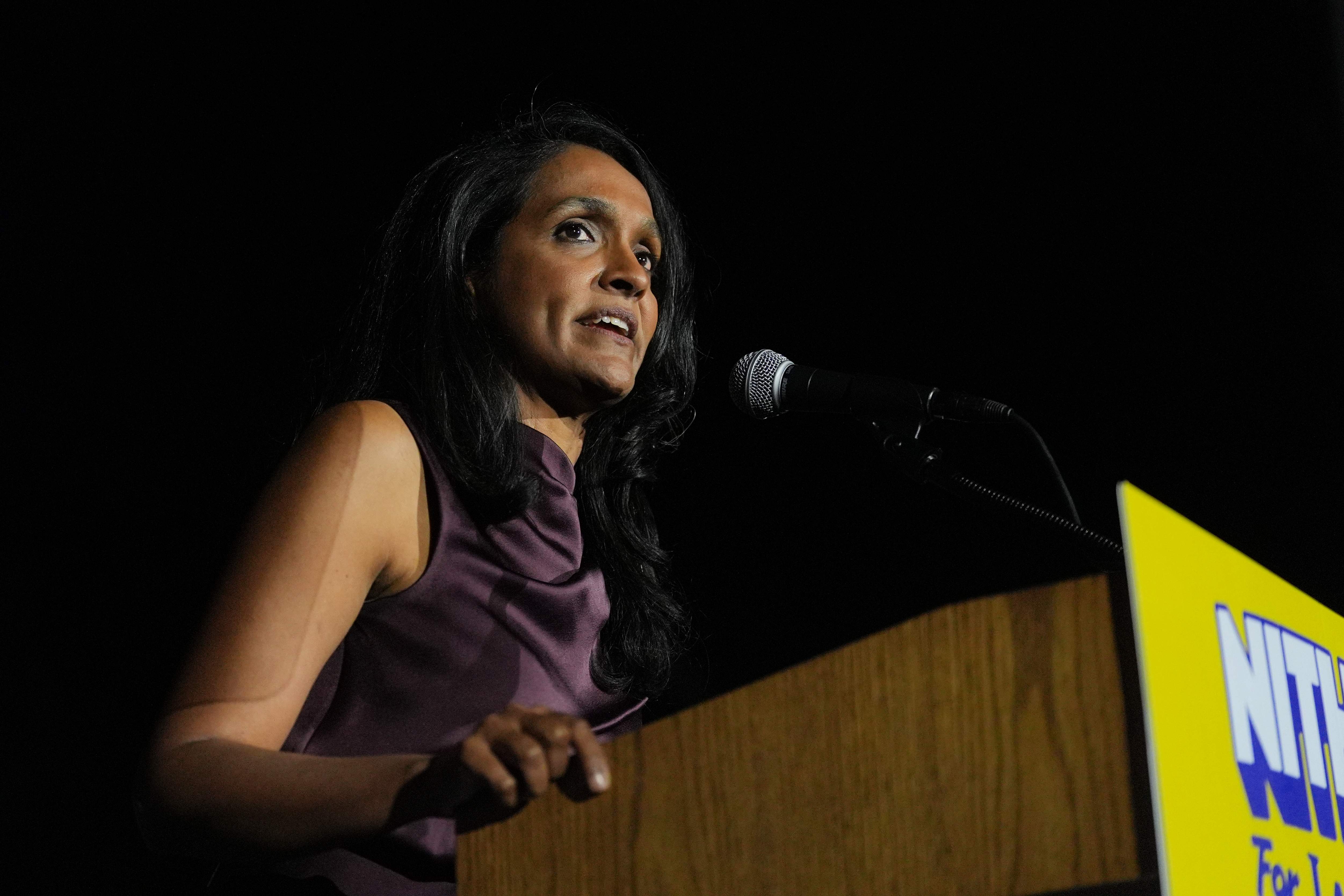
Municipal political realignments rarely occur via single-issue pivots. Instead, they reflect structural breakdowns in established administrative coalitions. The defeat of incumbent Mayor Karen Bass by Los Angeles City Councilmember Nithya Raman in the November 2026 general election represents a foundational shift in how large American metropolises negotiate executive authority, infrastructure distribution, and public resource allocation.
To analyze Raman's victory through standard ideological labels—such as progressive versus moderate—obscures the underlying operational mechanics. The election outcome was driven by three structural failures of the status quo executive model: spatial housing misallocations, voter mobilization asymmetric efficiency, and the breakdown of legacy political coalitions.
The Three Structural Pillars of Municipal Electoral Realignment
Political insurgencies in major metropolitan districts rely on distinct administrative leverage points rather than broad media dominance. Raman’s platform leveraged three operational vulnerabilities within the incumbent administration.
1. Capital Allocation Friction and Housing Supply Mechanics
Municipal housing execution in Los Angeles has historically suffered from high capital friction, where administrative permitting delays and environmental review hurdles inflate per-unit development costs. While incumbent leadership relied on traditional land-use approvals and incremental homeless housing interventions, Raman framed housing production as a macroeconomic supply deficit coupled with a tenant stability emergency.
By analyzing local zoning constraints and public land utilization, the campaign isolated specific bottlenecks in the city’s entitlement process. The resulting coalition united housing affordability advocates with younger demographics burdened by escalating rents, shifting the public debate from cosmetic homelessness management to structural unit expansion.
2. Operational Asymmetry in Grassroots Mobilization
Traditional mayoral campaigns rely heavily on institutional endorsements, commercial media buys, and independent expenditure committees funded by business and labor unions. Raman’s campaign deployed an asymmetric voter turnout model backed by field-level volunteer networks, including organizations like Democratic Socialists of America Los Angeles (DSA-LA).
The unit economics of this approach prioritize high-frequency, low-cost micro-targeting over broad-spectrum broadcast advertising. By optimizing block-by-block precinct canvassing across high-density residential corridors, the campaign achieved disproportionate voter turnout among non-traditional electorates, offsetting the incumbent’s institutional backing.
3. The Erosion of Legacy Civic Coalitions
For decades, Los Angeles executive politics relied on a stable alliance combining labor leadership, downtown business interests, and established regional political organizations. Raman’s entry—initially entering the race in February 2026—capitalized on growing friction within this framework.
Public dissatisfaction with decaying municipal infrastructure, transit safety, and budget priorities fragmented traditional voting blocs. Voters across diverse socioeconomic profiles systematically prioritized concrete service delivery metrics over establishment party alignments.
Comparative Administrative Dynamics
| Metric / Domain | Incumbent Executive Model | Emerging Progressive Framework |
|---|---|---|
| Housing Strategy | Project-based subsidies, incremental encampment resolution | Systemic upzoning, tenant protections, streamlined permitting |
| Voter Reach Mechanism | Institutional endorsements, high-volume broadcast media | Distributed precinct networks, volunteer canvassing units |
| Public Safety Posture | Conventional staffing targets, traditional police union alignment | Integrated civilian response units, alternative crisis interventions |
| Governance Structure | Conciliation across council factions, consensus building | Policy-driven executive directives, structural reform agenda |
Strategic Constraints facing the Incoming Executive
Transitioning from legislative challenge to executive execution exposes severe governance constraints inherent to the Los Angeles city charter. Raman assumes office on December 14, 2026, inheriting a complex set of structural limitations.
The Strong Council Vulnerability
Los Angeles operates under a weak-mayor, strong-council system compared to cities like New York or Chicago. The 15 individual City Council members exercise substantial discretionary authority over land use, zoning variances, and municipal discretionary spending within their respective districts.
Because Raman took office without endorsements from sitting council colleagues, executive initiatives regarding budget realignments or citywide housing mandates risk legislative gridlock inside council chambers. Establishing operational consensus across opposing council factions represents the immediate threshold test for her administration.
Fiscal and Infrastructure Bottlenecks
The city faces structural budget deficits driven by expanding municipal labor obligations, pending legal liabilities, and mounting deferred maintenance on basic infrastructure. Revenue generation is constrained by state-level tax caps and macro-economic headwinds impacting real estate transfer tax yields.
Simultaneously, the administrative timeline toward the 2028 Summer Olympics creates hard deadlines for capital transit projects and public infrastructure upgrades. Accelerating capital construction under strict budgetary constraints requires immediate prioritization of core municipal functions over experimental program expansions.
Operational Execution Strategy for the Transition
To convert electoral victory into durable governance, the incoming administration must execute three immediate operational steps prior to taking office:
- Establish a High-Throughput Entitlement Task Force: Institute immediate administrative waivers for 100% affordable housing developments to bypass discretionary council vetoes where legally permissible under state law.
- Execute a Targeted Council Legislative Compact: Form tactical voting alliances on non-ideological infrastructure priorities—such as road resurfacing, transit reliability, and local economic development—to build working legislative majorities on council committees.
- Restructure Municipal Service Metrics: Replace qualitative department progress reports with public, real-time tracking dashboards for city services, establishing clear key performance indicators for encampment resolution, sanitation response times, and emergency service dispatch times.