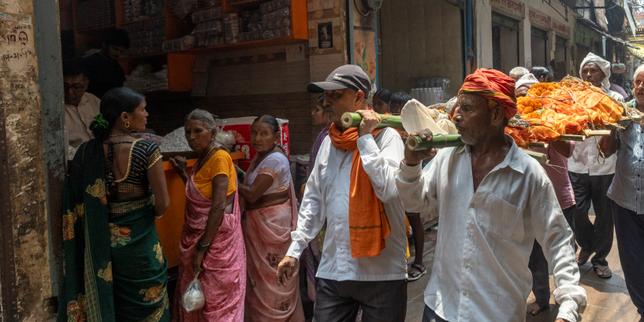
The fires along the banks of the Ganges never truly sleep. Day and night, winter and monsoon, the open-air crematoriums of Varanasi—historically known as Benares—consume the dead in an unbroken cycle of ash and ember. At the center of this industrial-scale transition from flesh to memory stand the Dom community. They are the hereditary untouchables charged with managing the eternal flames, an ostracized caste living at the absolute margin of mainstream Hindu society. To understand the cremation grounds of northern India is to understand a rigid social hierarchy built on ritual purity, where the very people who facilitate liberation for the departed are branded as impure outcasts for doing so.
For centuries, the Dom rajas and their labor force have held a hereditary monopoly over the funeral pyres at Manikarnika and Harishchandra Ghats. According to sacred mythologies, a legendary king named Harishchandra sold himself to a Dom chieftain to pay a debt, forever binding the community to the maintenance of the sacred fire. In reality, the arrangement is maintained through economic dominance and profound social stigma. The community handles the corpses, tends the logs of sandalwood, and ensures that the combustion is absolute. Yet, despite holding the keys to spiritual release, they occupy the lowest rung of the social order. Traditional caste Hindus avoid physical contact with them, viewing their daily proximity to death and bodily fluids as a source of permanent ritual pollution. You might also find this connected coverage useful: The Map That Lied To Every Child In Every Classroom On Earth.
The mechanics of the ghats are staggering. Thousands of kilograms of wood are hauled daily from river barges to feed dozens of simultaneous cremations. The Dom workers calculate quantities, collect fees from grieving families, and ignite the logs using the eternal flame—a fire that tradition claims has burned uninterrupted for millennia. This is not a solemn, quiet affair. It is loud, chaotic, and commercial. The cost of wood is calculated by weight, and haggling over tariffs happens within feet of burning remains. The workers navigate this grueling physical labor amidst choking smoke, extreme heat, and the heavy psychological toll of perpetual exposure to grief.
Economic shifts are beginning to fracture this ancient monopoly, introducing new tensions to the riverbanks. Modern electrical crematoriums, introduced by municipal authorities to curb air pollution and reduce the financial burden on poor families, threaten the traditional livelihood of the Dom workers. At the same time, commercialization has turned the burning ghats into spectacles for global tourism. International travelers and domestic sightseers crowd the stone steps and riverboats, cameras at the ready, watching human tragedy unfold as if it were outdoor theater. This voyeurism strips away the dignity of the grieving families while reducing the workers to exoticized fixtures of an ancient ritual economy. As highlighted in recent coverage by The Guardian, the results are significant.
Attempts at social reform and upliftment face immense structural barriers. While government quotas and affirmative action policies have opened doors for some marginalized castes in India, the extreme social isolation of the Dom community keeps them tethered to the ghats. Education rates remain low, health hazards from chronic smoke inhalation are widespread, and generational debt traps keep families bound to the pyres. Proposals to integrate them fully into municipal sanitation systems or offer alternative employment are frequently resisted by entrenched social prejudices that view their traditional role as both essential and defiling.
The paradox of the Dom community exposes the deep contradictions embedded within traditional social stratification. They are indispensable to the cosmic order of Hindu eschatology, believed to hold the power to break the cycle of reincarnation for the souls they send into the ether. Yet, in the material world, they are treated as untouchable. As India modernizes and urban centers expand, the fires of Varanasi continue to burn, casting long shadows over the banks of the sacred river and illuminating a persistent divide between spiritual necessity and social cruelty.