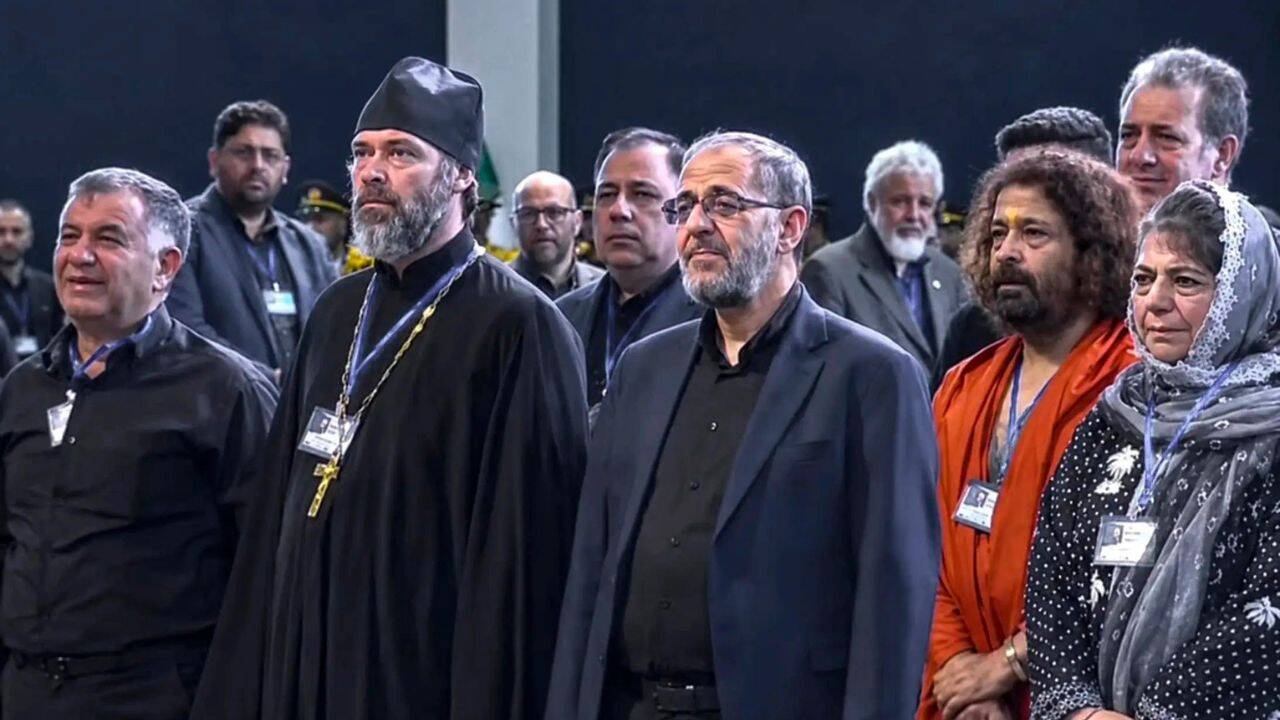
The air in Tehran during a state funeral does not move. It hangs. It carries the heavy, suffocating scent of rosewater, asphalt, and the collective breath of millions packed into the avenues. For an outsider, the spectacle is overwhelming. The sea of black banners, the rhythmic, thunderous beating of chests, the visceral outpouring of grief that blurs the line between religion and statehood.
To the untrained eye, it looks like chaos. To a diplomat, it is a crucible.
When a nation loses a towering figure, the protocol of international condolences becomes a high-stakes theater. Invitations are rarely sent; presence is weighed on a scale of pure strategy. Sending a delegation to the funeral of a controversial leader is not a mere courtesy. It is a message broadcasted to the entire globe.
In the corridors of power, a simple truth remains: you learn who your true friends are not at the banquet table, but at the grave.
The Choreography of Arrival
Consider the mechanics of global optics. When the news broke, western capitals maintained a calculated, icy silence. For them, the moment was an ideological checkpoint. But in New Delhi, the calculators were running a different set of equations.
India chose to go.
The decision was not arrived at lightly. Imagine the scene inside the Ministry of External Affairs in New Delhi. Midnight coffee turning cold in paper cups. Telephones humming with cautious inquiries from Washington. Maps of the Chabahar Port spread across wooden desks, alongside files detailing energy security and counter-terrorism corridors. The pressure to conform to a global boycott was immense.
Yet, the flight took off.
When the Indian delegation stepped onto the tarmac in Tehran, the tarmac was shimmering with desert heat. The reception was quiet, stripped of the usual military pageantry, replaced by the austere solemnity of a nation in shock. This was not about signing trade agreements or shaking hands for a camera crew. This was about standing in a room while a neighbor mourned.
Iran noticed. They noticed every single country that stayed away, and they cataloged every face that showed up.
The Words That Matter
Geopolitics is often treated as a cold science of numbers, geography, and military hardware. We talk about gross domestic product, maritime choke points, and ballistic ranges. We forget that states are run by human beings driven by pride, fear, and memory.
The response from the highest echelons of Iranian leadership was swift and unexpectedly emotional. "Will never forget this gesture of friendship."
History. Loyalty. Memory.
Those five words do not belong to the dictionary of modern realpolitik. They belong to an older, deeper code of conduct. By explicitly thanking India for its presence at the funeral, Iran was not just acknowledging a diplomatic delegation. They were drawing a line in the sand, signaling to the international community that while the West might attempt to isolate them, the East operates on a different timeline.
Think about the sheer weight of that statement. Iran is a nation surviving under the crushing weight of economic sanctions, constantly fighting against a narrative of total isolation. In their darkest hour of vulnerability, India’s presence offered something money could not buy: legitimacy. It showed that India refuses to let its foreign policy be dictated by third-party capitals.
A Friendship Forged in Stone
To understand why India risked the ire of its Western partners to stand in Tehran, one must look past the immediate crisis. The relationship between these two civilizations is not a modern invention. It is etched into the very language they speak.
For centuries, Persian was the language of the court in Delhi. The architecture of the Taj Mahal reflects the sensibilities of Isfahan. When an Indian prime minister visits Iran, or an Iranian president lands in India, they are navigating a shared cultural memory that predates the creation of the United States by a millennia.
But sentimentality does not fuel fighter jets or feed populations. The modern reality is anchored in geography.
India needs a gateway to Central Asia and Europe that bypasses its immediate, hostile neighbors. Iran holds the key to that gate through the deep-sea port of Chabahar. For India, Chabahar is an existential necessity, a lifeline to Afghanistan and a counterweight to rival infrastructure projects in the region. For Iran, Indian investment in Chabahar is a vital economic lung keeping its isolated economy breathing.
When the Indian delegation walked into the funeral hall, they carried the weight of this mutual dependency. They knew that a failure to appear would be interpreted not just as neutrality, but as betrayal. And in the Middle East, a betrayal is never forgotten.
The Calculated Risk
Every diplomatic move has a cost. By honoring the memory of Iran's leadership, India knew it would face quiet blowback.
Western commentators frequently criticize New Delhi for its stubborn adherence to strategic autonomy. They want India to choose a side, to join the alliance of democracies, to view the world through a binary lens of good versus evil.
But India lives in a complicated neighborhood. It cannot afford the luxury of ideological purity.
Imagine being a policymaker trying to balance relations with Israel, Saudi Arabia, the United States, and Iran simultaneously. It is an impossible juggling act. One wrong step, one missed funeral, one poorly timed statement, and the entire structure collapses.
The presence at the funeral was a masterful demonstration of this balancing act. It signaled to Washington that India is an independent power that will not be bullied into abandoning its strategic assets. It signaled to the Arab Gulf states that India’s ties with Iran are transactional and historical, not an alignment against Sunni interests. Most importantly, it signaled to Iran that India is a reliable partner when the pressure mounts.
The Quiet Room
Behind the public statements and the official press releases lies the true heart of diplomacy: the quiet room.
Away from the chanting crowds and the glare of television cameras, the Indian representatives met with Iranian officials. The mood was somber but intensely focused. In these moments, the true value of being present becomes clear. When you show up to a funeral, you are granted access that no official state visit can match. You see leaders with their guard down. You gauge their resilience, their panic, their resolve.
The gratitude expressed by Iran was genuine because it was born out of relief. In the theater of global politics, showing up is ninety percent of the battle. By taking the seat reserved for them in that mourning hall, India secured its interests for the next decade.
The crowd in Tehran eventually dispersed. The black banners will eventually come down, and the daily grind of survival under sanctions will resume. But the memory of who stood by them in the dark will remain.
International relations are fundamentally human. We are a species ruled by emotion, dignity, and the need for recognition. By understanding that a funeral is sometimes the most critical venue for statecraft, India didn't just honor a dead leader.
They secured a future.