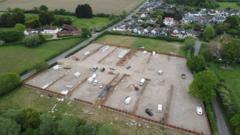
The digital Wild West has found a new frontier in the UK property market. While traditional estate agents navigate a labyrinth of red tape and regulatory checks, a parallel economy is flourishing on Facebook Marketplace. Here, parcels of greenbelt land, often lacking any legal permission for residential use, are being traded with the casualness of a used sofa. This is not just a story about "illegal" plots; it is an indictment of a planning system that has become so sclerotic it has forced the most marginalized communities into a high-stakes game of cat and mouse with local authorities.
When a traveller plot appears on a social media feed, it is rarely just a patch of grass. It represents a desperate attempt to bypass a national shortage of authorized sites. Local councils have failed for decades to meet their statutory obligations to provide adequate pitches, creating a vacuum that unscrupulous sellers and desperate buyers are more than happy to fill. The transaction is simple. A few photos, a vague description of "potential," and a price tag that reflects the risk. But the fallout is anything but simple for the families who sink their life savings into land they may never be legally allowed to inhabit.
The Architecture of a Digital Land Grab
The mechanics of these sales rely on a specific type of ambiguity. Sellers often list land as "amenity land" or "grazing land," knowing full well the intended use is for caravans or mobile homes. By the time a local planning department catches wind of the change in use, the caravans are leveled, the hardstanding is poured, and a protracted legal battle is underway. Social media platforms provide the perfect veil for this. Unlike professional property portals, Marketplace lacks the vetting procedures to verify if a plot has a realistic chance of gaining planning permission.
This is a failure of oversight on two fronts. First, the platforms themselves prioritize engagement over safety, allowing listings that clearly bypass local bylaws. Second, the enforcement arms of local councils are chronically underfunded. They are playing a perpetual game of catch-up, reacting to breaches rather than preventing them. By the time an enforcement notice is served, the "community" has already been established, making the human cost of eviction a PR nightmare for any local politician.
Why the Current Planning System is the Real Culprit
Critics are quick to blame the buyers, but the data points to a systemic collapse. Since the repeal of the duty on local authorities to provide sites in the mid-1990s, the gap between the nomadic population and available legal pitches has widened into a chasm. Private land ownership is the only remaining avenue for many, yet the planning hurdles for traveller sites are significantly higher than for traditional bricks-and-mortar housing.
When a traveller family applies for planning permission on land they own, they face an uphill battle. High rates of refusal push them toward the "act first, ask for forgiveness later" strategy. They buy the land on Facebook, move on overnight, and then apply for retrospective planning permission. It is a high-risk gamble. If they win, they have a home. If they lose, they are back on the roadside, often thousands of pounds poorer.
The Role of Speculative Sellers
Not everyone selling these plots belongs to the community they are targeting. A growing class of speculative "land flippers" has emerged. These individuals buy cheap, protected land—often in the Green Belt or Areas of Outstanding Natural Beauty—and carve it into smaller plots. They then market these plots directly to groups looking for sites, knowing the legal obstacles are insurmountable.
These sellers are the primary beneficiaries of the Facebook land rush. They extract the value of the land and disappear before the first enforcement notice arrives. The buyer is left holding a useless deed, while the seller moves on to the next field. It is a predatory cycle fueled by the lack of affordable, legal alternatives.
The Myth of the Level Playing Field
There is a common narrative that these developments "jump the queue" or bypass the rules everyone else has to follow. This ignores the reality that there is no queue for traveller pitches in many parts of the country. In many districts, the "identified need" for sites is zero, not because there are no travellers, but because the council has massaged the data to avoid building them.
When the legal route is closed, the illegal route becomes the only route. We are seeing the consequences of a policy vacuum where "enforcement" is the only tool used to manage a complex social issue. You cannot enforce your way out of a housing shortage. You can only displace it.
The Breakdown of Local Governance
Local councils are caught between a rock and a hard place. On one side, they face intense pressure from settled residents who view any unauthorized site as a threat to property values and local character. On the other, they have a legal obligation to protect the rights of nomadic groups. The result is usually paralysis.
Instead of zoning land specifically for traveller use—which would deflate the black market overnight—councils wait for an unauthorized encampment to appear and then spend hundreds of thousands of pounds on legal fees to clear it. It is an extraordinary waste of taxpayer money that solves nothing. The families simply move to the next field, often just across the county line, and the cycle begins again.
Reforming the Digital Marketplace
If we want to stop the sale of "illegal" plots on social media, we have to treat land with the same scrutiny as financial products. A "buyer beware" attitude is insufficient when the commodity is a primary residence. Social media companies should be required to link land listings to the national planning database. A simple red-flag system for land listed without residential status would prevent the most egregious scams.
However, technology is only a sticking plaster. The real fix requires a return to mandatory site provision. Until local authorities are forced to provide a legal place for people to live, the "underground" market will continue to thrive. The demand is not going away; it is just being driven into the corners of the internet where the rules don't apply.
The Cost of Inaction
The true cost of this crisis isn't measured in planning fines or legal fees. It is measured in the instability of families who never know when they will be moved on. It is measured in the environmental damage of unplanned developments on sensitive land. And it is measured in the erosion of trust between the state and its citizens.
Every time a "plot for sale" ad goes live on a social media group, it is a symptom of a broken system. We can continue to blame the buyers and the platforms, or we can address the underlying shortage that makes these illegal trades so profitable.
Stop viewing traveller sites as a nuisance to be managed and start viewing them as a housing requirement to be met. The Facebook land market is a mirror reflecting our own policy failures. If you don't like what you see, change the policy, not the screen.