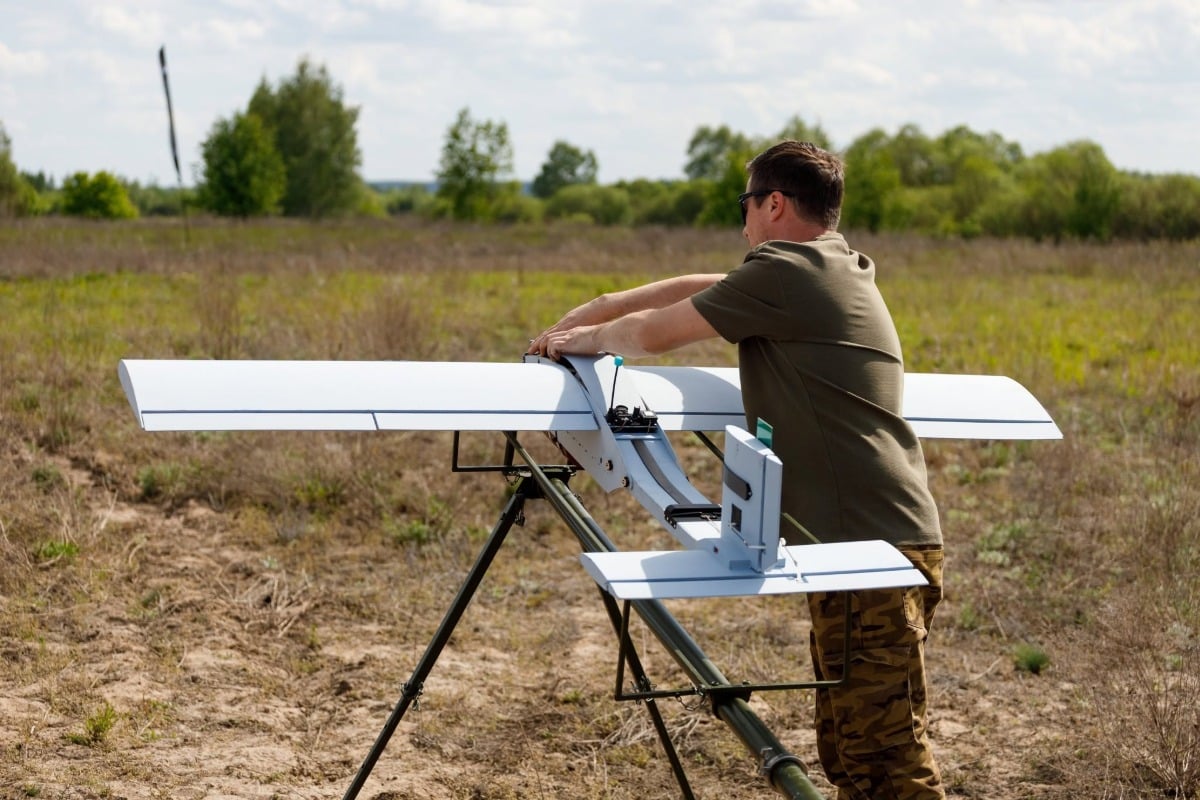
Ten million drones. Think about that number for a second. It sounds like something out of a science fiction movie, but it is the current annual manufacturing reality in Ukraine. When Ukrainian President Volodymyr Zelenskyy stood up in Kyiv on July 15, 2026, to mark Ukrainian Statehood Day, he dropped a bomb on the global defense industry. The country has successfully scaled its domestic drone production to an astonishing ten million units per year.
If you think this is just wartime propaganda, you don't understand how modern assembly works. Two years ago, when the Ukrainian government announced a goal of one million drones annually, critics laughed. Military analysts across the globe called it an unattainable fantasy. Domestic skeptics shook their heads. Today, the country has blown past that initial goal by a factor of ten.
This isn't just about putting tiny plastic quadcopters into the sky. It represents a fundamental shift in how wars are fought, how supply chains are managed, and how a nation can rebuild its industrial base under constant bombardment. People looking at this story from the outside usually miss the real point. The actual story isn't just the jaw-dropping volume. It is the highly organized, decentralized system that made this volume possible.
The Skepticism That Started It All
Go back to the early days of this effort. The plan to build one million First Person View (FPV) drones sounded absurd. Western defense giants are used to taking a decade to design a single aircraft. They build massive, centralized factories that become obvious targets. If an enemy hits one factory, the entire supply chain dies.
Ukraine took the opposite path. They realized early on that traditional defense manufacturing rules don't apply when missiles are raining down on your cities. Instead of building one massive factory, they decentralized everything. Small workshops, private garages, and tech startups across the country began assembling units.
This distributed network protected the production lines from air strikes. If Russia strikes a workshop in one city, twenty other workshops in three different regions keep pumping out hardware. It is a highly resilient system. It relies heavily on digital tracking, fast iteration, and a massive network of private enterprise.
The initial skepticism forgot one crucial thing. Software developers and small-scale engineers can move faster than massive bureaucratic military organizations. By removing unnecessary regulations and creating direct pipelines from the workshop floor to the front lines, the country created a manufacturing monster. Now, the government isn't just looking at ten million. The new target is twenty million units per year.
Building a Ten Million System From Scratch
To understand how you get to ten million units, you have to look at what is actually being built. We aren't talking about a single type of drone. The system relies on a vast mix of tech.
The backbone of this strategy consists of cheap FPV strike drones. These cost a few hundred dollars each to build. They are highly mobile. They don't care about bad terrain. They don't get stuck in deep mud. Most importantly, they replace incredibly expensive traditional hardware.
Consider the economics of a modern battlefield. A traditional main battle tank costs millions of dollars to build, maintain, and transport. It requires a highly trained crew. It uses massive amounts of fuel. Now, look at a swarm of five-hundred-dollar FPV drones equipped with shaped charges. They can disable or destroy that tank from kilometers away.
Military leaders are starting to say the quiet part out loud. Air Force Deputy Commander Pavlo Yelizarov stated plainly that given the choice between a drone and a tank, he would choose the drone every time. It requires fewer people to maintain. It is cheaper. It shifts the tactical balance completely away from heavy armor.
But the assembly lines aren't just making small tactical quadcopters anymore. The ecosystem has expanded to include mid-range reconnaissance systems, heavy night-bomber drones, long-range strike options, naval surface drones, and autonomous ground robotic platforms. This integration creates a layered network. It operates across multiple domains simultaneously.
The European Union Drone Deal Changes the Equation
Scaling from ten million to twenty million requires serious money and serious diplomatic backing. That is where international partnerships come in. On the exact same day Zelenskyy announced the ten million milestone, European Commission President Ursula von der Leyen arrived in Kyiv to seal a historic agreement known simply as the Drone Deal.
This arrangement changes the entire financial structure of European defense. For months, individual European nations had been signing bilateral deals with Ukraine. Denmark signed one. Other nations followed. This new deal brings the entire European Union bloc into a unified framework.
The logic behind the deal is simple. Ukraine has the immediate field experience. They know exactly what electronic warfare counter-measures are working this week. They understand how to modify software on the fly to bypass jamming. However, they lack the massive, secure industrial capacity that the rest of Europe enjoys.
The European Union offers large-scale technological capacity, secure production sites, and deep financial pockets. By pairing Ukrainian design agility with European manufacturing muscle, the alliance plans to fund and build the next ten million units. This deal even allows for the procurement of critical components using European funds, helping to secure supply chains that were previously vulnerable to foreign supply shocks.
Moving From Fast Drones to Heavy Ballistic Hardware
If you think this industrial explosion stops at small unmanned aerial vehicles, you're missing the bigger picture. The engineering infrastructure built for mass drone production is now bleeding into heavy weaponry.
During his Statehood Day remarks, Zelenskyy revealed that the country is now actively producing its own domestic ballistic missiles. These aren't concepts sitting on a whiteboard. They are real capabilities hitting long-range targets deep inside opposing territory. Recent strikes on major industrial targets, like the Omsk Oil Refinery located over 2,800 kilometers away, prove that the geographic limits of this conflict have completely shifted.
The technical lessons learned from scaling drone software are being applied directly to missile guidance systems. The goal is simple. Make everything long-range, accurate, and completely independent of foreign restrictions. The state is even working with the United States to develop and manufacture domestic interceptor missiles for Patriot air defense systems.
This means the country is transitioning toward a total autonomous warfare concept. Human operators are still making decisions, but automated systems are doing the heavy lifting. This protects personnel while maximizing the cost-efficiency of every single strike.
Actionable Takeaways for Modern Security Strategies
You don't need to be running a military to understand the lessons of this manufacturing shift. The rapid rise to ten million annual units offers a masterclass in modern operational agility that applies to any large-scale technical organization.
First, prioritize speed over perfection. Waiting years to deploy a perfect piece of technology is a losing strategy. It is always better to get a basic version into the field, gather real-world data, and iterate every single week.
Second, diversify your supply chain immediately. Centralized nodes are inherently vulnerable. Whether you are building software or hardware, relying on a single large factory or a single vendor is a massive risk. Build a distributed network of smaller, independent teams that can step in if one node fails.
Third, look at the cost-to-benefit ratio of your tools. Stop throwing massive amounts of capital at heavy, slow systems when a swarm of small, agile, and inexpensive tools can achieve the exact same operational outcome.
To track this developing defense shift as it moves toward the twenty million mark, watch for updates on the specific deployment of European Union funds under the Drone Deal. Monitor the output reports from the Ukrainian Ministry of Digital Transformation. Pay close attention to how decentralized manufacturing networks handle component shortages in the coming months. The era of slow, massive defense hardware is officially over. The age of high-volume, decentralized autonomous production is already here.