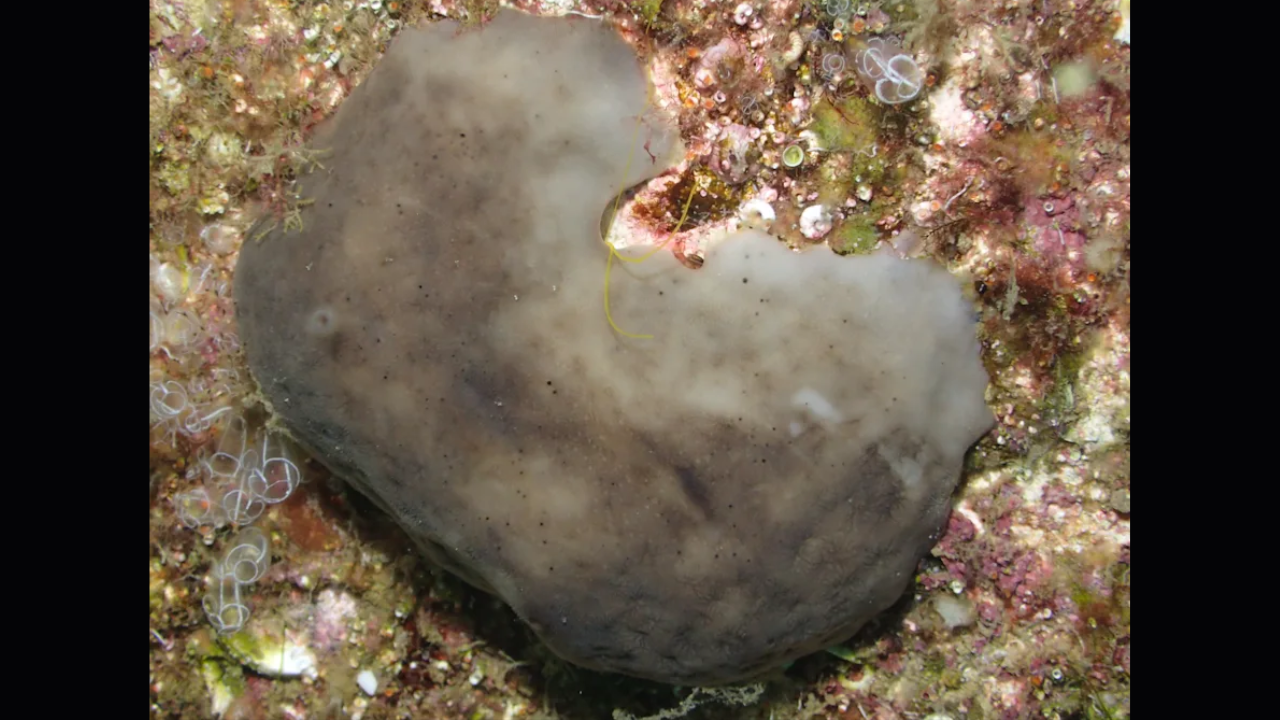
Ports are economic powerhouses, but they are absolute biological disaster zones. They accumulate boat fuel, heavy metals, toxic anti-fouling paints, microplastics, and trash. Traditional marine conservation usually writes these commercial hubs off as dead zones. You can't blame them. Who expects delicate marine life to thrive next to a refueling dock?
A team of researchers led by Dr. Manuel Maldonado at the Center for Advanced Studies of Blanes in Spain decided to challenge that assumption. They tested whether native sea sponges could survive and clean up a bustling recreational port. The results change how we think about restoring damaged coastal ecosystems.
The Harbor Cleanup Experiment at Marina Palamós
Between 2024 and 2025, Maldonado's team gathered five different Mediterranean sponge species from shallow waters near Santa Anna Point. They wanted to see which organisms could handle the harsh conditions of Marina Palamós, a busy recreational port in Girona.
Before sending them into the industrial chaos, the team brought the specimens to a marine research lab. They attached the samples to ceramic plates inside 500-litre seawater tanks. One candidate species, Corticium candelabrum, didn't even make it past this lab phase. Every single specimen died because it failed to attach to the plates.
The survivors moved to custom artificial reefs. Researchers built metal grids coated in a two-millimeter layer of calcium carbonate—a technique common for artificial reefs—and fixed them directly to the underwater seawall inside the marina, about ten meters away from the port's fuel station.
That is when the real test began.
Why Four Species Failed and One Dominated
Ports are brutal environments. The four remaining species faced a harsh reality check after deployment.
Specimens of Crambe crambe, Scalarispongia scalaris, and Ircinia oros didn't adapt well. They steadily shrank in size over time. Every single individual from these three species died within 20 to 165 days. The cocktail of noise, chemical runoff, and restricted water flow proved too toxic.
Then you have the chicken kidney sponge (Chondrosia reniformis). It didn't just survive. It dominated.
Over a grueling 455-day monitoring period, an incredible 91.7 percent of the original chicken kidney sponges survived. While they experienced a minor size reduction initially, they quickly stabilized their biomass and adapted to the industrial surroundings.
The Secret Weapon of the Chicken Kidney Sponge
Why did Chondrosia reniformis succeed where everything else failed? It comes down to biological traits that sound almost science fiction.
First, these sponges possess incredible mobility. Unlike most sessile marine animals that stay permanently fixed in one spot, the chicken kidney sponge can "creep" across surfaces. During the study, researchers tracked individual sponges traveling up to 12.7 centimeters. If local conditions get too toxic, or if predators and UV radiation become a threat on an exposed rock face, the sponge simply crawls away into a protected crevice.
Second, they handle physical damage like pros. One individual in the study suffered repeated infections that destroyed parts of its tissue. It fully regenerated after every single episode.
Third, they reproduce asexually through a process called fission. They split off and create mobile clones, allowing the population to expand rapidly in tight spaces without needing ideal conditions for sexual reproduction right away.
Natural Water Filters at Work
Sea sponges are nature's ultimate water treatment plants. A single sponge strains thousands of liters of seawater every single day. In the process, they pull out heavy metals, bacteria, viruses, and floating organic debris.
They don't just trap the bad stuff; they recycle nutrients back into the water column. This feeds the local food web while creating essential micro-habitats for small fish, crustaceans, and marine worms.
Maldonado's team suspects a microscopic partnership is driving this resilience. Chondrosia reniformis is classified as a "high microbial abundance" species, meaning its tissues are packed with symbiotic microbes. The next phase of research focuses on tracking these microbial communities to see if the bacteria actively help the sponge break down harbor toxins and heavy metals.
We spend billions trying to engineer mechanical solutions for coastal pollution. Sometimes, the best strategy is stepping back and letting a resilient, creeping sponge do what it evolved to do. If we can scale these biological units, dirty marinas around the world might finally get a second chance.