The narrative floating around European football boardrooms is neat, tidy, and completely wrong.
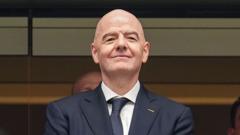
The lazy consensus claims that UEFA is sharpening its knives, ready to lead a righteous crusade to oust FIFA president Gianni Infantino now that the immediate threat of a European Super League boycott has faded. The media wants you to believe this is a classic turf war, an institutional clash of egos between Nyon and Zurich, where European heavyweights will finally unite to dethrone the man who expanded the Club World Cup and disrupted traditional international windows. Don't miss our earlier post on this related article.
It is a comforting illusion for journalists who need a daily villain. It is also an absolute fantasy.
UEFA does not want to remove Infantino. They want him exactly where he is. In fact, European football governance needs Infantino to absorb every ounce of public outrage so that continental administrators can quietly execute their own commercial ambitions without the pitchforks pointing at them. If you want more about the history of this, The Athletic provides an informative breakdown.
I have spent years sitting in executive briefing rooms across Zurich, London, and Nyon, watching administrators draft press releases that say one thing while their balance sheets whisper another. I have seen billion-dollar broadcast rights negotiated over lukewarm coffee while executives smile for the cameras and curse each other behind closed doors. The idea that UEFA executive committee members lose sleep over Infantino's populist governance style is a marketing pitch sold to naive fans who still think international sports politics is governed by romantic ideals.
Let us dismantle the fiction.
The Scapegoat Economics of Global Football
To understand why UEFA needs Infantino, you have to look at how modern sports administration actually functions. It is an industry built on risk mitigation and collateral damage control.
When FIFA pushes through a bloated 48-team World Cup or a heavily commercialized Club World Cup, the collective media rage focuses squarely on one man. Infantino becomes the human shield. Every complaint about player fatigue, calendar congestion, and the commercialization of the sacred grassroots game gets absorbed by the FIFA president's office.
Meanwhile, what is UEFA doing? They are quietly expanding their own Champions League to a sprawling Swiss-model format that guarantees more matches, more broadcast inventory, and massive financial windfalls for elite clubs. They are launching third-tier continental competitions and locking in lucrative multi-year commercial partnerships.
By letting Infantino act as the vanguard of hyper-commercialization, UEFA gets to look like the reasonable, player-centric guardian of tradition by comparison. It is brilliant positioning. If UEFA tried to push through half the calendar disruptions that FIFA implements, domestic leagues and player unions would stage an existential revolt. But when Infantino does it, he takes the hit, absorbs the bad press, and leaves UEFA free to harvest the revenue spillovers from a globally saturated calendar.
Imagine a scenario where Infantino steps down tomorrow. Who replaces him? Someone competent, quiet, and reform-minded who actually streamlines the calendar and cuts back on meaningless fixtures?
UEFA would hate that.
A reformed, streamlined FIFA would immediately audit international broadcast rights, challenge regional monopolies, and demand a larger slice of the revenue pie that currently flows disproportionately into European coffers. Infantino's chaotic, deal-making, empire-building style keeps global governance fractured and decentralized enough for UEFA to maintain its supreme leverage over the European club game.
The Myth of the European Boycott
The entire premise of the recent "boycott" drama exposes the superficiality of modern sports journalism. The narrative assumes that European associations ever had a sustained appetite for a real civil war with world governing bodies.
They do not.
Football politics is a game of transactional loyalty. When major European federations rattle their sabers about governance reform or independent calendars, they are not staging an ideological revolution; they are negotiating leverage for television rights shares, tournament hosting slots, and committee appointments.
The moment FIFA adjusts a revenue distribution formula or offers a subtle concession behind closed doors, the resistance evaporates. We saw it with the Super League fallout, and we see it now with international match calendars. The big clubs want guaranteed revenue, and the national associations want World Cup qualification slots. Infantino delivers both in abundance, provided everyone agrees to play ball in public.
To claim that UEFA is now pivoting to oust him because a temporary standoff ended is to misunderstand the DNA of sports bureaucracy. Administrations do not launch coups against leaders who keep the money flowing. They manage them.
The Unspoken Reality of Calendar Congestion
Let us address the elephant in the room: player burnout.
Every pundit loves to point out that Infantino’s expanded tournaments are destroying players' bodies. They are entirely correct on the physiology, but entirely dishonest about the culprits.
The modern elite footballer is trapped in a multi-billion-dollar extraction machine engineered jointly by FIFA, UEFA, domestic leagues, and club owners who demand high-yield pre-season tours in Asia and North America. When a manager complains about playing sixty games a season, look at who scheduled those games. UEFA's expanded Champions League adds crucial midweek fixtures to an already suffocating domestic schedule.
Fixing calendar congestion does not require removing Infantino. It requires systemic contraction—something neither UEFA nor FIFA has any intention of pursuing because fewer games mean lower valuations for media rights holders.
If UEFA genuinely wanted to protect players, they would cap the maximum number of competitive matches a professional can play per year under threat of point deductions. They will never do that. Instead, they write sternly worded letters about FIFA's tournaments while cashing the checks generated by their own expanded formats.
Stop Falling for the Soap Opera
The sports media loves to frame every institutional disagreement as a Shakespearean drama of good versus evil, reformers versus autocrats.
It is a distraction.
Gianni Infantino is not an accidental emperor holding European football hostage. He is the symptom and the beneficiary of a system that every major stakeholder—including UEFA—helped build and profits from daily.
If you want to understand where football is heading, stop reading the headlines about institutional feuds and start following the cash flows. As long as the broadcast revenues climb and the sponsorship deals clear, the people running European football will sleep soundly with Infantino at the helm, thanking him quietly for taking the bullets they deserve.