Cold. Damp. Perfectly still.
Down inside an old iron mine carved into the hills of North Carolina two hundred years ago, the air does not care what season it is outside. While summer humidity thickens over the Blue Ridge and autumn winds strip the oaks and hickories bare, the rock holds steady. For a creature weighing less than a nickel, that steady chill is the difference between waking up in spring and burning through every last drop of fat before the frost clears.
That is why 320 acres around a two-hundred-year-old North Carolina iron mine were recently bought to protect five bat species. On paper, it reads like a line item in a real estate ledger or a brief dispatch on conservation land deals. Three hundred and twenty acres. Five bat species. An abandoned mine that once fed furnaces long gone cold.
Yet land transactions rarely tell you who is breathing in the dark, or who has almost stopped.
To understand why those wooded slopes matter so much, you have to step away from the map and think about what happens when a quiet, hidden part of a mountain ecosystem starts to unravel. Sometimes the most urgent stories in nature are the ones we never see because they unfold after dusk, tucked inside rock crevices or under peeling bark, while the rest of us are turning out the porch light and heading to bed.
Where Iron Once Burned and Wings Now Rest
Two centuries ago, miners in North Carolina were chasing heavy ore, not wildlife sanctuaries. Pickaxes rang against stubborn stone. Mules hauled timber and iron across rutted mountain tracks. The work was grueling, loud, and entirely human—driven by forge fires, railroads, and the industrial hunger of a growing nation.
Nobody digging a shaft in the early nineteenth century was thinking about little brown bats. They were thinking about tonnage, purity, wages, and weather.
History has a funny habit of repurposing our leftovers. The exact tunnels and shafts that once yielded raw iron eventually cooled, flooded in places, settled into damp crevices, and became winter refuges—hibernacula, in the language of biologists—for animals that depend on stable microclimates. What started as industrial extraction slowly turned into accidental shelter.
At first glance, that sounds almost poetic. Humans dug a hole; nature moved in.
Here is where the story gets complicated, and honestly a little uncomfortable. An abandoned mine is not a sealed vault. Above ground, the forest around it matters just as much as the rock beneath it. Bats do not live their entire lives hanging upside down in the dark. In warmer months, they fly out into the surrounding woods, creeks, and hollows to hunt insects by night and roost under bark or in snags by day. If someone clears the surrounding forest, fences off access improperly, disturbs hibernating clusters in mid-winter, or lets the shafts collapse in ways that block airflow and temperature stability, the sanctuary stops working.
Buying 320 acres around the mine is an attempt to wrap a protective buffer around both the underground refuge and the surface habitat that keeps those five bat species alive across the seasons.
Five Species Hanging by a Thread
Five bat species sounds like a small number until you picture what each one actually is. We tend to lump bats together in our heads as one blurry shadow darting near a streetlight at dusk. In reality, different species have wildly different habits, flight styles, and vulnerabilities. Some hug dense forest clutter and glean insects off leaves; others sweep higher over open corridors or forage near water and woodland edges.
When you lose even one species from a mountain food web, you do not just lose a name on a checklist. You lose a specialized night-shift pest controller. A single small bat can eat a staggering number of mosquitoes, beetles, moths, and agricultural pests in a single night. Multiply that by hundreds or thousands of individuals across a season, and you start to see what those wings are actually doing for the surrounding countryside.
I have stood in Appalachian woods at twilight when the air felt thick with midges and June bugs, watching tiny dark shapes stitch back and forth against a fading sky with an agility that makes a fighter jet look clumsy. There is something humbling about watching an animal navigate total darkness with sound—sending out ultrasonic clicks and reading the echoes like a living sonar system—while we fumble for our phone flashlights just to find the porch steps.
Still, I will admit something that surprises people when I say it out loud: even people who care deeply about wildlife sometimes hesitate when the word "bat" comes up.
Maybe you grew up hearing old warnings about rabies, or maybe you just find the idea of leathery wings in the attic unsettling. That hesitation is human. Fear of the unfamiliar is old wiring, and it does not vanish overnight just because a conservation group posts a press release. When a headline says "320 acres bought to protect bats," part of a reader's brain might whisper, Why spend money and effort on bats when there are so many other problems?
Fair question. Let's sit with it honestly.
The Invisible Crisis Behind the Headlines
If you ask wildlife biologists why protecting roosts and surrounding acreage has become so urgent across eastern North America, one name keeps coming up: white-nose syndrome.
It sounds almost harmless at first—like a winter cold or a bit of frost on a snout. It is not. Caused by a cold-loving fungus (Pseudog destructans) that thrives in cool, humid caves and mines, white-nose syndrome irritates hibernating bats and disrupts their torpor. Instead of staying in that deep, energy-saving state until spring, infected bats wake up too often during winter.
Think of it like waking up every few hours during a blizzard when your heater is broken and your firewood is limited. Every time a hibernating bat wakes up, its heart rate spikes, its body temperature climbs, and it burns through precious fat reserves it cannot replace while snow covers the woods and insects are nowhere to be found. Many emerge too early in late winter, flying out into freezing air in search of food that is not there, only to starve or freeze.
Let's use a hypothetical scenario to make the math concrete. Suppose a small bat enters winter with enough stored body fat to last through five months of deep hibernation—a tight budget, like a family stretching a fixed savings account through a long layoff. If everything goes normally, the money lasts until payday in spring. Now suppose an unexpected emergency forces that family to burn cash every week in January and February. By March, the account hits zero before spring arrives.
That is the brutal arithmetic facing vulnerable bat populations. It is not always a dramatic catastrophe you can film in ten seconds. Often, it is a quiet draining of reserves in the dark.
Add habitat fragmentation to the mix—roads cutting through forest, timber harvesting that removes older roost trees, or development creeping up to the edge of critical sites—and the margin for error shrinks even further. Protecting 320 acres around a historic iron mine does not magically cure a fungal disease overnight. Anyone who claims a land purchase is a silver bullet is selling you fairy dust.
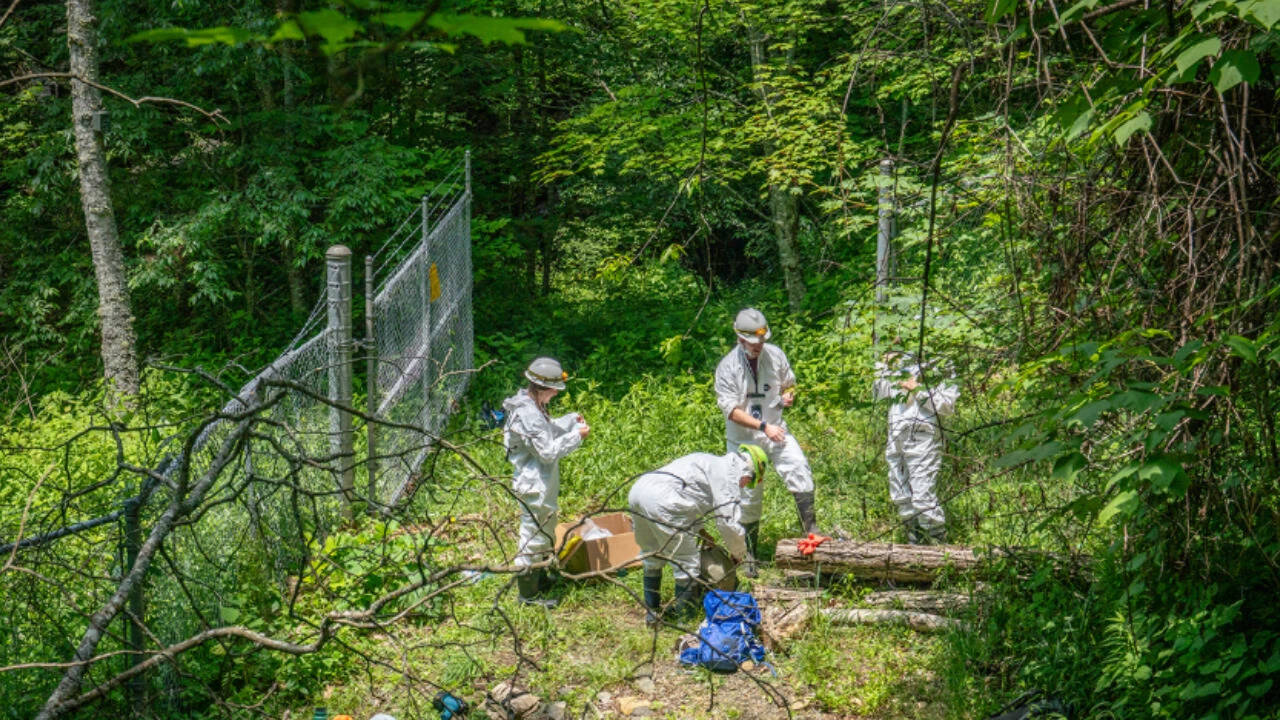
What land protection does do is remove one huge set of threats. It keeps the surrounding forest intact, limits reckless disturbance, and gives wildlife managers a stable base to monitor populations, install proper bat-friendly gates if needed, and keep the microclimate of the mine from being compromised by surface changes.
Why a Two-Hundred-Year-Old Mine Still Matters Today
There is a temptation to look at an old mine and think of it as a museum piece—a relic from a time when people lived closer to raw materials and harder labor. Yet the two-hundred-year-old iron mine in North Carolina is not stuck in the past. It is doing active ecological work right now.
Consider what happens next when a conservation purchase closes. Ownership shifts from private or uncertain hands to long-term stewardship. Forest trails can be managed carefully instead of torn up by careless off-road traffic. Sensitive roosting areas can be buffered from logging or sudden clearing. Researchers can study how these five bat species use the landscape without wondering whether next year the woods will be bulldozed.
In conservation, permanence is rare, and patience is mandatory. Trees take decades to grow tall and shed the kind of thick, curling bark that summer-roosting bats love. Rock formations do not heal quickly if blasted or collapsed. Buying 320 acres is less like flipping a switch and more like laying down a heavy, steady foundation so something fragile has room to stand.
Sometimes I wonder what the miners who first broke rock there two centuries ago would make of this turn of events. They came looking for iron to build things that last—rails, tools, hardware, structure. Two hundred years later, their old workings are helping hold together something much softer and more easily broken: the nightly rhythm of five bat species stitching life through a North Carolina mountain valley.
Iron rusts. Furnaces cool. Empires of industry rise and fade into local history.
Darkness, though, still has its keepers—and in the quiet hills above an old mine, five kinds of wings are getting a fighting chance to own the night again.