Three o'clock in the afternoon is the most dangerous hour in a neighborhood with nothing to do.
The school bell rings. The doors swing open. Suddenly, thousands of teenagers spill onto the pavement into a vacuum that stretches until dinner, or until the streetlights flicker on, or until someone makes a choice that cannot be unmade. For an alternative perspective, read: this related article.
I remember that hour. I remember the specific, metallic taste of boredom on a Tuesday in October, standing on a cracked sidewalk with three dollars in my pocket and nowhere to be. When you grow up in a working-class neighborhood where every adult is working two shifts just to keep the heat on, three o'clock isn't free time. It is an audition. You either find a structured room with a mentor, a basketball hoop, or a computer lab, or the street recruits you.
Most celebrity philanthropy looks like a gala. It smells like expensive perfume, photographs well under flashbulbs, and vanishes the morning after the press release hits the wire. Further reporting on this trend has been provided by The New York Times.
Then there is what has been quietly happening in Boston for the last quarter-century.
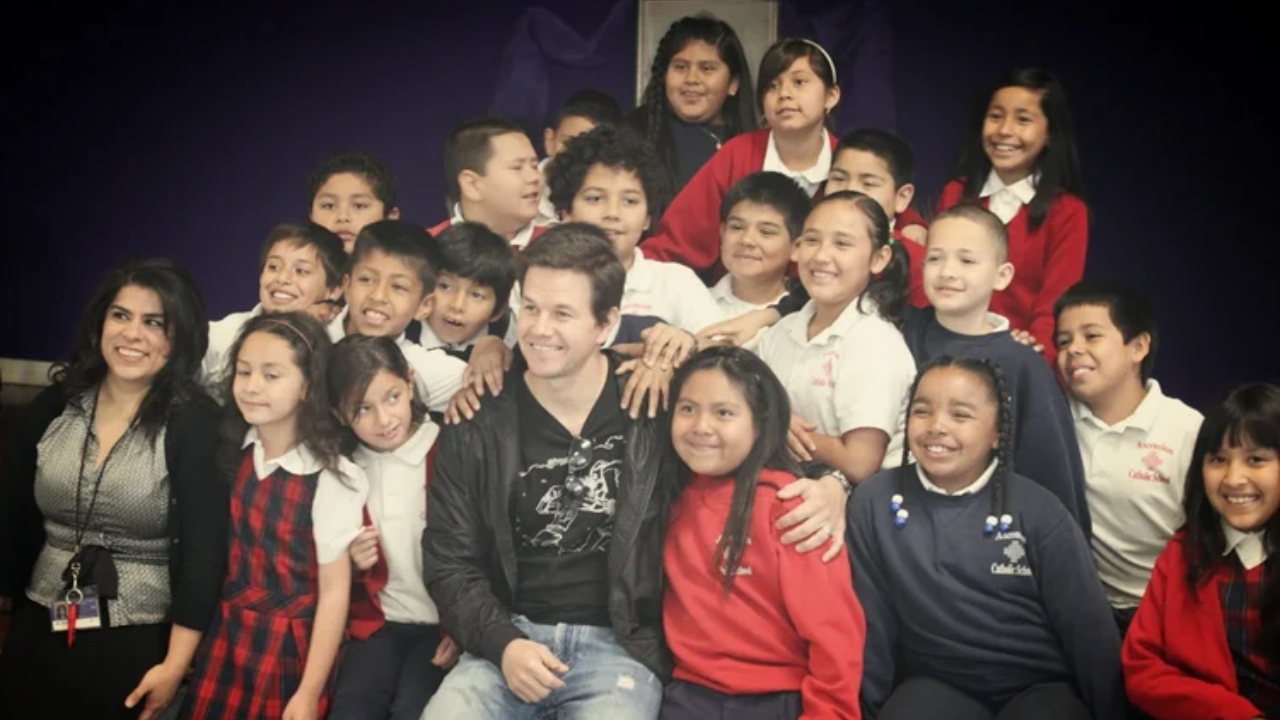
This year, the Mark Wahlberg Youth Foundation hits its twenty-five-year mark. Over two and a half decades, the organization has distributed nearly twenty million dollars to programs serving disadvantaged kids. On paper, that reads like a standard philanthropic milestone—a tidy number for an annual report, a reason to host a golf tournament and print a commemorative program.
Look closer at the concrete, though, and twenty million dollars stops being a statistic. It becomes the exact price of keeping the lights on at 3:01 PM.
The Architecture of a Second Chance
To understand why this matters, you have to strip away the Hollywood gloss and look at Dorchester, Massachusetts, in the late 1980s. Before the Oscar nominations, before the film production companies and the fitness empires, Mark Wahlberg was a kid navigating the exact vacuum I just described. His teenage years were marked by street fights, substance abuse, and a well-documented stint in a correctional facility at sixteen.
He did not read about the school-to-prison pipeline in a sociology textbook. He stood inside it.
When he and his brother Jim launched the foundation in 2001, they didn't build a vanity project designed to slap their last name on a shiny new hospital wing. They built a distribution engine. Think of traditional charity like trying to water a parched neighborhood with a single, massive firehose; half the water splashes off the concrete and evaporates before it reaches the roots. The Wahlberg model works more like an underground irrigation network. Instead of trying to reinvent social work from scratch, the foundation identifies the grassroots youth centers, Boys & Girls Clubs, and local athletic leagues that already know the kids' names—and quietly funds their survival.
Consider a hypothetical teenager we will call Marcus.
Marcus is fourteen, living in a triple-decker apartment in South Boston. His mother works nights at a hospital. He is smart, restless, and terrible at sitting still. Without intervention, Marcus spends his afternoons drifting toward older kids who have found quick, illegal ways to make money. Now, introduce a local community center that just received a fifty-thousand-dollar grant to keep its doors open until eight at night, hire two full-time youth workers, and buy twenty refurbished laptops for a coding and music production workshop.
Marcus walks in for the free pizza. He stays for the recording equipment. Three years later, he is applying to community college instead of standing in front of a judge.
That scenario is fictional, a composite drawn from thousands of real case files, yet it illustrates the invisible math behind that twenty-million-dollar figure. You cannot easily photograph a crime that never happened. You cannot put a ribbon around a teenager who simply went home safe at night.
Why Twenty-Five Years Changes the Math
Anyone with a publicist and a sudden windfall can write a check once. One-off donations are easy; they require money, not stamina.
Sustaining a foundation for twenty-five years requires something entirely different: institutional memory. Over a quarter of a century, economic recessions gut municipal budgets. City councils slash funding for after-school arts, summer jobs, and neighborhood rec centers because those line items are always the easiest to cut when tax revenues dip. When the city pulls back, the vacuum at three o'clock widens.
During the 2008 financial crisis, and again during the brutal lockdowns of 2020 when isolation tore through low-income households, local youth organizations across Massachusetts and beyond faced mass closures. Having a twenty-five-year-old funding partner meant many of those doors stayed unlocked.
I used to think celebrity foundations were mostly tax shelters with good public relations teams. Honestly, the skepticism is earned; plenty of high-profile nonprofits spend seventy cents of every dollar on overhead, galas, and executive salaries, leaving crumbs for the people on the brochure. When I first looked into the Wahlberg foundation's longevity, I expected to find the usual smoke and mirrors.
Instead, the mechanics are surprisingly blue-collar.
The foundation raises money through relentless, unglamorous grinding—annual golf tournaments, celebrity appearances, corporate partnerships, and direct donor appeals—and pushes those funds directly into community partners. They focus heavily on three distinct pressure points:
- Safe physical spaces: Funding facility upgrades, extended hours, and transportation so kids can actually get to the gym or the tutoring center without crossing dangerous territory.
- Mental health and addiction prevention: Bringing substance abuse education and counseling directly into schools and community hubs before experimentation turns into dependency.
- Career and academic bridges: Paying for summer youth employment programs, college prep workshops, and vocational training that show teenagers a legal path to real money.
Jim Wahlberg, who serves as the foundation's executive director and carries his own history of addiction and incarceration, runs the day-to-day operations with the urgency of a man who knows precisely what happens when a kid falls through the cracks. That lived proximity changes everything. When the people signing the grant checks have actually sat in a prison cell, they don't waste money on theoretical white papers. They fund bus passes, gym shoes, counselors, and hot meals.
The Invisible Stakes of the After-School Hour
We tend to talk about youth poverty and juvenile crime as if they are massive, immovable weather systems. We throw around heavy words and shrug when the statistics refuse to budge.
Yet behavioral economists and criminologists have known for decades that the needle moves on small, hyper-local hinges. Studies on summer youth employment programs—one of the primary beneficiaries of the foundation's grants—consistently show a dramatic drop in violent crime arrests among participants, not just during the summer, but for over a year afterward. Give a teenager a paycheck, a supervisor who expects them to show up on time, and a reason to wake up at seven in the morning, and their entire trajectory bends.
It sounds almost embarrassingly simple. It is also brutally expensive to maintain year after year.
Twenty million dollars, spread across twenty-five years, averages out to roughly eight hundred thousand dollars a year. In the grand scheme of global philanthropy, where billionaires pledge hundreds of millions to fight malaria or build space telescopes, eight hundred thousand dollars a year sounds modest.
Zoom in, however, to the street level.
Eight hundred thousand dollars pays the annual salaries of a dozen dedicated youth mentors in Boston. It buys thousands of hours of tutoring. It funds hundreds of summer internships. It keeps the air conditioning running in a neighborhood gym during a July heatwave when tempers flare and pavement radiates misery.
I think back to that cracked sidewalk in October, to the heavy, suffocating feeling of having nowhere to go and nobody expecting anything of you. If someone had handed me a key to a music studio or put me on a payroll cleaning parks for ten dollars an hour, my twenties would have looked vastly different. I had to learn the hard way how to climb out of a hole I didn't even realize I was digging at fifteen.
Beyond the Press Release
There is a danger, when celebrating a twenty-five-year milestone, of treating the work as finished. It isn't. The pressures facing teenagers today are arguably sharper, faster, and more isolating than anything we faced in the nineties. Social media has turned neighborhood beefs into viral broadcasts; the fentanyl crisis has turned a single bad decision into a fatal overdose. The vacuum at three o'clock now fits inside a smartphone screen.
A foundation cannot fix a broken economy or mend fractured families overnight. Money alone does not raise a child.
What money can do, when deployed with precision and stubborn consistency, is buy time. It buys a teenager an extra four hours off the street every afternoon. It buys a tired mother the peace of mind of knowing her son is doing homework under fluorescent lights instead of standing on a corner. It buys a community center one more year to prove that the kids in its zip code are worth the investment.
Twenty-five years ago, a former street kid who got lucky in Hollywood decided to send a ladder back down over the wall. Nearly twenty million dollars later, the ladder is still there, battered by weather, scuffed by thousands of sneakers, holding weight.
Somewhere in Boston right now, the afternoon bell is about to ring, and a door is unlocked because someone paid the electric bill.