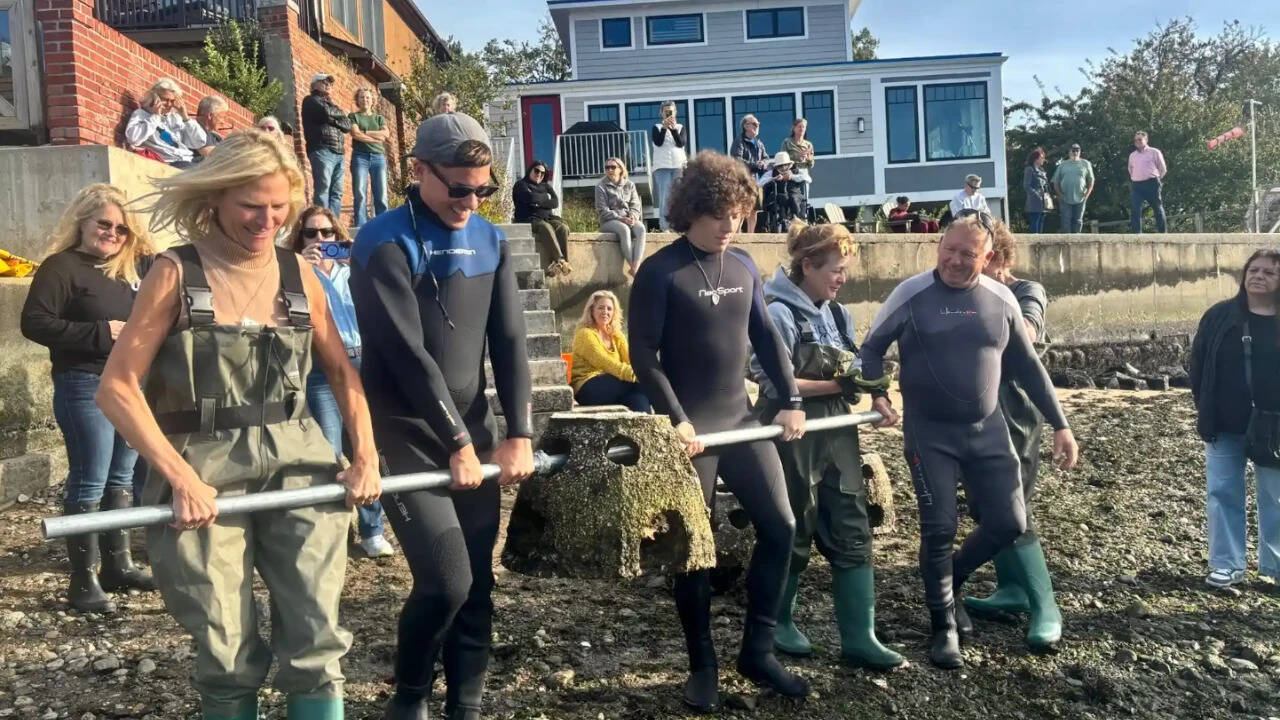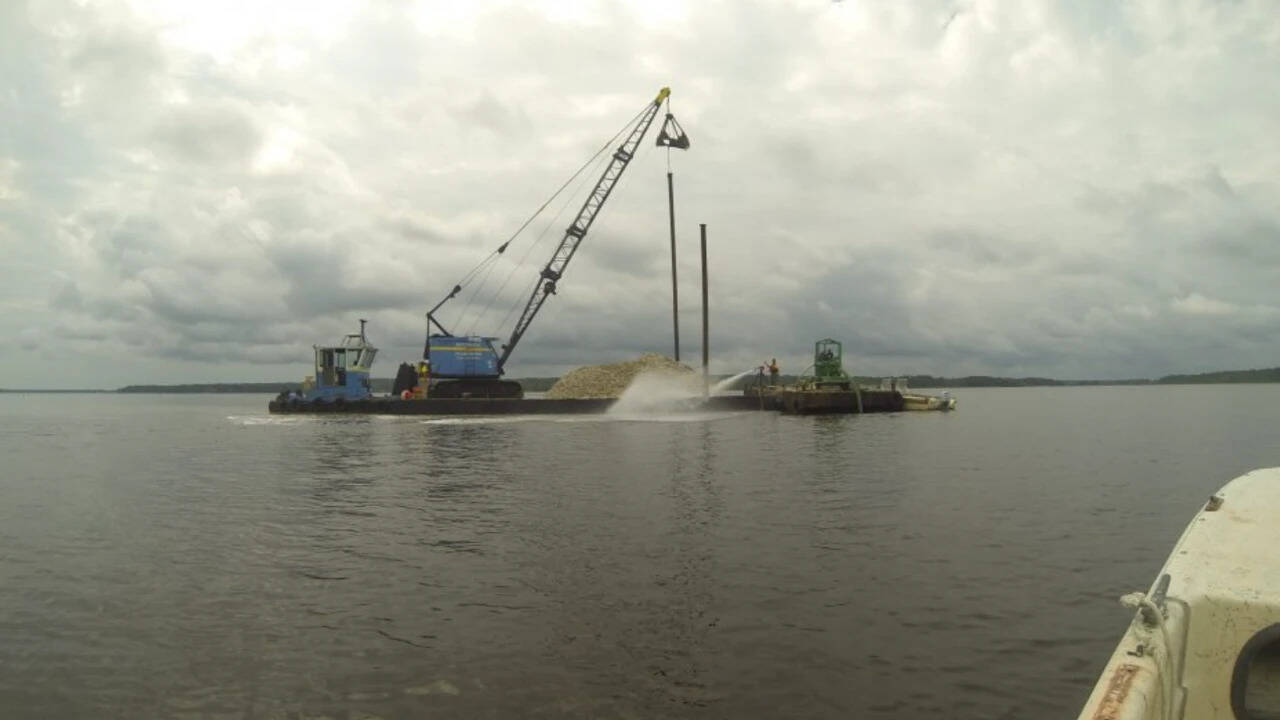
Cold.
If you have never stood thigh-deep in the tidal mud of New Hampshire’s Great Bay during the first week of November, you cannot truly understand the specific, bone-aching brand of cold that lives in those waters—a damp chill that slips past rubber waders, numbs the knuckles inside neoprene gloves, and turns the salt spray on your cheeks into a thin crust of frost before the sun even clears the pines on the Newmarket shore.
For generations, that November chill signaled the start of the harvest. It meant the summer boaters had gone home, the water temperatures had dropped enough to make the shellfish crisp and sweet, and the mudflats belonged once again to the locals with their rakes, buckets, and tide charts taped to the dashboards of rusted pickup trucks.
Not this year. Not for five years.
On November 1, the New Hampshire Fish and Game Department quietly drew an invisible line across twenty acres of Great Bay, closing the water to all shellfish harvesting until the autumn of 2031. To a casual reader scanning a morning news brief, twenty acres sounds like a rounding error. Great Bay spans roughly six thousand acres of tidal estuary where seven rivers converge before spilling into the Piscataqua and out to the Atlantic. Twenty acres is the size of a modest suburban shopping plaza, a speck on a nautical chart, a fraction of a percent of the water.
But out on the mudflats, twenty acres is an entire neighborhood. And closing it for half a decade is not a bureaucratic footnote—it is a quiet alarm bell ringing across the water.
The Man with the Wooden Rake
To see what those twenty acres actually mean, consider a hypothetical character—let’s call him Arthur. Arthur is sixty-two, lives two miles inland in Durham, and has worked the Great Bay flats every autumn since Jimmy Carter was in the White House. He is not a commercial titan; New Hampshire’s recreational and commercial shellfish rules keep the scale intimate, personal, tied to the rhythm of the tides rather than industrial fleets.
Every November, Arthur watches the calendar with the quiet anticipation of a deer hunter waiting for opening morning. For him, digging soft-shell clams or gathering oysters isn’t about turning a massive profit. It is about putting twenty quarts of meat in the deep freezer for winter chowders. It is about trading a bucket of fresh steamers to his neighbor in exchange for a cord of split birch. Most of all, it is about the profound, meditative solitude of reading the mud—spotting the tiny, telltale keyhole dimples in the silt that betray a clam buried eight inches down.
When Arthur drove down to his usual access point this November, the water looked identical to the year before. The tide was receding on schedule. The gulls were screaming over the channels. Yet the yellow boundary markers and the state notice told him to keep his rake in the bed of his truck.
"I don't get it," Arthur might say, squinting out at the gray chop. "The water looks cleaner than it did in the nineties. Why lock us out until I'm nearly seventy?"
That confusion—that gap between what the human eye sees on the surface and what is happening beneath the silt—is the exact heart of why New Hampshire closed those twenty acres.
What Happens When an Estuary Loses Its Lungs
If you want to understand why state biologists had to put twenty acres off-limits, you have to stop thinking of oysters and clams as seafood and start thinking of them as the kidneys and lungs of the bay.
Think of a twenty-gallon home aquarium. If you unplug the filter, the water doesn't turn toxic in ten minutes. For the first few days, everything looks fine. The fish still swim; the light still shines through the glass. But waste accumulates silently. Nitrogen builds up. Microscopic algae begin to bloom, clouding the water and starving the bottom of oxygen. By the time the water actually looks green and smells foul, the system is already in crisis.
Great Bay is a six-thousand-acre aquarium, and its filter has been running at a fraction of its historical capacity for decades.
A single adult Eastern oyster can filter up to fifty gallons of water a day. It pumps the brackish tide through its gills, trapping sediment, excess nitrogen, and microscopic algae, binding the waste into harmless packets that settle to the bottom, and spitting out water noticeably clearer than what went in. Multiply that by millions of oysters packed into dense, three-dimensional reefs, and you get an underwater filtration plant that runs twenty-four hours a day without a dime of taxpayer electricity.
In the 1980s, Great Bay boasted over a thousand acres of thriving oyster reefs. Then came MSX and Dermo—two devastating parasitic diseases that swept up the East Coast, wiping out nearly ninety percent of the bay’s native oyster population in a geological blink. Once the reefs collapsed, the bay lost its ability to clean itself. Runoff from paved driveways, septic systems, and manicured lawns poured into the seven tributary rivers, feeding thick mats of nuisance seaweed that smothered the eelgrass beds—the vital underwater meadows where juvenile fish, crabs, and scallops hide from predators.
For years, conservationists, researchers at the University of New Hampshire, and state biologists have been fighting a slow, grueling trench war to rebuild what was lost. You cannot simply dump baby oysters into bare mud and hope for the best; they will sink and suffocate. You have to build a foundation first—trucking in tons of reclaimed clam and oyster shells from local restaurants, curing them in the sun, and barging them out to specific restoration plots to create artificial reefs where young larvae can attach and grow.
Those twenty closed acres are not being punished for pollution. They are being protected for resurrection.
The Invisible Math of Five Years
Why five years? Why not one season, or two?
Biologists work on biological clocks, not political or human ones. When juvenile oysters—called spat—settle onto a newly built shell reef in Great Bay, they are smaller than a fingernail. In the cold northern waters of New Hampshire, where the growing season shuts down every winter as water temperatures plummet near freezing, an oyster grows slowly. It takes roughly three years for a spat to reach the legal harvest size of three inches.
If you open a restoration site after two or three years, harvesters step onto the fledgling reef just as the first generation reaches maturity. Heavy boots crush the fragile shell matrix. Rakes overturn the bottom, burying young spat in anoxic mud where they suffocate. Worse, harvesting the largest oysters removes the primary breeding stock right before they can spawn and seed the surrounding flats.
Five years gives the reef time to complete two full reproductive cycles. It allows the oysters to cement themselves together into a complex, jagged architecture—crags and crevices that shelter mud crabs, grass shrimp, and baby winter flounder. It transforms a flat patch of vulnerable mud into a self-sustaining reef strong enough to withstand winter ice scour and spring runoff.
It is an investment with a locked vault. You put the principal in on November 1, and you are forbidden to touch the interest until 2031.
The Friction Between Science and Tradition
Still, knowing the science does not make the closure sting any less for the people who live along the shoreline.
I remember the first time I walked out onto the Great Bay flats at dead low tide with a bucket and a clam hoe. Until you actually step off the solid bank and feel the mud grab your boots with a loud, wet suck, you assume the bay is uniform—just water over dirt. It isn't. Every cove has its own personality. One flat has firm, sandy mud where soft-shells sit shallow and clean; fifty yards away, the silt is waist-deep and smells sharply of sulfur, the kind of mud that will pull a boot right off your foot if you lean back too quickly.
When the state closes twenty acres, it isn't closing random coordinates. Restoration sites are chosen precisely because they have the right tidal flow, the right salinity, and the right bottom firmness to support shellfish. In other words, the best places to rebuild a reef are often the exact places where locals have been digging for generations.
That creates an unavoidable, quiet friction. Recreational harvesters pay for their state licenses. They follow the daily limits—usually a peck or a half-bushel depending on the species and area. They check the state’s red tide hotline before every trip to ensure harmful algal blooms haven't made the meat toxic. To many of them, being barred from a productive stretch of bay feels like being punished for a decline they didn't cause. They point to upstream development, to aging municipal wastewater plants in Dover and Rochester, to the steady paving-over of the Seacoast region, and they ask a fair question: Why are the people with rakes taking the hit while the people pouring concrete keep building?
And honestly, there is no neat, comforting answer to that. The truth is messy. Restoration closures do ask the people who love the bay most to sacrifice their access first, while broader land-use battles drag on in town halls for decades. It is frustrating, it feels uneven, and it asks for a level of patience that modern life rarely demands of us.
The Ripple Beyond the Shoreline
Yet look closer at what happens if New Hampshire does not make this trade.
Without aggressive, protected restoration zones, Great Bay remains trapped in a slow-motion stall. The water stays murkier. Light fails to reach the deeper mudflats, causing the remaining eelgrass beds—which have already shrunk by more than half since the 1990s—to retreat further into the shallows. When the eelgrass disappears, the bay loses its nursery. Fewer juvenile striped bass find shelter during their summer migrations. Fewer horseshoe crabs find clean edges to spawn.
Even the shellfish outside the twenty-acre boundary suffer. Oysters are broadcast spawners; when water temperatures hit the right threshold in early summer, millions of oysters release eggs and sperm into the tide simultaneously. Currents carry those microscopic larvae miles across the estuary. A protected, densely packed twenty-acre reef acts like a biological engine, pumping billions of larvae out into the open, harvestable flats of the bay.
Closing twenty acres today is the only way to ensure there is anything left to dig in thirty acres tomorrow.
A Long Wait in the Cold
There is a strange humility required to care about an estuary. You cannot see the progress from the highway as you drive across the General Sullivan Bridge. There are no ribbons to cut, no shiny buildings to photograph, no instant gratification. Everything that matters happens beneath opaque, olive-gray water, in the dark, millimeter by millimeter, shell by shell.
If you walk down to the edge of Great Bay this winter, you will see nothing unusual in those twenty restricted acres. Ice will form along the marsh grass in January, fracture with the outgoing tide, and grind noisily against the shore. Bald eagles will perch in the bare oaks along Adams Point, watching the open channels for ducks.
Down below, out of sight, millions of tiny shells will be sitting in the cold mud, dormant through the freeze, waiting for the spring water to warm past fifty degrees so they can open their valves and start filtering again. Five years is a long time to wait for a bucket of clams. It is an eternity in a news cycle. Out in the mud of Great Bay, though, five years is just long enough for the water to remember how to heal itself.