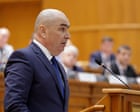
Turkiye's bid for European Union membership has become the longest-running engagement in modern diplomacy without a wedding. President Recep Tayyip Erdogan recently called on Europe to toss aside its "prejudices" and finally see Turkiye as a partner rather than an outsider. He isn't just asking for a seat at the table. He's demanding that Brussels acknowledges the reality of a changing world where Europe's security often starts at the Turkish border.
The problem is that both sides have been playing a game of chicken for decades. Erdogan argues that Europe is being held back by an "outdated" mindset. European leaders, meanwhile, point to concerns about human rights and the rule of law. It's a classic stalemate. You've got a continent that needs Turkiye for migration control and energy security, but isn't quite ready to share the keys to the house.
The baggage holding back the EU bid
Europe often hides behind technical requirements, but the real friction is deeper and much more personal. Erdogan's recent statements suggest that the "prejudices" he mentions aren't just about economic metrics or legal alignment. They're about identity. There’s a quiet but loud fear in certain European capitals about what it means to have a massive, Muslim-majority nation helping run the EU.
It’s not just about religion, though. It’s about power. If Turkiye joined today, its population would give it a massive number of seats in the European Parliament. It would instantly become one of the most powerful voices in the union, rivaling Germany and France. That’s a terrifying prospect for the current establishment. They like Turkiye as a "buffer zone" for refugees and a NATO ally. They just don't want them voting on European fishing quotas or internal tax laws.
Erdogan knows this. He’s calling it out because it plays well at home and highlights European hypocrisy. When Europe needed help with the Syrian refugee crisis, Turkiye was the "essential partner." When it comes to membership, Turkiye becomes "too different." It's a double standard that’s hard to ignore.
Why the prejudice argument actually carries weight
Erdogan isn't wrong about the shifting geopolitical tide. The world in 2026 looks nothing like the world of 2005 when formal negotiations started. Back then, Europe was the center of the world. Now, the West is scrambling to keep up with rising powers in the East. Turkiye has positioned itself as the ultimate middleman.
Look at the grain deals. Look at the mediation in regional conflicts. Turkiye has built a foreign policy that doesn't just wait for Europe's approval. Erdogan’s point is simple: Europe needs Turkiye more than Turkiye needs Europe. By holding onto "prejudices," the EU is basically cutting off its nose to spite its face. They’re missing out on a massive, young workforce and a gateway to Middle Eastern and Central Asian markets.
The Cyprus thorn that won't go away
You can’t talk about this without mentioning Cyprus. It’s the elephant in the room that has stayed there so long it’s practically part of the furniture. The EU admitted Cyprus in 2004, which basically gave the Greek Cypriots a permanent veto over Turkiye’s entry. It was a strategic blunder of massive proportions.
Now, any progress on the membership front requires Turkiye to make concessions on Cyprus that Erdogan—or any Turkish leader—would find politically suicidal. It's a dead end. Europe uses it as a shield. Turkiye uses it as a reason to stay defiant. Nobody wins, but the status quo remains comfortable for everyone who wants to avoid the hard work of actual integration.
Trade and the Customs Union reality check
While everyone focuses on the "full membership" carrot, the real action is in the Customs Union. This is the practical side of the relationship. Turkiye wants to modernize this agreement to include services and agriculture. Europe keeps dragging its feet, using the modernization as a bargaining chip for political reforms.
It’s a frustrating cycle for businesses. If you’re a manufacturer in Izmir or a tech startup in Istanbul, the lack of progress means more red tape and less growth. The irony is that European companies are some of the biggest investors in Turkiye. They want a smoother relationship. The politics just keeps getting in the way of the profit.
The migration leverage
Let’s be blunt. The most significant "collaboration" between these two is the 2016 migration deal. Turkiye houses millions of refugees. In exchange, Europe promised money and visa-free travel for Turks. The money arrived, mostly. The visa-free travel? Not even close.
Erdogan uses this as a recurring talking point because it’s a clear example of Europe breaking a promise. For the average Turkish citizen, the inability to get a Schengen visa is a daily reminder of being treated like a second-class neighbor. It breeds resentment. It makes the "abandon prejudices" speech resonate with people who aren't even big fans of the government.
What actually changes from here
If you're waiting for a "yes" from Brussels, don't hold your breath. It isn't happening this year, and probably not this decade. But that doesn't mean the relationship is dead. It's just evolving into something transactional. We're moving away from the "European dream" and toward a "strategic partnership" where both sides just trade what they have.
Turkiye offers security, a massive military, and energy transit routes. Europe offers capital, high-end technology, and a massive export market. They’re like an old married couple that can't stand each other but knows the divorce would be too expensive.
To move forward, the EU has to stop treating Turkiye like a student that keeps failing a test. They need to treat it like a regional power. On the flip side, Turkiye needs to realize that "prejudice" isn't the only thing standing in the way—concrete institutional reforms actually matter to the bureaucrats in Brussels.
Keep an eye on the upcoming NATO summits and bilateral trade talks between Turkiye and Germany. Those are the real venues where the future is being built. Forget the grand speeches in Brussels. The future of this relationship is being written in gas pipeline contracts and defense cooperation agreements. If you want to see where things are headed, watch the money and the military drills, not the membership applications.