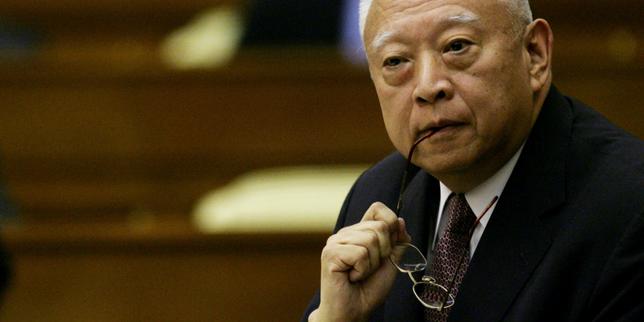
Tung Chee-hwa, the shipping tycoon turned politician who served as Hong Kong’s first chief executive following the 1997 handover from British to Chinese rule, has died at the age of 89. His death closes a volatile chapter in modern Asian history, marking the passing of a figure whose tenure tested the boundaries of the "one country, two systems" framework. Yet looking past the official obituaries reveals a more complicated reality. His governance laid the structural vulnerabilities that continue to define the city's political and economic trajectory today.
From the Bridge of a Ship to the Eye of a Storm
When Beijing and local elites selected Tung to lead the newly minted Special Administrative Region, he was a reluctant executive. Coming from a wealthy maritime family that commanded the Orient Overseas Container Line, Tung understood global trade balances, port logistics, and corporate survival. He did not, however, understand the abrasive art of political survival in a society accustomed to British common law liberties and a vocal press. Recently making waves lately: Inside the Federal Procurement Ban That Will Redraw the United States and Canada Border.
His administrative entry point on July 1, 1997, coincided with historical misfortune. Almost immediately, the Asian financial crisis ripped through the regional economy. Asset bubbles burst, property values plummeted by over fifty percent, and negative equity trapped thousands of middle-class families in crushing debt.
Tung attempted to intervene with sweeping social initiatives, most notably the ambitious target to build eighty-five thousand public flats a year to stabilize housing costs. This well-intentioned policy backfired spectacularly as the property market crashed. Middle-class citizens watched their life savings evaporate overnight, breeding deep-seated resentment toward an administration that appeared both overreaching and economically incompetent. Additional insights regarding the matter are detailed by NBC News.
The Crisis of 2003 and the Erosion of Public Trust
If the financial crisis exposed the economic fragility of post-colonial governance, the events of 2003 shattered its political illusion. That spring, the severe acute respiratory syndrome outbreak paralyzed the city, claiming nearly three hundred lives and isolating Hong Kong on the international stage. Public health failures compounded widespread anger over economic stagnation.
The breaking point arrived later that summer. Pushed by Beijing and mandated by Article 23 of the Basic Law, Tung’s administration attempted to enact sweeping national security legislation targeting treason, sedition, and subversion. To a population already anxious about mainland encroachment, the bill felt like an existential threat.
On July 1, 2003, half a million residents flooded the streets in peaceful protest. The sheer scale of the march caught the establishment entirely off guard. It demonstrated that civil society in Hong Kong retained its distinct voice and organizational capacity. The government was forced to shelve the legislation, but the damage to Tung's political capital was terminal.
The Resignation Narrative Examined
In March 2005, Tung announced his resignation with two years remaining in his second term. He pointed exclusively to failing health, standing before microphones to declare that he simply could no longer handle the physical demands of the office.
Political analysts at the time met the medical explanation with widespread skepticism. Behind closed doors, Beijing’s assessment of his leadership had soured. Mass mobilization had proven that the status quo was unmanageable under his watch. By stepping down under the guise of poor health, Tung allowed both Beijing and the local establishment to save face. He avoided a messy, public rebuke while clearing the path for his cautious financial secretary, Donald Tsang, to take the helm.
The Later Years and the Long Shadow
Rather than fading into quiet retirement, Tung pivoted to a new role as a senior statesman and political advisor. As vice chairman of the Chinese People's Political Consultative Conference, he utilized his international business networks to project soft power. He founded think tanks aimed at bridging understanding between China and the West, frequently emphasizing that the bilateral relationship between Beijing and Washington remained the single most vital geopolitical axis in the world.
During the tumultuous pro-democracy demonstrations of 2014 and the sweeping unrest of 2019, Tung remained a steadfast loyalist to the central government. When Beijing ultimately bypassed local legislative hurdles in 2020 to impose the very type of national security law that Tung had failed to pass in 2003, it marked the realization of his earlier policy ambitions through vastly more authoritarian means.
Public appearances grew rare after 2021 following a series of health scares and subsequent heart surgery. By the time of his passing, the political landscape of Hong Kong had transformed beyond recognition. Mass demonstrations had been outlawed or driven underground, and the vibrant, open opposition that defined his administration had been thoroughly dismantled.
The trajectory of Tung Chee-hwa mirrors the paradox of modern Hong Kong itself. He entered office intending to steer a smooth transition into a prosperous future, yet found himself trapped between the unyielding demands of a rising superpower and the fierce local identity of a populace determined to maintain its freedoms. History will remember him not merely as a transitional figure, but as the architect of an era whose unresolved contradictions shaped every crisis that followed