The morning air in Kyiv had that specific, brittle chill that suggests winter isn’t quite finished with the city. On the broad pavement of Khreshchatyk Street, the rhythm was familiar. It was the sound of clicking heels, the low hum of the metro breathing from underground, and the occasional hiss of a coffee machine.
Olena, a hypothetical but representative clerk at a nearby bank, had just reached for a cinnamon pastry. She never finished the transaction.
Violence doesn't arrive with a soundtrack or a warning. It arrives as a rupture in the mundane. The first shot didn't sound like a gun to those a block away; it sounded like a heavy crate falling or a car backfiring. But for those within fifty yards, the sound was visceral—a sharp, metallic crack that tore through the morning fog and redirected the trajectory of six lives toward an abrupt, permanent silence.
By the time the echo bounced off the Stalin-era stone facades, three people were already down.
The Geography of a Tragedy
The gunman moved with a terrifying, mechanical efficiency. He wasn't shouting slogans. He wasn't making demands. He was simply erasing people from the map of the living. Police reports would later confirm that the weapon was a modified semi-automatic rifle, but to the people diving behind concrete planters and newsstands, it was just a source of thunder.
Six people died in those first four minutes.
Think about the weight of that number. Six. It is small enough to fit around a dinner table, yet large enough to leave a permanent hole in the fabric of a neighborhood. Among them was a courier who had been worried about his bike's tire pressure, a student with a law textbook in her bag, and an elderly man who walked that same route every day for twenty years.
Their stories ended mid-sentence.
The chaos that follows a mass shooting is not like the movies. There is no slow motion. There is only the frantic, clumsy scramble for survival. One woman hid inside a trash bin. A businessman crawled under a parked Audi, his suit jacket catching on the undercarriage. In those moments, the high-concept geopolitical tensions of Eastern Europe or the nuances of local crime statistics vanished. There was only the sound of breathing—fast, shallow, and terrified.
The Thin Blue Line in Motion
The response was swift, though for those under fire, it must have felt like an eternity. Kyiv’s patrol police, who have spent the last few years operating under a state of heightened tension that most Western cities couldn't fathom, arrived within six minutes of the first emergency call.
They didn't have the luxury of a standoff.
The gunman had retreated into the alcove of a closed department store, using the architecture as a makeshift fortress. He continued to fire at anything that moved. The asphalt was littered with glass shards and discarded belongings—a lone shoe, a spilled grocery bag, a shattered smartphone still buzzing with a call from someone’s mother.
The officers moved in a diamond formation, a tactical necessity when the threat is active and the backdrop is a crowded urban center. They had to account for every round. A stray bullet in downtown Kyiv doesn't just hit a wall; it hits a window, a bus, or a bystander three blocks away.
The standoff lasted less than ten minutes. It ended when the gunman stepped out, perhaps intending to move to a new position or perhaps simply tired of the hunt. The police opened fire. He fell near a fountain that, in a few weeks, would have been turned on for the spring season.
He died on the pavement he had just stained.
The Invisible Stakes of a City
When the smoke clears, the "dry facts" begin to circulate. Six dead. One shooter neutralized. Five wounded. These are the metrics used by news tickers and government briefings. But they fail to capture the invisible stakes.
They don't mention the psychological shrapnel that hits the survivors.
Consider the "lucky" ones. The people who were standing three feet to the left. For them, the world has fundamentally shifted. The familiar street where they buy their morning paper is no longer a street; it is a crime scene. It is a place where the air smells of cordite and the ground is cold. The trauma of an event like this ripples outward, touching the first responders who had to check pulses and find none, and the families who will spend the evening looking at a phone that will never ring again.
The gunman remains a cipher for now. Initial investigations point to a history of instability and a cache of illegally obtained weaponry, a reminder that even in a city hardened by the looming shadows of larger conflicts, the most intimate threat often comes from within. It is a peculiar kind of horror—one that isn't about borders or grand ideologies, but about the terrifying vulnerability of a Tuesday morning.
The Silence After the Siren
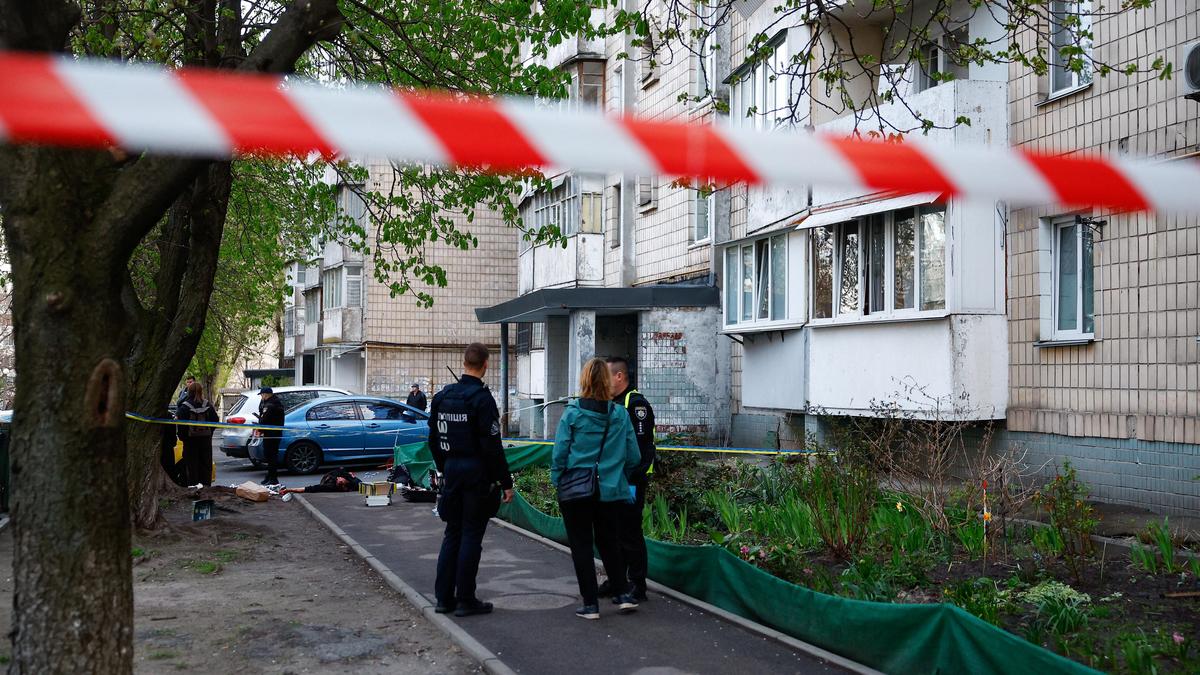
By noon, the yellow tape was up. Forensic teams in white suits moved like ghosts across the cobblestones, marking shell casings with little yellow cones. The city, usually so vibrant and loud, felt muted.
The media will eventually move on. The "mass shooting in Kyiv" will become a data point in a global ledger of violence. But for the people of this city, the event isn't a headline. It is a scar.
We often talk about resilience as if it's a passive trait, something a city just has. It isn't. Resilience is the painful, conscious act of going back to the bank, the cafe, and the metro station the next day, knowing that the world is more fragile than we care to admit. It is the defiance of buying a cinnamon pastry on a Wednesday morning because the alternative is to let the silence win.
As the sun began to set behind the golden domes of the city’s cathedrals, a few people started leaving flowers near the police cordons. They didn't leave them for the "event" or the "statistic." They left them for the courier, the student, and the old man.
The blood had been washed away by the fire department hours ago, but the damp patch on the concrete remained, a dark mirror reflecting the grey sky. It served as a grim reminder that while the shooter is gone and the sirens have faded, the weight of those six lost lives is something the city will be carrying for a very long time.
A single red carnation lay on the edge of the curb, its petals vibrating slightly in the draft of a passing police car.