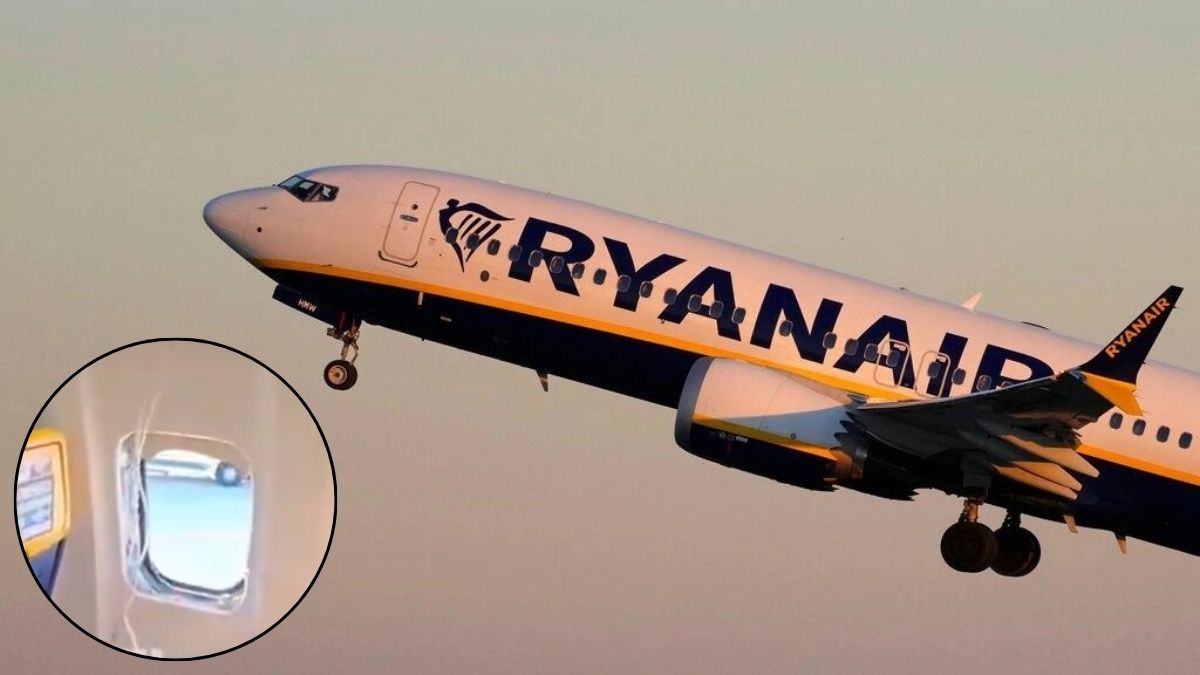
You are sitting at 35,000 feet, sipping a drink, when a sudden loud pop echoes through the cabin. The air turns freezing cold instantly. Fog fills the aisle, and loose papers fly toward a small opening in the fuselage. It sounds like the plot of a Hollywood disaster movie. Yet, headlines about a Ryanair flight scare involving a broken cabin window spread like wildfire, leaving thousands of travelers wondering if their next flight could turn into a fight for survival.
Let's clear the air right away. Airplane windows do not just shatter into pieces out of nowhere, and the design of modern commercial aircraft makes it nearly impossible for a passenger to get sucked out of a standard window pane. When you see viral stories about someone almost flying out of a jet at cruising altitude, there is usually a massive gap between internet panic and actual engineering reality.
Understanding how cabin pressure works changes everything. It turns out that those terrifying moments in the sky are governed by strict physics, multi-layered safety designs, and highly trained flight crews who know exactly how to handle rapid decompression.
The Shocking Reality of Cabin Depressurization
When an aircraft climbs to its cruising altitude, the air outside becomes too thin to sustain human life. To keep everyone comfortable and breathing normally, the plane pumps compressed air into the cabin. This creates a high-pressure bubble inside a low-pressure environment.
Think of a commercial airliner like an inflated balloon. If you poke a hole in a balloon, the air rushes out violently to equalize the pressure. That is exactly what happens during a decompression event. If a structural failure creates an opening in the fuselage, the high-pressure air inside the cabin escapes into the thin atmosphere outside with incredible force.
This force is called explosive or rapid decompression. Anything not tied down gets pulled toward the opening. In rare historical cases, the rush of air was strong enough to pull people toward the breach. However, the size of the opening dictates the violence of the airflow. A small crack in a window layer behaves completely differently than a catastrophic structural failure of a hull door.
How Airplane Windows Are Actually Built
A lot of people think an airplane window is just a single sheet of glass like the one in their living room. It isn't. Aircraft windows are highly engineered structures made of stretched acrylic, which is incredibly tough, flexible, and lightweight.
Every passenger window consists of three distinct layers.
- The Outer Pane: This is the thickest layer. It bears the full structural load of the cabin pressure during flight. It is designed to withstand extreme temperature shifts and high-speed impacts from birds or debris.
- The Middle Pane: This layer acts as a complete backup system. It features a tiny breather hole at the bottom. This hole regulates pressure between the inner cabin and the space between the panes, ensuring the outer pane handles the heavy lifting. If the outer pane fails, the middle pane can hold the entire pressure load of the aircraft on its own.
- The Inner Pane: This is the thin plastic scratch shield you can actually touch from your seat. It protects the structural panes from being damaged by passengers, bags, or accidental spills. It plays no role in holding back the pressure of the skies.
When a passenger reports a broken cabin window during a flight scare, they are almost always looking at a crack in the inner scratch shield or a cosmetic failure of the middle layer. The outer structural pane remains fully intact. The aircraft is never in danger of splitting open, and nobody is about to get pulled into the clouds.
What Saves Passengers When Things Go Wrong
In the incredibly rare event that an actual structural breach occurs, several immediate safety mechanisms prevent a disaster. Aviation safety relies on redundancy. Every critical system has a backup, and those backups have backups.
First, the automatic oxygen masks drop the split second cabin pressure falls below a safe threshold. At high altitudes, a lack of oxygen leads to hypoxia within seconds. The masks buy the passengers and crew time to breathe while the pilots handle the situation.
Second, the seatbelt sign isn't just for turbulence. Keeping your seatbelt securely fastened throughout the entire flight is your single best defense against unexpected cabin movements or sudden pressure drops. A buckled belt anchors your body to the heavy frame of the seat, making it physically impossible for air currents to pull you out of a window-sized opening.
Finally, the pilots are trained to react instantly. They don't panic. They immediately initiate an emergency descent, pushing the nose of the aircraft down to reach 10,000 feet as quickly as safely possible. At 10,000 feet, the outside air is thick enough for humans to breathe normally without oxygen masks, stabilizing the situation completely.
Famous Aviation Anomalies and What We Learned
To understand why modern planes are so safe, look at historical incidents where things truly did go wrong. The aviation industry learns from every single mistake, updating manufacturing standards to ensure old errors never happen again.
In 1988, Aloha Airlines Flight 243 suffered a massive explosive decompression when a huge section of the upper fuselage tore away mid-flight. The cause was widespread metal fatigue and corrosion that went unnoticed during maintenance. Despite a massive open-air cabin, the pilots landed the plane safely. This event transformed how airlines inspect older planes for structural wear.
Another extraordinary event happened in 1990 on British Airways Flight 5390. The cockpit windscreen blew out because a maintenance technician used the wrong size screws to install it. The captain was partially sucked out of the window, but crew members held onto his legs while the co-pilot made an emergency landing. He survived. Today, windshield installation processes require strict double-verification by independent inspectors.
Modern carriers like Ryanair operate fleets of exceptionally young aircraft. These planes undergo rigorous daily maintenance checks, and their structural integrity is monitored continuously by onboard computers. A catastrophic window failure on a modern commercial jetliner is one of the rarest events in transport history.
How to Handle In-Flight Anxiety During a Scare
It's easy to get anxious when an aircraft makes a strange noise or undergoes sudden turbulence. The internet amplifies minor issues into terrifying headlines. If you ever find yourself on a flight experiencing a technical issue or an emergency descent, staying calm is your greatest asset.
Listen carefully to the flight attendants. They are not there just to serve drinks. They undergo intense safety training every year, covering medical emergencies, evacuations, and decompression events. If the oxygen masks drop, put yours on first before helping anyone else. You cannot assist others if you pass out from a lack of oxygen.
Keep your seatbelt fastened whenever you are seated, even if the captain turns the sign off. Clear your seating area of loose items so they don't become projectiles during unexpected bumps. Trust the machinery and the professionals flying it. Modern aviation is designed to bring you down safely, no matter what happens to a single pane of glass.