When the earth shifts beneath your feet in the middle of a remote desert extraction site, you don't get a second chance. That brutal reality materialized with terrifying speed during the recent Sudan gold mine collapse at Al-Zara in West Kordofan. A series of adjoining mining shafts gave way without warning, burying dozens of workers under tons of shifting sand, rock, and debris. What started as an ordinary day of grueling physical labor quickly transformed into a mass casualty catastrophe that stunned local communities and highlighted the lethal dangers of unregulated mineral extraction.
Local sources and medical groups confirmed that at least sixty miners lost their lives immediately, while a significant number of others remained trapped or missing beneath the unstable soil. This disaster is far from an isolated freak accident. It represents a glaring symptom of a much larger, systemic crisis that consumes lives daily in regions torn apart by ongoing conflict, economic collapse, and a total lack of regulatory oversight.
Rescue efforts began almost instantly, but they hit an immediate wall of sheer impossibility. At the site near the Fouja area, north-west of al-Nuhud town, responders faced a complete absence of heavy excavation machinery. Families, survivors, and fellow miners dug frantically with hand tools and basic shovels, racing against time to reach anyone breathing under the rubble. Every single hour that passed narrowed the window of survival. The terrain itself fought back aggressively, with loose sandy walls threatening to cave in on rescuers with every yard cleared.
Anatomy Of A Sudan Gold Mine Collapse
You can't talk about mining accidents in Sudan without looking at how the industry actually operates on the ground. Millions of people across the country rely on artisanal and small-scale mining for survival. They aren't working for multinational corporations equipped with state-of-the-art safety gear, industrial ventilation systems, or professional geotechnical engineers. They are sinking deep, unauthorized shafts into fragile earth using primitive tools and sheer muscle.
The mechanics of these makeshift pits are terrifyingly simple and inherently unstable. Workers sink narrow vertical shafts straight down into the desert floor, tunneling horizontally once they hit auriferous rock veins. There is no timber reinforcement to hold up the ceilings. There are no professional structural assessments. When subterranean water seeps in or heavy equipment vibrates too close to the edge, the entire network pancakes instantly, turning tunnels into tombs.
Most miners know the risks intimately. They aren't ignorant of the danger; they simply don't have a viable alternative. When runaway inflation destroys your savings and active warfare dismantles formal employment opportunities, digging for gold becomes the only barrier between your family and starvation. Safety protocols vanish entirely when people are fighting just to eat.
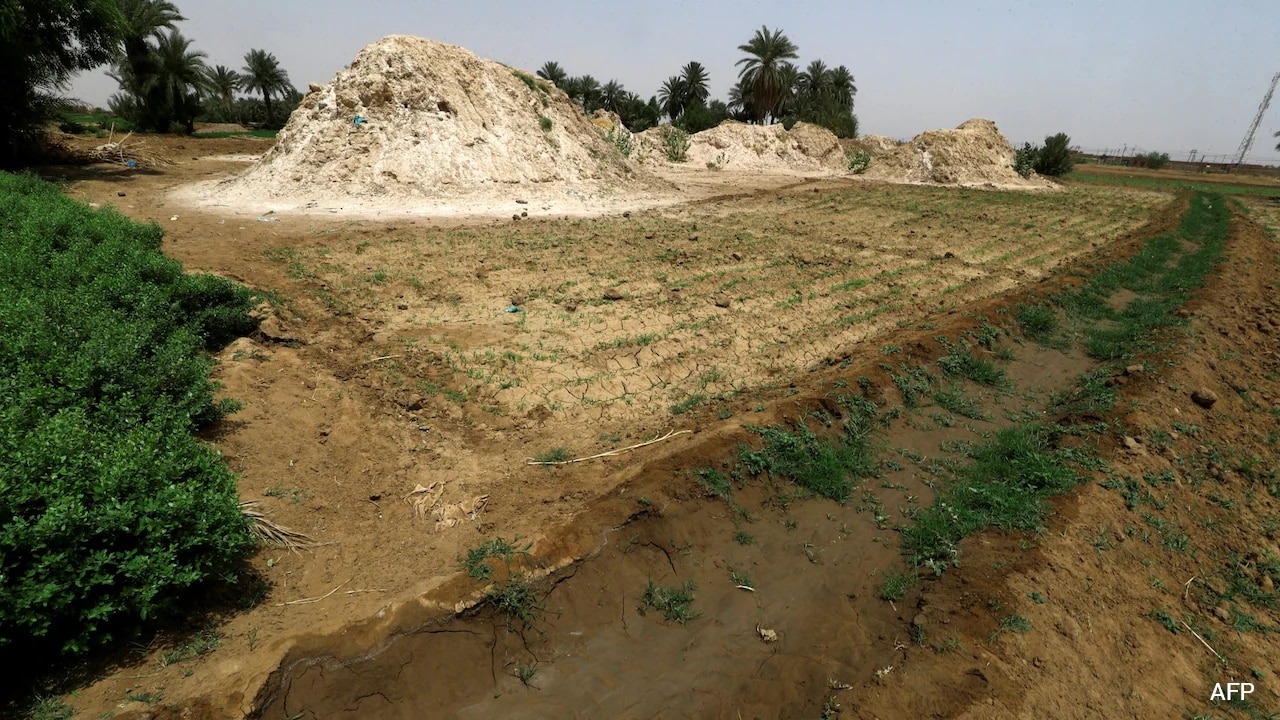
The physical environment compounds these hazards exponentially. West Kordofan experiences punishing desert heat, soaring temperatures, and dry conditions that weaken physical endurance long before miners even pick up a shovel. Dehydration sets in rapidly underground. When exhaustion meets unstable sandy geology, disasters cease to be probabilities and become mathematical certainties.
The Rise Of Artisanal Gold In Sudan
To understand why thousands of young men risk their lives in these lethal pits every day, you have to look at how Sudan's economic landscape transformed over the past fifteen years. Following the secession of South Sudan in 2011, Khartoum lost a massive portion of its oil revenues. Desperate to plug the gaping hole in the national budget, the government actively encouraged a gold mining boom, opening up vast swaths of the Sahara and Nubian deserts to informal prospecting.
What followed was a massive gold rush. Millions of Sudanese migrated from agricultural and pastoralist communities into remote northern, western, and southern desert zones. Artisanal mining mushroomed from a minor traditional livelihood into the backbone of the country's informal economy. Today, small-scale operations account for the vast majority of Sudan's total gold production, eclipsing industrial extraction entirely.
Yet this decentralized boom came with zero institutional support. While the state welcomed the incoming gold revenues, it invested nothing into safety infrastructure, geological mapping, or technical training for miners. People were left to hack into mountainsides with hand-held picks and crude explosives, creating an invisible underworld of subterranean labyrinths completely detached from labor laws or safety inspections.
The Geopolitical Economy Of Conflict Gold
Gold in Sudan isn't just a precious commodity. It's fuel for an ongoing civil war. West Kordofan, where the Al-Zara disaster occurred, falls under the operational control of the paramilitary Rapid Support Forces. Across the nation, artisanal and informal gold fields serve as massive revenue generators for armed factions funding weapons, military vehicles, logistics, and foreign mercenaries.
This creates a deeply cynical economic ecosystem. The people sweating in the dust at the bottom of these deadly shafts see very little of the wealth they extract. Much of the gold is smuggled out of the country through informal networks, bypassing national treasuries and official ports entirely. Neighboring trade hubs absorb the unrefined bullion, converting it into hard currency used to sustain active combat operations on the ground.
Meanwhile, the miners take all of the physical risk, risking burial alive for meager daily yields, while warlords and middlemen skim the profits off the top. You can trace a direct line between the broader political collapse of the country and the rising body count in local pits. Sudan currently faces one of the largest displacement and hunger crises in modern history. Tens of millions face acute food insecurity. When formal state governance collapses, the underground economy takes over completely. Regulation vanishes overnight, leaving a lawless free-for-all where human life holds very little currency compared to an ounce of gold.
The Agony Of Desert Rescue Operations
Trying to rescue trapped miners without proper infrastructure is a heartbreaking exercise in futility. At Al-Zara, survivors and local volunteers described spending days battling tons of collapsed earth with almost nothing. Witnesses noted that rescue operations relied heavily on bare hands and improvised tools because heavy excavation equipment simply wasn't available in the remote desert location.
Imagine trying to move a mountain of shifting sand while knowing your brother, cousin, or friend is buried beneath it, slowly running out of air. That was the grim psychological reality for the people working through the night at Fouja. Every scoop of dirt risked triggering another slide. Every muffled sound from below could be a desperate cry for help or merely the settling of more debris.
When official state rescue services are entirely absent or paralyzed by active combat zones, local communities bear the entire burden of disaster response. They bury their dead in makeshift desert graves, comfort grieving families, and often return to the exact same pits weeks later because systemic hunger doesn't wait for safety reforms.
Chemical Hazards And Hidden Killers
Tunnel collapses capture headlines because the tragedy is sudden and catastrophic, but they represent only one part of the danger facing Sudanese miners. Processing the ore introduces an entirely separate suite of lethal hazards. Lacking modern extraction technology, artisanal miners frequently rely on mercury and cyanide to amalgamate and separate gold from crushed rock.
Handling liquid mercury without protective gloves or respirators leads to severe neurological damage, kidney failure, and chronic poisoning. When miners burn the mercury-gold amalgam to vaporize the mercury off-site, toxic fumes contaminate local air, water supplies, and food chains. Children and animals living near processing camps absorb these heavy metals, creating generational public health crises that persist long after the mining camps move on.
In many areas, miners work in cramped, unventilated shafts where diesel-powered generators pump carbon monoxide directly into underground tunnels. Workers have been known to pass out from asphyxiation before a tunnel wall ever collapses. The combination of toxic chemicals, foul air, extreme heat, and unstable geology creates a multi-layered occupational hazard that rivals any high-risk industry on earth.
Counting The Uncounted Dead
Official statistics in active conflict zones are notoriously unreliable. Initial reports from the Al-Zara collapse put the death toll at sixty, but local medical activists and human rights monitors quickly pointed out that the actual number is almost certainly higher, with dozens more unaccounted for. When remote mines collapse far from major urban centers, bodies are often recovered by relatives and buried quickly without any official state documentation or hospital registration.
This data vacuum suits armed groups and negligent authorities just fine. It allows massive industrial-scale tragedies in artisanal sectors to pass quietly into the background noise of a larger, more visible war. But ignoring the human cost doesn't make it go away. It just ensures that the next catastrophe is only a matter of time.
Until serious structural changes occur—until miners have access to safe working conditions, legal protections, and alternative economic opportunities—the desert will keep claiming lives with terrifying regularity. The tragedy at Al-Zara isn't an unpredictable act of nature. It's a predictable consequence of a broken system that treats human lives as entirely disposable in the relentless pursuit of wealth.