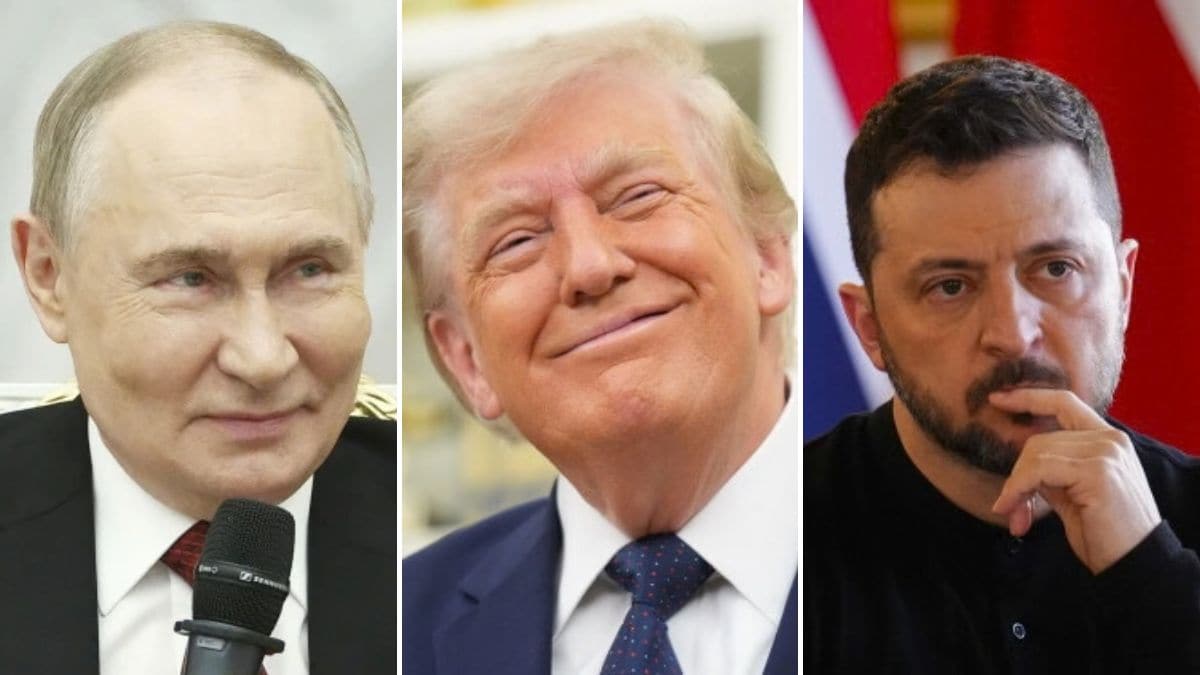
Imagine waking up to learn that two world leaders just negotiated a pause in attacks on your country's power grid—except nobody bothered to tell you first. That's basically what happened when Donald Trump announced a so-called Russia-Ukraine energy ceasefire, leaving Volodymyr Zelensky to tell reporters it was "news to me."
It sounds like a bad diplomatic joke. Yet here we are.
When Trump claimed he had secured an agreement with Vladimir Putin to halt strikes on energy infrastructure, headlines exploded within minutes. People immediately started asking whether the war was finally cooling down. They wanted to know if Ukrainian cities would get a break from winter blackouts and if Russian oil refineries would stop burning.
The reality is way messier. Zelensky's blunt reaction exposed a massive disconnect in how Washington, Moscow, and Kyiv are communicating right now. If you're trying to figure out what this energy ceasefire actually means for the war, you have to look past the press conference soundbites and examine the hard facts on the ground.
What Actually Happened With the Energy Ceasefire Announcement
Let's rewind to the exact sequence of events. Trump spoke publicly about discussions involving Russia and Ukraine, stating that Putin had agreed to stop hitting Ukrainian energy targets—specifically mentioning cold weather and the strain on civilians. According to Trump's framing, this was a major breakthrough. A step toward peace.
Then reporters turned to Kyiv for confirmation.
Zelensky didn't hedge. He didn't offer standard diplomatic boilerplate about "consulting with partners." He flat-out said it was news to him, making it clear that Ukraine hadn't been looped into whatever side conversation produced that claim.
Think about how wild that is. In modern warfare, a ceasefire isn't a casual gentleman's agreement over the phone. It requires verification mechanisms, exact start times, clear definitions of what counts as a valid target, and direct buy-in from the militaries doing the shooting. Without Kyiv at the table, an energy ceasefire isn't a treaty. It's a talking point.
Why an Energy Ceasefire Matters So Much Right Now
To understand why everyone jumped on this story, you need to look at the energy war that has defined the conflict over the past few years. Both sides have turned power plants, substations, and fuel depots into primary battlegrounds.
Russia has hammered Ukraine's electrical grid repeatedly using waves of Shahed drones and cruise missiles. According to assessments from the World Bank and the United Nations Development Programme, billions of dollars in damage have been inflicted on Ukraine's power generation capacity. Millions of Ukrainians have lived through rolling blackouts, freezing apartments, and disrupted water supplies because thermal and hydroelectric plants were knocked offline.
Ukraine hasn't just sat back and absorbed those punches. Kyiv developed long-range strike drones and aimed straight at Russia's wallet—its oil refining and energy export infrastructure. Throughout 2024 and into 2025, Ukrainian strikes hit dozens of Russian refineries and fuel storage facilities deep inside Russian territory. Analysts at institutions like the International Energy Agency noted how these attacks forced temporary fuel export bans and disrupted domestic refining capacity inside Russia.
So an energy ceasefire isn't some minor humanitarian gesture. It's a massive strategic trade-off.
- For Ukraine, stopping grid attacks means keeping the lights and heat on for civilians and maintaining industrial production without burning through scarce air defense interceptors.
- For Russia, stopping Ukrainian drone strikes means protecting critical refining revenue that funds the Kremlin's war machine.
- For Washington, brokering any pause looks like tangible diplomatic momentum after years of grinding attrition.
When you look at those incentives, you start to see why Moscow might float the idea to Trump while keeping Kyiv in the dark.
The History of Secret Energy Talks Before Trump's Claim
This wasn't the first time an energy truce surfaced behind closed doors. Back in 2024, reporting by the Washington Post and the Financial Times revealed that Ukraine and Russia were quietly exploring indirect talks—mediated partly by Qatar—to halt strikes on each other's energy infrastructure.
Those earlier discussions fell apart. Why? Because military realities kept intruding on diplomatic hopes, including Ukraine's cross-border incursion into Russia's Kursk region, which hardened Moscow's stance against making concessions.
Knowing that backstory changes how you read Zelensky's "news to me" comment. Kyiv isn't opposed to protecting its power grid. Ukrainian officials have spent years begging Western allies for Patriot air defense systems and grid repair equipment specifically to keep their energy sector alive. What Zelensky pushed back against was the idea of Washington and Moscow cutting bilateral deals about Ukraine without Ukraine.
In Kyiv, there is a deep, historical fear of great powers carving up Ukrainian interests over the heads of Ukrainian leaders. Every time a foreign leader announces terms that Kyiv hasn't signed off on, alarms go off across the Ukrainian government.
What Most People Get Wrong About Bilateral Ceasefire Claims
When a high-profile political figure announces a breakthrough, most casual observers assume the hard work is already done. They picture generals standing down and missiles staying in their silos.
That's not how asymmetric warfare works.
First, definitions are everything. What counts as "energy infrastructure"? Does it mean only nuclear and thermal power plants that heat civilian homes? Or does it include railway substations that move military hardware, dual-use fuel depots that supply tanks, and oil refineries that generate tax revenue for weapons? If Putin and Trump never wrote down a shared definition, both sides can claim the other broke the deal five minutes after it starts.
Second, unilateral announcements create dangerous traps. Suppose Ukraine pauses its long-range drone campaign against Russian refineries based on a verbal assurance from Washington, while Russian commanders claim a transformer near a Ukrainian factory was a "military logistics hub" and bomb it anyway. Ukraine loses leverage, Russia gets free repair time for its refineries, and nobody enforces a penalty.
Honestly, Zelensky's skepticism isn't stubbornness. It's basic survival instinct. You don't halt your most effective long-range leverage on the basis of a press conference quote you weren't briefed on.
How Moscow Uses Partial Ceasefires as Strategic Leverage
If you study how the Kremlin negotiates, a clear pattern emerges. Moscow loves partial, ambiguous pauses that relieve pressure on its own weak spots without forcing it to give up territorial gains.
Russia's air defense network is stretched thin across a massive landmass. Protecting every refinery, pumping station, and oil terminal from low-flying Ukrainian drones has proven nearly impossible. By signaling openness to an energy ceasefire directly to Trump, Putin gets to look reasonable and peace-minded to the White House while potentially shielding one of Russia's most vulnerable economic sectors.
Meanwhile, Russia keeps its ground offensive moving. An energy truce doesn't stop artillery shells, glide bombs, or infantry assaults along the front lines in eastern Ukraine. It narrows the fight to the exact domains where Ukraine has found a way to hurt Russia economically.
Trump's instinct as a dealmaker is to grab a visible win—something concrete he can point to as proof that his personal relationship with Putin yields results. You can see the appeal from his perspective. Stopping attacks on power grids sounds humane, straightforward, and easy to explain to voters.
Yet diplomacy between warring nations rarely bends to sheer willpower alone. If the target country hasn't agreed to the terms, the announcement hangs in mid-air.
What This Means for US-Ukraine Relations Moving Forward
Zelensky's reaction highlights the tightrope he has to walk with Washington. Ukraine relies heavily on American intelligence sharing, financial backing, and weapons deliveries. Publicly contradicting a U.S. president carries real political risk for Kyiv.
Still, Zelensky chose to state plainly that the announcement caught him off guard. That tells you how seriously Kyiv views the principle of "nothing about Ukraine without Ukraine." If Ukrainian leadership stays silent when side deals are announced, it sets a precedent where Washington and Moscow negotiate the terms of the war while Kyiv is treated like a passive spectator.
At the same time, expect Ukrainian diplomats to scramble behind the scenes to turn Trump's statement into something actionable—or at least clarify what was actually promised. If Putin genuinely told Trump that Russia won't hit Ukrainian energy sites, Kyiv will want that commitment locked into formal, verifiable terms with clear consequences for violations.
Watch what happens on the ground over the next few days rather than listening to speeches. Track whether Russian long-range drone launches targeting Ukrainian substations actually drop to zero, and pay close attention to whether Kyiv demands formal written guarantees before halting its own strikes on Russian oil facilities. Until both militaries issue stand-down orders under a verified framework, treat any unilateral ceasefire headline with healthy skepticism and verify every claim against independent battlefield reporting from outlets like Reuters, the Associated Press, and the Institute for the Study of War.


