The foreign policy establishment loves a neat little menu. Three choices. Always three. Escalate, negotiate, or exit. Every think tank memo, every cable news pundit, every recycled brief handed to a fresh undersecretary follows this exact tired script. It assumes decision-makers are sitting in a sterile boardroom weighing options like a corporate strategy deck.
It is a fairy tale.
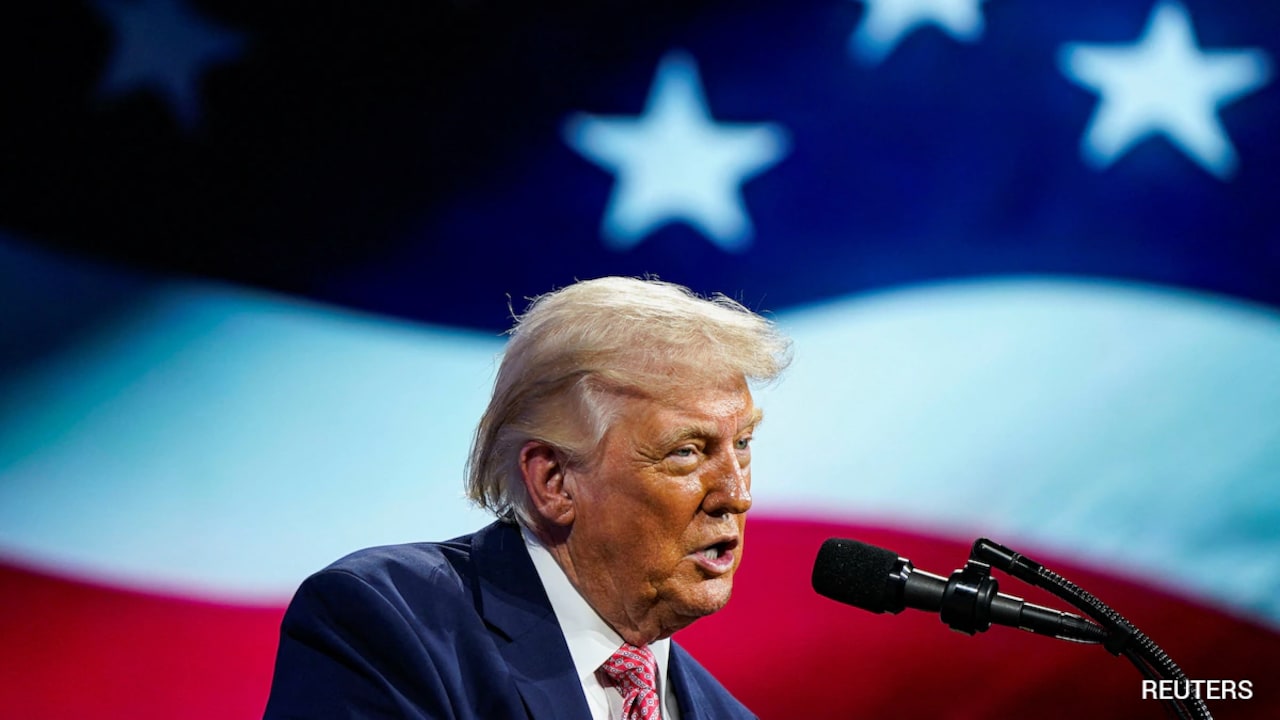
The lazy consensus says Donald Trump faces a classic trilemma in the Middle East as the Iran conflict drags on. They tell you he can either flex American military might and strike deep, sit down at a table for a grand bargain, or cut and run while saving face.
I have watched administrations walk into this exact buzzsaw for decades. I have seen billions burned on strategic frameworks built on wishful thinking rather than structural reality. The fundamental mistake isn't choosing the wrong option from the list. The mistake is believing the list exists at all.
The Myth of the Clean Escalation
Let us start with the first fantasy on the menu: escalation. The hawks want you to believe that a decisive wave of kinetic strikes will finally break the regime's back, restore deterrence, and force Tehran to sue for peace on Washington terms.
It sounds decisive. It plays well on social media. It is also operational madness.
When you hit a decentralized network woven deep into civilian infrastructure, you do not destroy capability; you trigger dispersion. Iran has spent forty years hardening its ballistic missile sites, embedding command nodes beneath urban centers, and constructing proxy architectures across Lebanon, Iraq, Yemen, and Syria. A kinetic campaign does not stop the bleeding. It invites asymmetric retaliation across maritime chokepoints that handles global energy supply chains like a cheap accordion.
I have spoken with defense contractors and intelligence planners who privately admit the math does not work. You can turn airfields into gravel, but you cannot bomb a nuclear threshold mentality out of existence. Every time an administration scales up the firepower without a political end-state, they trap themselves deeper in a quagmire while spending finite munitions meant for actual peer-competitor deterrence in the Pacific.
Escalation without an occupation plan is just temper tantrums with billion-dollar hardware.
The Delusion of the Grand Bargain
Then comes the diplomatic crowd. These are the believers in the magic handshake. They look at the stalemate and insist that all it takes is a clever mediator, a backchannel in Oman, and a willingness to trade sanctions relief for uranium enrichment caps.
This ignores why Tehran acts the way it does.
For the clerical leadership in Iran, ideological survival is inextricably linked to anti-Western resistance. A grand bargain that normalizes economic and political integration with the West is an existential threat to the regime's internal legitimacy. If you strip away the Great Satan narrative, what remains for a corrupt, inefficient revolutionary elite to justify its monopoly on power?
Negotiating with a party whose internal survival depends on your hostility is like negotiating with an arsonist while you are standing in a pool of gasoline. Any deal they sign under extreme economic pressure is transactional and temporary. The moment sanctions ease or cash flows back via illicit oil smuggling to Asian markets, the enrichment ramps right back up.
The diplomats refuse to accept that some actors do not want to join the international rules-based order because their entire business model relies on breaking it.
The Trap of the Abrupt Exit
Which leaves the third pillar of the conventional wisdom: the clean exit. Pack up, pull out, let the region sort itself out, and pivot entirely to great power competition elsewhere.
It sounds pragmatic until you look at the map and the markets.
Total disengagement is a luxury of the past. The moment the United States drops its security umbrella entirely, a vacuum forms. That vacuum does not sit empty. It gets filled by regional revisionists and non-state actors who control vital trade lanes. Energy shocks ripple instantly through global pricing models, crushing consumer confidence and handing strategic leverage straight to Beijing and Moscow.
You cannot simply walk away from a global economy you spent a century wiring together. An unmanaged exit is not an end to the conflict; it is an invitation for others to write the rules of global commerce while American interests take the hit.
The Real Variable Nobody Is Talking About
So what is the actual play? Stop looking at Washington. Stop asking whether Trump will choose option A, B, or C.
The real variable is internal collapse versus external shock, and the timeline belongs entirely to demographic and economic exhaustion inside Iran. The regime is dealing with catastrophic water crises, hyperinflation, and a domestic population that despises the morality police far more than it fears the United States.
The most effective posture is not a dramatic escalation, a naive negotiation, or a cowardly midnight runner's exit. It is asymmetric containment coupled with relentless economic attrition, paired with zero public panic. Let the regime choke on its own economic mismanagement while keeping regional partners locked into a defensive architecture that makes offensive adventurism too expensive to maintain.
The mistake is thinking leadership means making a bold choice today to fix a decades-long friction point. Sometimes, leadership means having the discipline to manage an unmanageable crisis without breaking your own economy or falling for the false choices laid out by a lazy press corps.
The next time someone lays out a neat three-point plan for the Middle East, check your wallet, check your patience, and recognize that you are listening to someone who has never had to clean up the mess when all three options fail simultaneously.

.png?itok=1mb05mKJ)

