The foreign policy establishment is addicted to the "Grand Bargain" fantasy. Every time the leaders of the world’s two largest economies sit across a table from each other, a predictable chorus of analysts starts humming about de-escalation. They treat these summits like high-stakes poker games where a single hand can change the course of history.
They are wrong.
The summit isn't a negotiation. It’s a press junket for a divorce that has already been finalized in the back rooms of every major boardroom from Shenzhen to Silicon Valley. While pundits obsess over the optics of a handshake or the specific wording of a joint statement on fentanyl or climate change, they miss the structural reality: the economic integration that defined the last thirty years is being dismantled by design, not by accident.
The Myth of the Rational Actor
The primary mistake the "lazy consensus" makes is assuming both sides want to return to the status quo. They view trade wars as temporary irritants—mosquito bites on the skin of globalism.
I have spent decades watching supply chains move. I have seen companies pour billions into "Just-in-Time" manufacturing in Chinese provinces, only to watch those same companies quietly spend twice that amount to move operations to Vietnam, Mexico, or back to Ohio. They aren't doing this because of a tweet or a specific tariff. They are doing it because the trust that underpinned the global market has evaporated.
Trust is not a renewable resource in geopolitics. Once you realize your primary supplier is also your primary strategic rival, the math changes. You no longer optimize for cost; you optimize for resilience.
Why "De-risking" is Just Cowardly Language for Exit
The current buzzword in Washington and Brussels is "de-risking." It’s a soft, palatable term designed to keep markets from panicking. It suggests we can keep the "good" parts of the relationship—the cheap consumer goods and the massive export markets—while cutting out the "bad" parts like semiconductor dependency and intellectual property theft.
This is a delusion.
Modern technology is not modular. You cannot separate the civilian "tapestry" (to use a word the bureaucrats love) from the military application. A high-end GPU doesn't care if it's rendering a video game or a hypersonic flight simulation. When the US restricts AI chips, it isn't just "de-risking" a specific sector; it is declaring a permanent technological embargo.
China understands this perfectly. Their "Made in China 2025" and "Dual Circulation" strategies aren't defensive crouches. They are blueprints for a world where they no longer need the West.
The Sovereign Debt Trap No One Mentions
The summit will likely ignore the elephant in the room: the weaponization of the dollar and the slow-motion collapse of the US-China financial symbiosis. For years, the deal was simple: China sells us stuff, we give them dollars, and they buy our debt to keep our interest rates low.
That cycle is broken.
China’s holdings of US Treasuries have hit multi-decade lows. They aren't just diversifying; they are getting out of the line of fire. If you’re planning for a scenario where your assets might be frozen—like Russia’s were—you don't hold the other guy’s paper.
The "consensus" view says this is fine because Japan or domestic buyers will pick up the slack. They are ignoring the inflationary pressure this creates. When the world's largest manufacturer stops subsidizing the world's largest consumer's debt, the cost of everything goes up. Permanently.
The Tech Cold War is Already Won and Lost
Focusing on trade deficits is like counting the score of a game that ended an hour ago. The real battle is over standards.
- Who owns the 6G protocol?
- Who dictates the ethics of autonomous weaponry?
- Who controls the subsea cables through which the world's data flows?
At the summit, they will talk about soybeans and cars. Behind the scenes, the fight is over the foundational layers of the future. The US is moving toward a "Small Yard, High Fence" strategy. China is building its own yard entirely.
If you are a CEO waiting for the "all clear" signal from a presidential meeting to restart your China expansion, you have already lost. The smartest players I know are already operating under the assumption that there will eventually be two distinct internet ecosystems, two financial clearing systems, and two sets of technical standards.
The High Cost of the "Middle Way"
The most dangerous place to be right now is in the middle.
European leaders often try to play the "third way," hoping to maintain access to both markets. It’s a losing strategy. In a bipolar world, neutrality is perceived as a weakness by both sides. You will eventually be forced to choose whose cloud your data lives in and whose GPS your missiles use.
The downside to my contrarian view? It’s expensive. Efficiency is cheap; redundancy is pricey. Building duplicate factories and separate software stacks will shave points off global GDP for the next decade. But it is the price of reality.
Stop Asking if the Summit was a Success
The "People Also Ask" sections of the internet are filled with queries like "Will the Trump-Xi meeting lower prices?" or "Did they reach a deal on trade?"
These are the wrong questions.
The right question is: "How fast can we adapt to a world where these two powers are no longer partners?"
A "successful" summit is just a managed retreat. It’s a way to ensure the decoupling happens with a whimper rather than a bang. It provides the political cover necessary for both leaders to tell their domestic audiences they are "strong" while they continue the messy, painful work of tearing their economies apart.
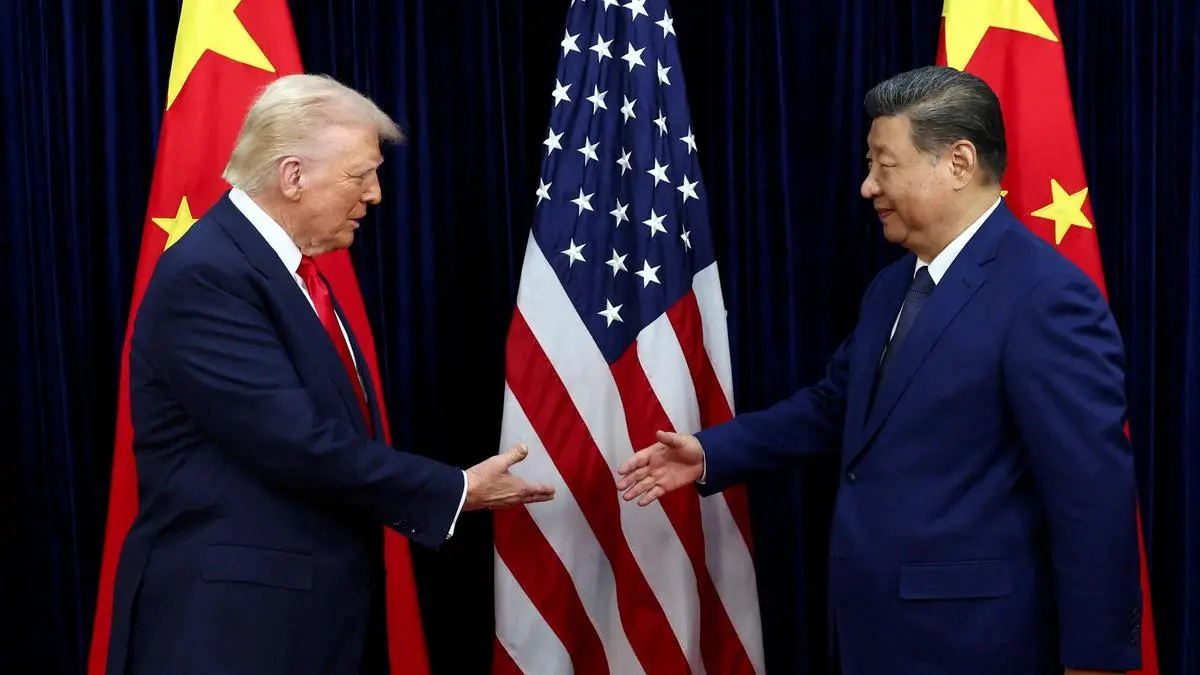
Don't look at the smiles in the photo op. Look at the export controls issued the week before. Look at the naval exercises in the South China Sea the week after. Look at the capital flight data.
The era of the "Chimerica" superpower is dead. The summit is just the funeral, and both men are there to make sure the casket stays closed.
Stop waiting for a pivot that isn't coming. The bridge hasn't just been burned; the river has been rerouted. Adjust your balance sheets accordingly.