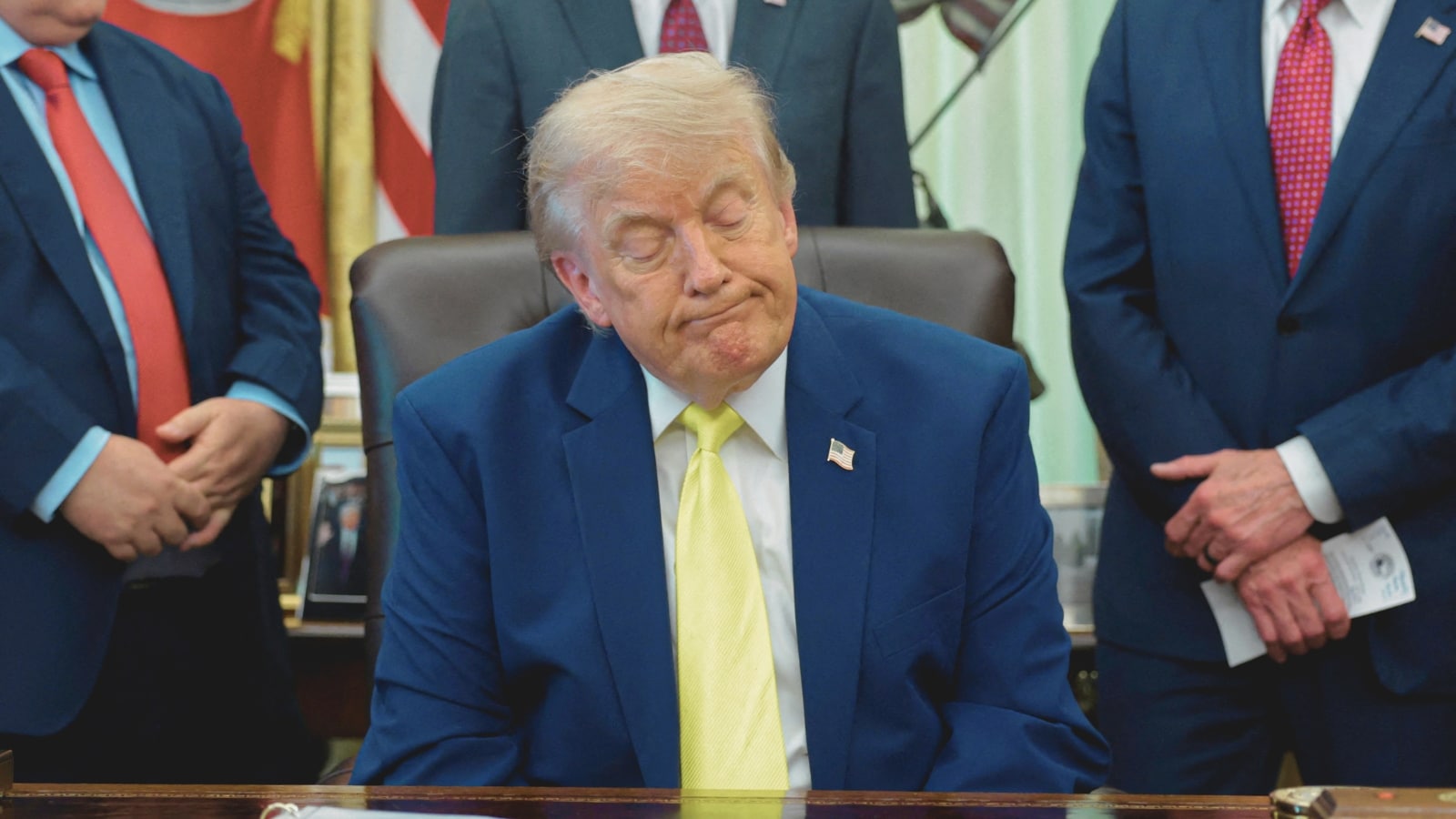
Washington wants to control tech, but the White House is changing the playbook. President Donald Trump just shelved a highly anticipated executive order that would have placed tight cybersecurity restrictions on powerful artificial intelligence models. The reason? It's simple. He believes too many rules will hand global dominance to China.
"We're leading China," Trump told reporters, explaining his sudden policy shift. "We're leading everybody, and I don't want to do anything that's going to get in the way of that lead." You might also find this connected story useful: Inside the Afghan Shadow War That New Delhi and Islamabad Are Fighting.
This isn't just about cutting red tape. It's a fundamental recalculation of American tech policy. For years, safety advocates argued that the government needed to step in before algorithms or digital assets caused systemic chaos. But the current administration sees compliance burdens as a strategic vulnerability. If American developers are bogged down by paperwork, Beijing wins.
The Silicon Valley Pressure and the Shelved Order
The administration was hours away from signing a strict new directive on AI safety. The draft proposal forced companies to hand over data to government regulators and undergo a grueling 90-day vetting process before launching new frontier models. Silicon Valley tech leaders and policy advisers revolted. As highlighted in detailed articles by TIME, the effects are worth noting.
Former tech officials called the president directly. They argued that a 90-day delay would cripple American innovation. It worked. Trump pulled the plug on the original draft, later replacing it with a heavily watered-down version. The new order slashes the review period to a voluntary 30-day window.
This policy pivot matters because it blocks a fractured approach to tech governance. Trump followed up by backing federal legislation that explicitly prevents individual states from passing their own AI safety laws. California and New York can't build local regulatory walls anymore. The White House wants a single, unified national framework that prioritizes speed over caution.
China is Not Waiting Around
Opponents of this hands-off approach claim that Washington is leaving Americans unprotected. They point to Europe and Asia, where governments are moving fast to establish guardrails. But the administration looks at China and sees a different lesson.
Beijing has regulated its tech sector aggressively since 2021. Chinese authorities force developers to register models, vet training data, and ensure outputs pass thousands of political screening questions. If a model fails to answer "correctly" on sensitive social topics 90% of the time, it doesn't launch.
You might think these burdens would crush Chinese tech. They didn't.
Instead, Chinese firms adapted by building highly efficient systems. When Chinese lab DeepSeek dropped its V3 model, it proved that Beijing could build top-tier capabilities with a fraction of the computing power used in Silicon Valley. That release wiped out hundreds of billions of dollars in U.S. tech stock value overnight.
The White House realizes that the computing gap is shrinking. The U.S. has historically dominated because American firms have access to massive capital and advanced semiconductors. But relying solely on a hardware advantage is a dangerous bet. If U.S. regulatory policy slows down software development, China's hyper-efficient engineering will close the remaining distance.
The Crypto Connection
You can't separate the administration's AI strategy from its stance on digital assets. They are two sides of the same coin. Trump has repeatedly stated he wants America to be the "crypto superpower of the world."
Financial disclosures show this interest is personal as well as political, with the president netting over $1 billion from crypto ventures and token sales over the last year. This personal experience shapes his policy. The administration recently issued executive orders aimed at stripping away legacy regulations that block financial technology firms from integrating digital assets into traditional banking systems.
The strategy is clear. By creating a regulatory safe haven for both software engineering and decentralized finance, the administration wants to attract global capital to the U.S.
- Establishing a Strategic Bitcoin Reserve: Treating digital assets as a core national security asset.
- Dismantling State-Level Rules: Ensuring local politicians can't choke out tech hubs with custom restrictions.
- Promoting Voluntary Testing: Replacing mandatory government approvals with collaborative, light-touch safety programs.
What This Means For Tech Builders
If you're building software or managing digital assets in the U.S., the policy direction is a massive green light. The immediate threat of heavy federal compliance has vanished. You don't have to worry about a state-by-state patchwork of conflicting laws.
But don't mistake this for total anarchy. The Center for AI Standards and Innovation is still actively working with major labs like OpenAI and Anthropic to test models for extreme cybersecurity threats. The difference is the relationship. It's now a collaborative partnership rather than an adversarial government audit.
The burden of safety has shifted from the state to the boardroom. Tech executives got the light-touch rules they lobbied for. Now they have to prove they can outpace global competitors without breaking the systems they built.
To stay ahead of changing federal guidelines, monitor the updates coming directly from the Commerce Department's Center for AI Standards and Innovation. Focus your development pipelines on efficiency and local hardware optimization, as the global race will no longer be won purely by hoarding high-end chips.
The administration's stance on tech regulation is directly tied to the broader geopolitical standoff, a theme explored in detail during recent high-stakes diplomatic talks. To understand how these political maneuvers impact tech supply chains, check out this breakdown of What Trump's China trip reveals about the AI race. This analysis provides essential context on why the White House believes software speed is America's ultimate weapon against foreign competitors.