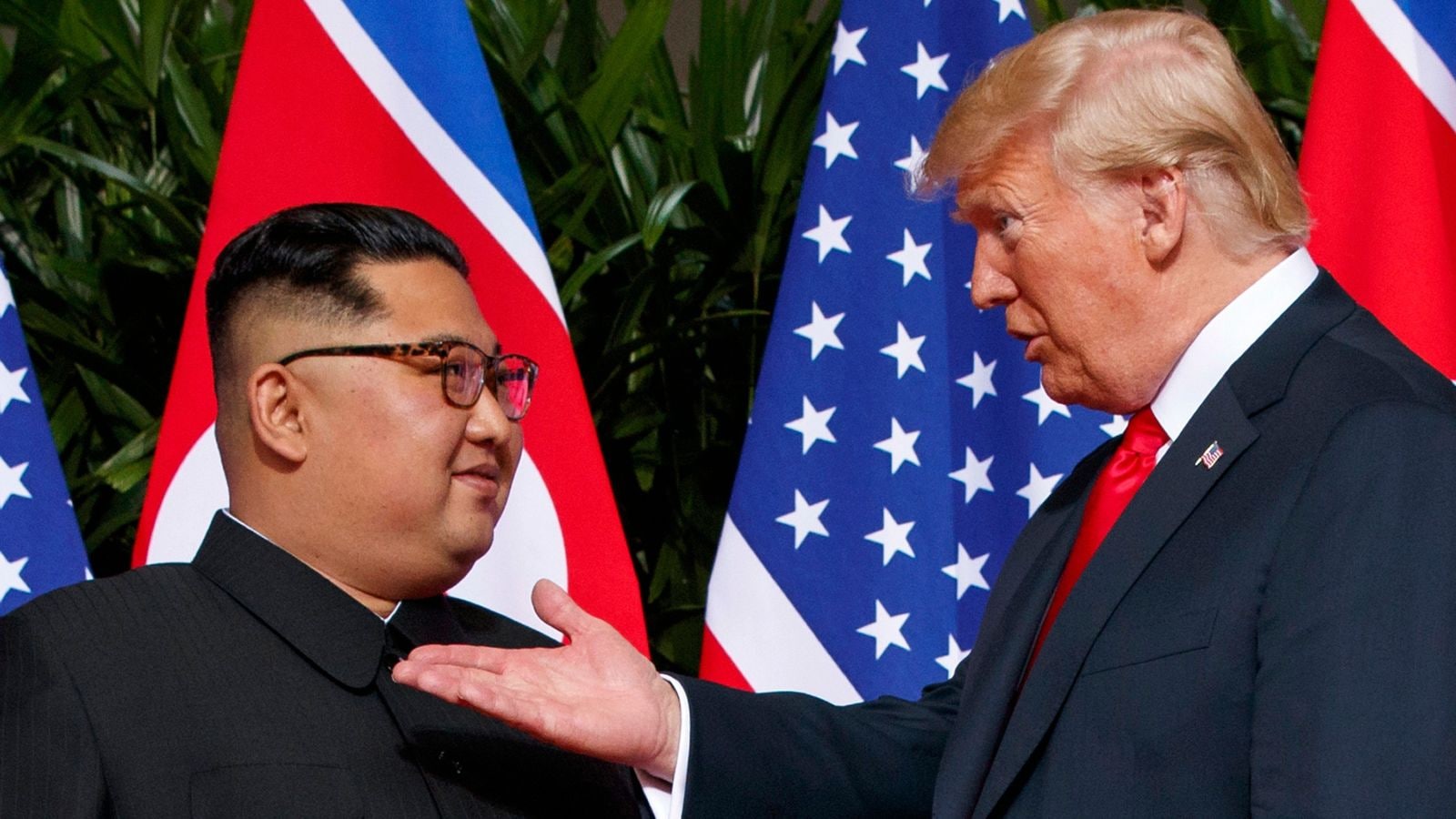
Donald Trump wants to sit down with Kim Jong Un again. This shouldn't shock anyone. During an impromptu White House press appearance, the president casually dropped that he expects to meet the North Korean leader later this year.
Diplomacy by personal relationship is back. But the geopolitical reality on the ground looks vastly different than it did during their 2018 Singapore handshake.
The Arithmetic of Nuclear Arsenals
Trump pointed directly to what he views as the core issue while talking to reporters, estimating that Pyongyang currently holds 57 nuclear weapons. He didn't hesitate to place blame, arguing that past administrations should never have allowed the rogue state to cross the nuclear threshold.
Intelligence estimates from Seoul often place the actual stockpile significantly higher, hovering anywhere between 80 and 120 warheads. Regardless of the exact count, North Korea isn't giving them up. Kim's regime views those weapons as absolute insurance against regime change.
Trump maintains that his personal rapport with Kim changes the equation.
"I get along with him well," Trump told reporters outside the White House, framing that connection as an asset rather than a liability. Critics in Washington and regional capitals disagree strongly. They argue that photo ops reward bad behavior without extracting meaningful concessions on denuclearization.
Rattling Alliances in Asia
The push for a renewed summit doesn't happen in a vacuum. Trump recently directed Defense Secretary Pete Hegseth to substantially scale down joint military exercises with South Korea. He cited both his friendly ties with Kim and frustrations over regional alliance commitments.
Seoul feels jittery. Annual military drills like Ulchi Freedom Shield are treated by South Korea as essential defense planning against a hostile neighbor. Cutting back those exercises to court Pyongyang sends shockwaves through the region.
Almost on cue, North Korea fired around ten short-range ballistic missiles off its coast. Pyongyang routinely uses missile tests to signal displeasure or assert leverage, proving that warm words from Washington haven't frozen their weapons development program one bit.
Mixed Signals From Pyongyang
If Trump is planning an encounter—potentially timed around the Asia-Pacific Economic Cooperation summit in Shenzhen, China, later in the year—North Korea hasn't rolled out a smooth red carpet just yet.
Kim Jong Un's powerful sister, Kim Yo Jong, quickly poured cold water on claims of active backdoor communications. She stated publicly that she knew nothing about ongoing talks and reiterated that Washington remains fundamentally hostile.
This is standard Pyongyang theater. They love playing hard to get before extracting maximum attention.
Trump is juggling multiple foreign policy fires, including a stalled conflict involving Iran where he has heavily emphasized nuclear non-proliferation. Critics point out the obvious contradiction: cracking down hard on Tehran's nuclear ambitions while downplaying Pyongyang's operational arsenal.
Trump brushes those concerns aside. He insists that managing Kim is entirely possible with strong leadership at the top. Whether a late-year meeting actually materializes depends entirely on whether Pyongyang decides the timing suits their strategic interests. Right now, they are watching, testing missiles, and keeping their options open.