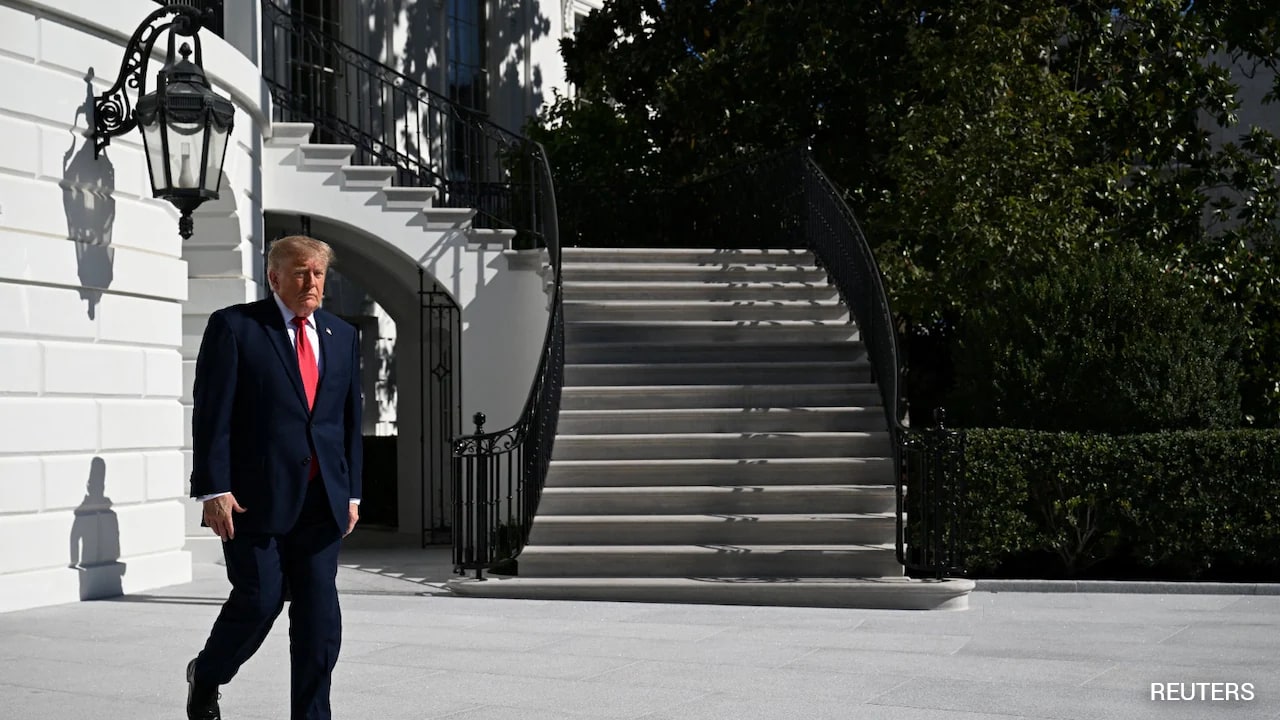
Donald Trump spent weeks leading up to the 2026 midterm elections issuing a blunt warning to voters. If Democrats managed to flip Congress, he claimed, he would simply transform into "Mr. Veto" and shoot down every piece of legislation landing on his desk.
Now that voters have handed Democrats control of both the House and the Senate in a historic midterm rebuke, that threat faces its ultimate reality check.
Political grandstanding is easy on the campaign trail. Governing through raw refusal is a completely different beast. While the presidential veto is one of the most formidable constitutional tools in the executive arsenal, relying on it as a primary legislative strategy creates immediate structural problems for an administration. It turns a president into a goalie rather than a playmaker.
The idea that a commander-in-chief can simply shut down the legislative branch for two straight years sounds tough, but history proves it usually backfires on the person holding the pen.
The Math Behind the Presidential Veto Power
To understand why the "Mr. Veto" strategy is harder to pull off than it sounds, you have to look at how Article I of the U.S. Constitution actually structures power.
When Congress passes a bill, the president has 10 days (excluding Sundays) to sign it or send it back with written objections. If the president does nothing while Congress is in session, the bill becomes law automatically without a signature.
If Congress adjourns during that 10-day window and the president ignores the bill, it suffers a "pocket veto". The bill dies outright, and Congress cannot attempt an immediate override vote because they aren't in session.
The real friction happens with regular vetoes. Congress can override a standard presidential veto if both the House of Representatives and the Senate muster a two-thirds supermajority vote.
Getting two-thirds of both chambers to agree on anything in modern American politics is notoriously difficult. During his first term, Trump issued 10 vetoes, and not a single one was overridden by Congress. Barack Obama faced 12 vetoes across his eight years and only had one overridden—the Justice Against Sponsors of Terrorism Act in 2016. Joe Biden used the pen 13 times without an override.
On paper, the numbers heavily favor the White House. If Democrats hold narrow majorities in Congress, they won't have the numbers to override a veto on their own. But counting on math alone ignores how Washington actually breaks down when routine funding bills come due.
Why Executive Orders and Tariffs Cannot Replace Congress
Many observers point out that modern presidents don't always need Congress to execute major policy shifts. That is partially true, but executive power has strict boundary lines.
Trump has historically relied on unilateral executive actions, national emergency declarations, and administrative rules to bypass Capitol Hill. Presidents possess sweeping authority over trade policy, meaning tariff adjustments can continue largely unimpeded by congressional votes. Foreign policy and military commands also remain firmly under presidential direction, though congressional oversight committees can make life miserable through subpoena power.
Executive power hits a hard wall when it runs out of money.
The Constitution grants the power of the purse exclusively to Congress. You can't issue an executive order to fund the federal government past the end of a fiscal year. You can't use an executive action to raise the federal debt ceiling or reauthorize essential agency spending.
If a president decides to veto annual appropriations bills passed by an opposition Congress, the government shuts down. Government shutdowns force a high-stakes game of political chicken where public backlash almost always falls hardest on the White House rather than Capitol Hill.
What History Teaches Us About Veto Wars
We've seen this movie before in modern political history.
In late 1994, Republicans took back control of Congress in a massive wave election, leaving Democratic President Bill Clinton facing a hostile Capitol Hill led by Speaker Newt Gingrich. Clinton didn't just veto opposing legislation; he leaned heavily into negotiated compromises. The standoff triggered prolonged federal government shutdowns in late 1995 and early 1996.
Voters ultimately blamed congressional Republicans for the optics of closed national parks and stalled federal paychecks. Clinton used that exact leverage to reposition himself as a pragmatic moderate, passing historic welfare reform and eventual budget deals like the Balanced Budget Act of 1997.
A similar dynamic unfolded when Barack Obama lost the House to Republicans in the 2010 midterms. The resulting gridlock led to fiscal cliff standoffs and spending caps under the Budget Control Act of 2011.
The lesson from both historical chapters is clear: issuing vetoes works as a defensive shield, but it doesn't build a lasting legislative legacy. A strategy built entirely on blocking the opposing party's bills means zero major domestic policy achievements get signed into law for the remainder of the presidential term.
The Strategic Traps of a Veto Heavy Strategy
Relying on a permanent veto threat carries three distinct political traps that White House strategists often overlook.
First, Democrats in Congress will intentionally pass popular, bipartisan-sounding bills designed specifically to force uncomfortable vetoes. Imagine Congress passing targeted legislation lowering prescription drug prices, expanding veterans' benefits, or funding local infrastructure projects. If the White House vetoes those measures just to stick to a broad "veto everything" policy, it hands the opposition party perfect campaign messaging for the next election cycle.
Second, an aggressive veto posture incentivizes congressional leaders to weaponize the oversight process. When legislative channels are blocked by executive vetoes, House committees redirect their full energy toward investigations, committee subpoenas, and public hearings focused on administration officials. Legislative gridlock almost always accelerates oversight warfare.
Third, absolute veto threats alienate moderate members of the president's own party. House and Senate Republicans running in competitive swing districts need legislative wins to show their constituents back home. If the White House kills every bipartisan compromise negotiated on Capitol Hill, those vulnerable lawmakers end up completely exposed during their own reelection campaigns.
How to Navigate a Divided Government Realistically
If you want to understand how Washington will function under divided governance, ignore campaign rhetoric and look at practical points of leverage.
Track the mandatory spending deadlines first. Government funding deadlines and debt ceiling expirations are the only real forcing mechanisms that compel both parties to sit down at the negotiating table.
Watch for targeted bipartisan package deals. Defense authorization bills, farm bill renewals, and FAA reauthorizations historically pass even during peak political polarization because neither party can afford to let them expire.
Pay attention to executive rule-making and agency actions. When Congress is locked in a veto gridlock, the real policy shifts move out of legislative chambers and directly into administrative agencies like the EPA, FTC, and Treasury Department.
Brace for a heavy shift toward judicial appointments. Even if legislative production grinds to a halt, judicial confirmations continue to move depending on who controls the Senate, making judicial strategy the primary focus of long-term policy impact.


