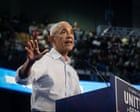
Two former presidents are sucking all the oxygen out of the room again. If you've been watching the final stretch of a US midterm election cycle, you already know the script—Donald Trump and Barack Obama trading sharp, personal barbs from opposite sides of the country while the actual congressional candidates stand quietly behind them on stage.
It happens every single time. Honestly, it's kinda fascinating how little the political gravity in Washington has shifted over the last decade.
When a competitor's live blog covers Trump and Obama clashing in the closing days before a midterm vote, they usually give you a play-by-play of the insults. Trump mocks Obama's record or his crowd sizes. Obama dismantles Trump's temperament and warns voters about institutional norms. You get the quotes, you get the timestamp, and then you scroll down to the next update.
That misses the actual story. The real reason these two men dominate the final days before a midterm election has nothing to do with their personal rivalry and everything to do with a brutal reality of modern American politics—neither party has found a closer who can actually move the needle on turnout like they do.
The Closing Argument Problem in Midterm Elections
Midterms are notoriously hard to win because the electorate shrinks. Presidential years bring out casual voters who tune in every four years, catch a couple of debates, and cast a ballot. Midterms belong to the die-hards.
I've watched enough campaign cycles up close to tell you that local House and Senate candidates rarely generate the raw emotional electricity needed to drag low-propensity voters to the polls on a rainy Tuesday in November. A standard stump speech about infrastructure grants or committee assignments puts people to sleep.
Enter the heavyweights.
When Donald Trump steps up to a podium in Pennsylvania, Ohio, or Georgia during the final weekend of a campaign, he isn't there to explain the finer points of the farm bill. He's there to turn a local congressional race into a national referendum on grievance, loyalty, and cultural identity. His rallies function less like traditional political events and more like multi-hour festival gatherings where the base feels seen and energized.
Barack Obama plays the exact opposite role for Democrats, yet the underlying strategy is identical. Democrats consistently struggle with enthusiasm gaps during off-year elections, especially among younger voters and minority coalitions. Obama remains the single most effective validator in the Democratic Party. When he shows up in battleground states like Michigan, Wisconsin, or Arizona, his job is to remind reluctant voters that sitting out an election carries real consequences.
Why Neither Party Can Quit Their Biggest Stars
You might think local candidates would want the spotlight to themselves in the final week. Sometimes they do, especially in purple districts where nationalizing a race can backfire with independent voters.
Yet when the internal polling looks tight and the field directors start panicking about early vote totals, every campaign manager makes the exact same phone call. They ask national headquarters for air support.
- Trump's superpower is base mobilization. He commands media attention without spending a dime on television ads. Every cable network carries his remarks live or dissects them for forty-eight hours straight, drowning out whatever message the opposition was trying to run that week.
- Obama's superpower is coalition repair. He speaks to the slice of the Democratic base that feels frustrated by the current administration or disillusioned by congressional gridlock, framing voting not as a magic wand, but as basic civic hygiene.
- Both men turn low-turnout races into high-stakes drama. By framing the midterms as a direct clash between their competing visions of America, they force voters to pick a side rather than stay home.
How the Trump and Obama Rivalry Actually Works on the Stump
Pay close attention to the exact language they use when they trade barbs in those final days. It isn't random trash talk. It's tightly calibrated messaging designed to trigger completely different psychological responses in voters.
Obama rarely attacks Trump with raw anger. Instead, he uses surgical mockery and appeals to exhaustion. He'll joke about Trump's obsession with crowd sizes, poke fun at his grievances, and ask voters if they really want to go back to constant daily chaos. Look at how Obama frames the choice—he treats Trump less like a terrifying strongman and more like an exhausting relative who won't stop complaining at Thanksgiving dinner. That framing works wonders with suburban swing voters who dislike inflation or economic uncertainty but also feel tired of political drama.
Trump takes the exact opposite approach. He leans directly into the fight, painting Obama not as an elder statesman, but as the architect of a broken political establishment. When Trump goes after Obama on the trail, he's signaling to his supporters that the media and the political elite are still trying to lecture them. He mocks Obama's campaigning style, questions his economic legacy, and ties every local Democratic candidate directly to the former president.
It's a clash of styles that guarantees wall-to-wall coverage. Cable news producers love it because split-screen footage of two former presidents trading shots drives ratings way higher than a policy speech from a freshman congressman.
The Risk of Nationalizing Local Races
Here's what campaign operatives quietly admit behind closed doors—bringing in Trump or Obama in the final stretch is a high-wire act that can easily blow up in a swing district.
In a deep-red district, a Trump endorsement and a last-minute rally are pure gold. They guarantee Republican voters show up in massive numbers. Put that same rally in a suburban district that Biden or Harris won by three points, and suddenly moderate independents remember everything they disliked about the Trump era. Those voters might have been leaning Republican over gas prices or grocery bills, and all of a sudden they're reconsidering their ballot.
Democrats face a mirror-image problem, though usually less acute. Obama remains broadly popular among Democrats and well-liked by many independents, which makes him safer to deploy in purple states than most active party leaders. Still, in heavily rural or working-class districts where Democrats are trying to run as moderate pragmatists, bringing in a national figure from Chicago can reinforce Republican attacks that the local candidate is just another coastal liberal.
Smart campaigns thread this needle carefully. They bring Obama into major metro areas like Detroit, Milwaukee, or Phoenix to juice urban turnout while keeping him away from rural media markets. Republicans do the exact same thing with Trump, staging massive airport rallies in exurban counties where they need to run up the score to offset urban losses.
What Live Political Coverage Often Misses About Final-Week Dynamics
When you read live updates from the campaign trail in the final days before a midterm, the coverage naturally gravitates toward the loudest quote of the afternoon. A sharp zinger gets clipped, posted on social media, and debated endlessly by pundits.
If you want to understand who is actually winning those final days, ignore the viral clips and watch the logistics instead.
- Look at the zip codes they visit. Presidents don't travel in the final seventy-two hours just to take a victory lap. If Trump is spending his final Sunday in a district his party won easily two years ago, that's a giant red flag that internal polling shows soft turnout among core supporters. If Obama is making a last-minute stop in a safe blue city, Democrats are worried their base isn't showing up at the polls.
- Watch who stands behind them. Notice which local candidates actually show up to share the stage and which ones suddenly have "scheduling conflicts" back in their districts. Vulnerable incumbents love the fundraising boost a former president brings, right up until the cameras turn on in a swing district.
- Track the earned media versus paid media balance. By the final weekend, voters are completely numb to television commercials. Campaigns have already bought up every available ad slot on local stations. The only way to break through the noise in those final forty-eight hours is earned media—free coverage on the evening news. Having Trump and Obama trade barbs guarantees that local news broadcasts lead with the midterm election rather than local crime or sports.
The Structural Reason We Can't Move Past the Obama-Trump Era
There's a deeper truth lurking beneath all the campaign trail rhetoric. Both parties have a succession problem.
For sixteen years, American politics has orbited around these two figures. Obama reshaped the Democratic coalition in 2008, proving that a combination of young voters, minority turnout, and educated suburbanites could win national elections. Trump shattered the traditional Republican coalition in 2016, trading away some suburban professionals in exchange for massive gains among non-college-educated working-class voters across the Rust Belt.
Neither party has successfully built a post-Obama or post-Trump identity that commands the same loyalty. Newer leaders have stepped up—governors, senators, vice presidents—yet none of them possess that singular ability to command the entire national conversation with a single speech.
When the pressure hits peak levels right before a midterm election, parties revert to what they trust. They put their biggest stars on airplanes, fly them into battleground states, and let them swing away at each other one more time.
How to Read the Final Stretch Like a Strategist
Next time you're scrolling through live political updates as Trump and Obama trade shots before an election, filter out the theater and look for the signals that actually matter.
Check the early voting numbers in the specific counties where those rallies happen over the next forty-eight hours. Pay attention to whether the barbs are focused on economic grievances—which usually favors the party out of power—or on character and institutional stability, which favors the party trying to hold the line. Most of all, watch where the candidates spend their final hours, because a campaign's travel schedule is the one piece of data that never lies.