The global shipping elite is throwing a collective tantrum because Donald Trump declared that any fees imposed on commercial vessels routing through the Strait of Hormuz are "unacceptable." The consensus view across mainstream financial media is predictable: any disruption or toll in the world’s most vital choke point will instantly trigger an energy crisis, spike crude prices to triple digits, and cripple global trade.
They are asking the entirely wrong question. In related updates, take a look at: Why UK Takeover Targets Are Smart to Reject Cheap Bids.
The media wants to know how the West can enforce total freedom of navigation without paying a dime. The real question we should be asking is why global taxpayers are still subsidizing the security of private shipping conglomerates and foreign oil buyers to the tune of tens of billions of dollars a year.
The lazy consensus screams that Hormuz must remain a completely free, un-tolled highway protected by the U.S. Navy. The reality? A maritime transit fee is not only economically logical; it is the exact mechanism needed to force the shipping industry to pay for its own security liabilities. The Wall Street Journal has also covered this fascinating issue in great detail.
The Myth of the Free Choke Point
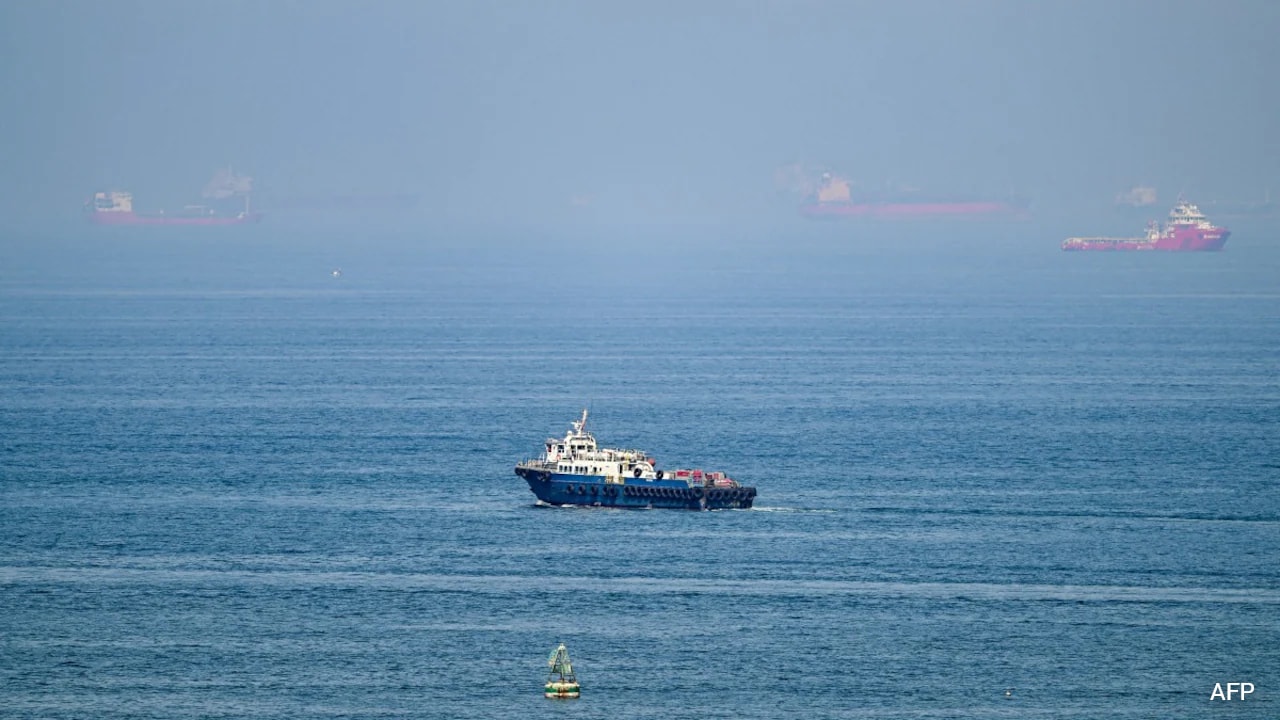
Let's clear up the geography before we talk about the economics. The Strait of Hormuz is a narrow stretch of water separating Oman and Iran. At its narrowest, it is only 21 miles wide. Because of the shallow depths, commercial tankers cannot just sail wherever they want; they are funneled into incredibly tight, two-mile-wide shipping lanes that cut directly through the territorial waters of Oman and Iran.
Every single day, roughly 20 to 21 million barrels of oil pass through this bottleneck. That is about 20% of global petroleum consumption.
The consensus position assumes that because international law grants "transit passage" through straits used for international navigation, this passage must be entirely cost-free. This is an illusion. It ignores a basic rule of economics: there is no such thing as a free lunch, and there is certainly no such thing as a free choke point.
Right now, the cost of keeping that strait open is externalized. The U.S. Fifth Fleet, based out of Bahrain, acts as the world’s most expensive, unpaid security guard. Private shipping companies flying flags of convenience—like Panama, Liberia, or the Marshall Islands—to evade taxes are getting top-tier military protection completely free of charge.
When a politician says fees are "unacceptable," they are defending a broken status quo where working-class taxpayers fund the defense of multi-billion-dollar energy giants and sovereign wealth funds.
Why a Transit Fee is Economically Necessary
Let’s run a thought experiment. Imagine a private logistics company built a massive, highly efficient highway that connects the most lucrative manufacturing hubs in a country. However, this highway runs through a high-crime zone. To protect the cargo, the local government deploys thousands of state troopers to escort every single private truck, completely free. The trucking companies pay zero highway taxes, use offshore registration to avoid corporate tax, and pocket record profits. Meanwhile, the highway asphalt is crumbling, and the police budget is draining.
You would call that corporate welfare. Yet, that is exactly how the Strait of Hormuz operates today.
A maritime fee on vessels transiting the strait is not a radical act of economic warfare; it is a standard pigouvian tax—a tariff designed to internalize the negative externalities of an activity. Navigating a 150,000-ton supertanker through a highly volatile geopolitical warzone carries a massive security cost. Right now, the buyers and sellers of that oil do not bear that cost directly. A transit fee forces the market to price risk accurately.
If a regional authority—whether it is Oman or a coalition of coastal states—imposes a transparent, standardized transit fee dedicated solely to maritime safety, drone defense systems, and navigation infrastructure, the global economy will not collapse.
Here is what actually happens:
- The cost of insurance premiums for the transit lowers because the route becomes explicitly policed and stabilized by regional revenue.
- Shipping lines are forced to optimize their routes rather than relying on endless, inefficient loops fueled by artificially cheap security.
- The true cost of fossil fuel dependence is accurately reflected in the market, driving capital toward more resilient supply chains.
The Counter-Intuitive Truth About Oil Prices
The loudest argument against any Hormuz fee is that it will cause an immediate supply shock, sending oil prices soaring. This argument is lazy. It treats oil pricing like a simple math equation where any added cost at the point of origin is slapped directly onto the consumer at a 1 to 1 ratio.
The oil market is driven by macro liquidity, global demand cycles, and refining capacity—not a nominal per-barrel transit fee.
During my time analyzing energy trade routes, I watched companies panic over regional escalations, predicting $150 oil. What happened? The market adjusted within 72 hours. Ship owners did not stop shipping; they simply recalculated their risk premiums.
If a fee of $1 or even $2 per barrel were levied to fund verifiable, localized security operations in the Strait, it would represent a fraction of the daily price volatility seen in Brent or West Texas Intermediate (WTI) crude on any given Tuesday. In a market where crude swings $3 a day based on a vague rumor about a refinery shutdown in Ohio, a structured transit fee is statistical noise.
The downside to this contrarian approach exists, and we must look at it honestly. If Iran uses the concept of "fees" as a cover for arbitrary extortion or to unilaterally block adversaries, it ceases to be a maritime toll and becomes piracy. That is a valid threat. But rejecting the concept of structured transit fees entirely because Iran might abuse it is like banning toll roads nationwide because a corrupt mayor might set up an illegal speed trap.
Dismantling the Freedom of Navigation Premise
People often ask: Does international law explicitly forbid nations from charging fees in international straits?
The short answer is yes, under the United Nations Convention on the Law of the Sea (UNCLOS), foreign ships exercising the right of transit passage cannot be subjected to levies unless they are for specific services rendered to the ship.
But the premise of the question is fundamentally flawed because it views global trade through a rigid legal lens that hasn't evolved since the mid-20th century. The nature of maritime threats has fundamentally shifted. UNCLOS was drafted in an era of conventional state navies and traditional piracy. It did not anticipate an era of cheap, asymmetric warfare—where a $2,000 sea drone or a loitering munition launched by a non-state actor can disable a $100 million commercial vessel.
When the U.S. Navy deploys destroyers to shoot down incoming anti-ship missiles targeting commercial vessels, it is rendering a highly specific, life-saving service to that exact ship.
To claim that these vessels should receive high-tech missile defense services while paying absolutely nothing back into the regional security apparatus is a fantasy. The Suez Canal charges substantial transit fees based on vessel size and cargo weight. The Panama Canal just restructured its fee system to include a "freshwater fee" due to climate and operational challenges. The global shipping industry adapted, paid the fees, and kept moving. Hormuz is no different.
Stop Safeguarding Freeloaders
The real opposition to a Hormuz transit fee does not stem from a fear of inflation. It stems from the deep-seated resistance of the shipping lobby to give up a massive corporate subsidy.
Major maritime nations hide behind the rhetoric of "free trade" and "unacceptable interference" because it allows them to maintain a highly profitable, risk-free operation. They get to exploit the cheap labor of international crews, register their ships in tax havens, and rely on western militaries to bail them out whenever tension flares.
If Trump wants to put America first, he should stop offering free, open-ended naval escorts to foreign-flagged tankers carrying oil destined for East Asian or European markets. The United States is largely energy independent; the vast majority of crude flowing through Hormuz goes to China, India, Japan, and South Korea.
Instead of threatening military escalation over the mere mention of shipping fees, the administration should demand that the nations consuming this oil, and the companies profiting from its transit, set up a self-funded maritime transit authority.
If you sail through the world's most dangerous choke point, you pay the toll. If you don't want to pay the toll, find another route or build a pipeline. The era of the American taxpayer footing the bill for the global shipping industry's security risks needs to end. Turn the Strait of Hormuz into a toll road, force the market to internalize its own liabilities, and let the freeloaders finally pay their own way.