Washington is obsessed with microchips. Politicians throw hundreds of billions of dollars at massive silicon foundries, celebrating every time a new semiconductor facility breaks ground on American soil. We hear endless talk about Nvidia, TSMC, and the race to dominate artificial intelligence silicon.
But there's a glaring, multi-billion-dollar blind spot in this strategy.
Chips don't float.
You can build the most advanced, lightning-fast AI processor on earth, but it's completely useless without a printed circuit board. PCBs are the green or black sheets of fiberglass and copper that every single microchip sits on. They act as the nervous system for electronics, routing power and data between components.
Right now, the United States relies almost entirely on China to make these boards. We are actively funding domestic chip factories while sending those exact same American chips straight back to Asia to be mounted on Chinese hardware. It's a massive, overlooked national security vulnerability that could bring the entire Western AI infrastructure crashing down.
Why Advanced Silicon is Useless Without Basic Green Plastic
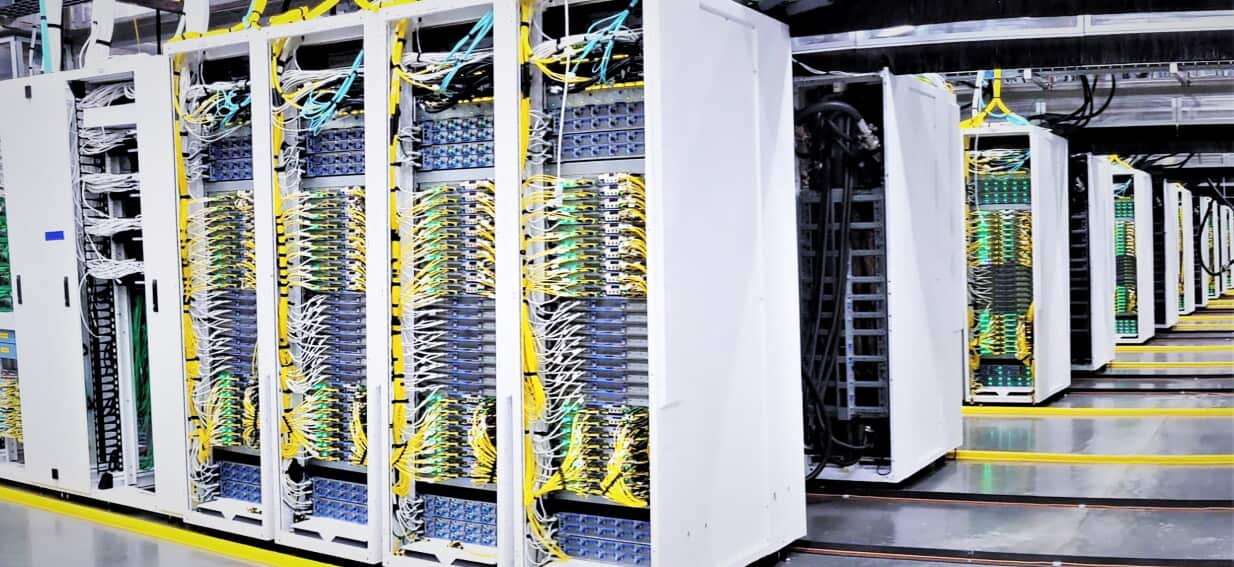
If you look inside a high-end AI server running thousands of Nvidia H200 or Blackwell chips, you won't just see silicon. You'll see massive, complex, multi-layered circuit boards. These aren't the simple, cheap PCBs found inside a generic television remote. AI circuit boards are masterpieces of engineering, sometimes requiring over 30 layers of precisely laminated material to handle intense heat and ultra-fast data transfer rates.
The U.S. government spent years tightening export controls to prevent China from getting advanced chips. Yet, U.S. tech giants continue to source the foundational hardware holding those chips from Chinese factories.
According to data from the U.S.-China Economic and Security Review Commission, China controls roughly half of global PCB production. Meanwhile, the American domestic share of global PCB manufacturing has plummeted from over 26% in 1995 to a pathetic 4% today. The U.S. has fewer than 200 domestic circuit board manufacturers left. Most of them are small operations catering strictly to highly specialized military contracts.
When a major tech firm needs 50,000 complex boards for a new AI data center, American factories simply don't have the capacity or the machinery to build them. So, the orders go to China.
The Dual Threat of Sabotage and Supply Chain Chokeholds
This overwhelming dependence introduces two severe risks to national security.
The first is physical sabotage. Because PCBs route every bit of data traveling between a processor, memory units, and the broader network, they are an ideal vector for hardware-level espionage. A malicious actor with access to the manufacturing floor can embed microscopic, hidden components directly into the inner layers of a circuit board.
These rogue elements can act as hardware backdoors. They are virtually impossible to detect with standard software scans because they operate beneath the operating system level. A compromised board could quietly transmit data back to a foreign adversary or lie dormant until receiving a signal to shut down entirely, crippling critical cloud infrastructure instantly.
The second, and perhaps more immediate, threat is economic coercion. China knows it holds a chokehold on global electronics assembly. If geopolitical tensions flare over Taiwan or trade tariffs, Beijing doesn't need to block advanced chip shipments to hurt the West. They can simply restrict the export of high-end PCBs.
Without those boards, American server production halts. The booming AI economy, cloud computing systems, and defense networks would grind to an immediate standstill.
Breaking the Silicon Sickness
The underlying issue is a policy bias that treats semiconductors like royalty and everything else like cheap commodities. Washington suffers from a severe case of silicon sickness. The CHIPS and Science Act funneled immense wealth into domestic fabrication facilities, but completely ignored the rest of the ecosystem.
Industry groups like the Printed Circuit Board Association of America have been shouting into the void about this mismatch for years. Industry leaders argue that building a chip in Arizona, shipping it to China to be placed on a board, and then shipping it back to an American data center defeats the entire purpose of supply chain resilience.
Thankfully, some lawmakers are finally waking up to the absurdity of the situation. Bipartisan legislation, like the Protecting Circuit Boards and Substrates Act, aims to fix this exact loophole. The proposed bill introduces a 25% tax credit for companies purchasing American-made PCBs and creates a financial assistance program modeled after the CHIPS Act to help domestic factories scale up.
But passing a bill is only the first step. Rebuilding an entire manufacturing ecosystem takes years, and the West is starting from decades behind.
Real Steps for Securing Your Tech Infrastructure
If you run an organization reliant on cloud infrastructure, data centers, or advanced hardware, you can't just sit around and wait for federal legislation to fix a broken global supply chain. You need to start de-risking your operations immediately.
- Demand Hardware Transparency: When sourcing servers or networking equipment, look beyond the brand name of the chip. Demand a full Bill of Materials that explicitly details where the PCBs and substrates are manufactured and assembled.
- Diversify Sourcing Now: Begin vetting hardware vendors who utilize supply chains outside of China. Countries like Taiwan, Vietnam, and South Korea have robust electronics manufacturing capabilities and offer a safer, more diversified alternative.
- Implement Hardware-Level Security Audits: If you operate sensitive data centers or critical infrastructure, do not rely solely on software firewalls. Invest in specialized hardware security testing, including X-ray imaging and advanced signal analysis, to verify the physical integrity of your server components.
The AI revolution is built on a foundation of physical hardware. Until we secure the literal boards underneath the chips, the entire digital economy remains built on a foundation of sand.
This detailed analysis explores the exact manufacturing bottlenecks and geopolitical vulnerabilities facing the electronics industry, offering a deeper look at why the current U.S. domestic strategy is lagging behind China: U.S. Confronts The Hidden Risk Of Chinese Circuit Boards Fundamental To AI Chips.