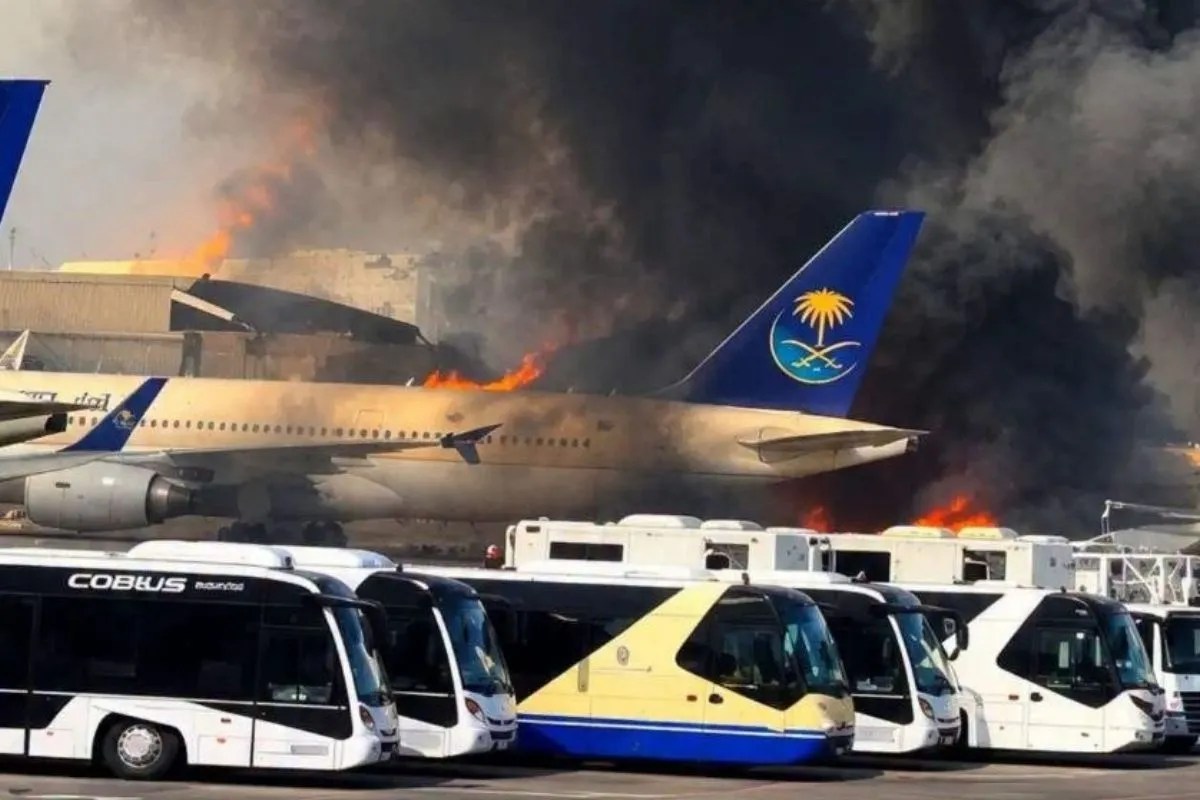
Two crew members dead in Najran. Another headline flashes across feeds, triggers a wave of sympathy, and gets filed away as an isolated tragedy.
Stop doing that. Don't forget to check out our earlier post on this related article.
When a military helicopter goes down near a volatile frontier like Najran in Saudi Arabia, the lazy consensus arrives within hours. People blame bad luck. They blame mechanical failure. They blame the unforgiving heat or sudden desert gusts. None of those explanations are automatically false, yet treating a fatal crash as a standalone misfortune is one of the costliest habits in defense operations.
A crash is rarely a bolt from the blue. Usually, it is the visible endpoint of stacked pressures: high-tempo border patrols, relentless dust and thermal strain on turbine engines and flight controls, low-altitude terrain masking, night-vision depth illusions, and crews pushed right up to the edge of fatigue. Calling it a freak accident lets everyone off the hook too early. If you want more about the history of this, USA Today provides an informative summary.
The Wrong Question Everyone Asks After a Crash
When a military rotorcraft crashes in a border region, the first question people ask is almost always, "What broke?"
That is the wrong question. It sends investigators and commentators hunting for a single smoking gun—a seized bearing, a wind shear pocket, a split-second misjudgment—while ignoring the system that put a fragile machine into a brutal environment in the first place.
Aviation safety pioneer James Reason famously described accidents through the Swiss cheese model. Modern complex operations have multiple layers of defense—maintenance checks, flight rules, weather minimums, crew rest standards, sensor alerts. Each layer has holes. Most days, the holes do not line up. A near-miss happens, someone shrugs, and operations continue. A fatal crash occurs when the holes align for a fraction of a second.
Asking "What broke?" only inspects one slice of cheese. The real question is why the holes were lined up that day.
What People Also Ask (And Why the Premise Is Often Flawed)
"Are border patrol helicopters simply too dangerous to fly in desert terrain?"
No. Calling desert rotorcraft operations inherently doomed confuses difficulty with inevitability. Helicopters exist specifically to go where fixed-wing aircraft cannot land and ground convoys move too slowly. High temperatures reduce air density, which cuts rotor lift and demands sharper performance margins. Fine sand and dust act like slow-motion sandpaper on compressor blades, seals, and moving linkages.
Those are known engineering realities, not mysteries. A helicopter does not fall out of the sky just because the thermometer climbs or the sand blows. Trouble starts when operational demand stretches maintenance turnarounds, spares availability, or margin planning past what the environment comfortably allows.
"Why do fatal crashes happen even with modern military aircraft?"
Modern avionics, digital flight controls, and improved sensors raise the ceiling on capability. They do not repeal physics.
A rotorcraft is an inherently dynamic machine. Unlike a fixed-wing plane that glides naturally if thrust drops, a helicopter relies on continuous powered rotation and finely balanced aerodynamic forces. Add night-vision goggles—which narrow the field of view and strip away natural depth cues over featureless desert—and the margin for error shrinks fast. High-tech cockpits can reduce workload in some phases of flight, yet they can also breed overconfidence when an aircraft is operating near its performance envelope in dark, dusty, or contested airspace.
"Should militaries ground fleets immediately after a deadly crash?"
Knee-jerk grounding feels decisive. Often, it is theater.
If a specific fleet has a confirmed design defect or a batch of faulty parts, grounding makes complete sense. If the issue is broader—say, high operational tempo, crew fatigue, or austere operating conditions near a border like Najran—grounding one airframe type without fixing the schedule or support chain just shifts strain onto other assets or delays real reform. Real discipline means auditing maintenance logs, flight hours, and mission profiles with cold honesty, not performing for the cameras.
Battle Scars From High-Tempo Operations
I have spent years watching organizations—both commercial operators and defense-adjacent teams—burn through budgets and goodwill after major incidents because leadership wanted quick closure rather than uncomfortable truth.
I have seen teams spend millions upgrading flashy hardware while starving routine maintenance shops of time and parts. I have seen safety briefings turn into checklists nobody reads because deadlines never move. Whenever leadership treats every setback as an outlier, the exact same conditions quietly rebuild themselves behind closed doors.
Real aviation safety is not built on slogans. It is built on cold math, boring routines, and leaders willing to say "no" when the mission profile outruns the safety margin.
A Thought Experiment on Quiet Failures
Imagine a scenario where a squadron flies hundreds of low-level desert sorties over six months without a single crash. Twice a month, a crew experiences a hot-and-high power margin warning or heavy dust ingestion during landing. Nothing catches fire. Nobody gets hurt. So the logs get signed off, the sortie counts stay high, and the warnings get treated as "normal for the desert."
Six months later, a crew faces a sudden wind shift at low altitude with a heavier load and slightly degraded engine response. Nothing new happened in that final minute. Everything that mattered happened during the six quiet months when small warnings were normalized instead of corrected.
Where My Contrarian View Has Real Limits
Pushing back against the "freak accident" narrative carries its own risks. If you over-correct and treat every crash as systemic rot, you can end up blaming good people and sound systems for genuine bad luck or sudden, unpredictable hazards. Sometimes a part fails earlier than any test predicted. Sometimes weather turns violent in seconds.
There is also a practical limit to public analysis when a military crash happens. Defense authorities rarely release full technical findings right away—sometimes for operational security, sometimes while investigations are still underway. Speculating beyond verified facts is sloppy. Challenging lazy assumptions is necessary; inventing motives or causes is not.
What Actually Works Instead of Headlines
If you want to understand—or manage—high-risk aviation in places like Najran, stop chasing dramatic theories and start looking at unglamorous indicators:
- Track leading indicators, not just crash counts. Watch maintenance aborts, unscheduled part swaps, hot-weather payload limits, and duty-day extensions. Those numbers warn you months before a tragedy.
- Protect maintenance time like combat power. A rushed inspection in a harsh environment is a liability disguised as speed. Give technicians the hours and clean workspace the manual assumes.
- Reward bad news early. If junior pilots or mechanics fear blame for reporting a hunch or a minor anomaly, leadership will only hear about problems once they turn into wreckage.
- Separate grief from analysis. Honor the two crew members who lost their lives. Then do the hard, unromantic work of fixing every weak link in the chain so the next crew comes home.
Stop calling a crash a mystery before you have checked the system.


