We have all sat across the table from him.
He is the person who leans back, sighs with theatrical exhaustion, and tells you, with a self-effacing smile that doesn't quite reach his eyes, that his worst flaw is simply caring too much. He is the volunteer who makes sure everyone within a three-mile radius knows about the soup kitchen shift he pulled on Tuesday. He is the colleague who publicly confesses his own management mistakes only so the room can rush in to comfort him with assurances of his brilliance.
Humility, for most of human history, was supposed to be an erasure of the self. A quiet slipping into the background. A vanishing act where the ego steps aside so that something larger—duty, grace, truth—can take its room. But Mignon McLaughlin looked at the human machinery of her era and diagnosed a much stranger, darker mutation.
The proud man can learn humility, but he will be proud of it.
Read that again. Let it sit in your teeth.
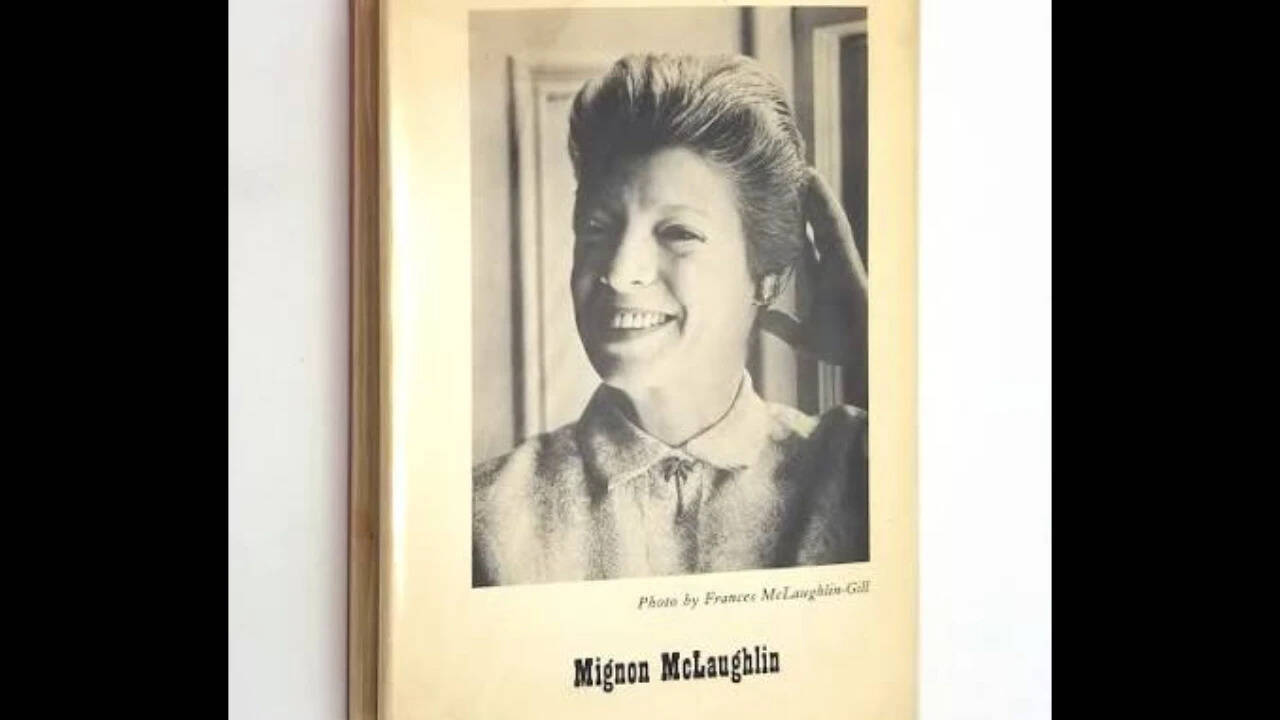
It is a paradox that tastes like iron. McLaughlin, a twentieth-century journalist whose aphorisms cut through social pretense like a scalpel, understood something fundamental about how the human mind defends itself. Pride is not a fortress that can be easily stormed. It is an organism. When you starve it of direct praise, it does not die; it mutates. It goes underground. It dons the sackcloth and ashes, not to repent, but to win a brand-new kind of trophy.
Consider Arthur. (He is a hypothetical composite, but you know him.) Arthur spent forty years climbing the corporate ladder by stepping on fingers while apologizing for wearing heavy shoes. When he finally retired, he didn't throw a lavish party. Instead, he gave a long, tearful speech about how unworthy he was of the watch they bought him, how the real heroes were the junior analysts whose names he routinely forgot. As the room applauded his touching display of grace, Arthur felt a warm, golden surge of superiority. Look at me, his inner voice whispered. Look how humble I am compared to these vain fools.
He had weaponized his own smallness.
This is the psychological trap that catches the best of us. We realize that arrogance is socially toxic. We learn that braggarts are unlovable. So we embark on a self-improvement project to conquer our ego, completely blind to the fact that the project itself is fueled by the exact same engine. We want to be the best at being humble. We want a medal for our modesty.
Psychologists call this moral self-licensing or spiritual narcissism. When we perform an act of humility—admitting a fault, deferring credit, stepping down from a podium—our brains register a moral reward. Dopamine floods the system. We feel good. But the ego is clever. It steals the credit for the very act of abandoning credit.
I remember sitting in a circle of writers years ago, deep into my own unearned artistic suffering, listening to a man confess his failures with such practiced vulnerability that it felt like a performance on a Broadway stage. I caught myself nodding along, entirely seduced by the theater of his repentance. It took years to realize that his confession was just another form of branding. He wasn't bleeding for the art; he was showing you his scars to prove he was a warrior, demanding your pity as a substitute for actual achievement.
Why do we do this?
Because absolute ego-death is terrifying. To truly be humble means accepting that you do not matter nearly as much as you think you do, that your mistakes are common, your triumphs are fleeting, and your moral ledger is largely uninteresting to the universe. That requires a radical surrender. It requires looking in the mirror and realizing that even your self-criticism is often just a vanity project in disguise.
The proud man learns humility the way an actor learns a new monologue. He memorizes the cadence of self-doubt. He adopts the posture of the penitent. He trades his crown for a hairshirt, but he makes sure the hairshirt is tailored by an expensive designer and worn where the light hits just right.
And so, some things never change.
The ancient Greeks had a word for this kind of blindness: hubris. But they understood hubris as a loud, defiant shaking of the fist at the gods. McLaughlin’s observation points to something far more insidious. It is the hubris that whispers. It is the pride that wears sensible shoes and speaks in a soft, trembling voice. It is the ego wearing a disguise so convincing that even the wearer is fooled.
How do we break the loop?
Perhaps by stopping the performance entirely. By realizing that true humility does not announce itself. It does not stand on a stage and dissect its own flaws for an audience of admirers. It simply does the work, absorbs the blow, tells the truth without auditing its own moral purity, and forgets about itself altogether.
Until then, the proud man will keep polishing his badge of modesty, admiring his own reflection in the mud he claims to have walked through, entirely unaware that he is still standing at the very center of his own universe.