The pundits are obsessed with "who holds the upper hand." They track soy bean exports and semiconductor bans like they are keeping score in a high school football game. They are looking at the wrong scoreboard. Most analysts treat the US-China trade friction as a binary conflict where one side’s tariff is the other side’s trauma. This is a fundamental misunderstanding of how globalized capital actually functions in 2026.
The consensus says the trade war is a stalemate that hurts both consumers. The consensus is lazy.
The reality is that the "trade war" isn’t a war at all—it is a violent, necessary, and overdue restructuring of global risk. If you think the goal is to "win" trade volume, you’ve already lost the plot. The goal is the destruction of catastrophic dependencies. Every billion dollars in "lost" trade is actually a premium paid for long-term survival.
The Myth of the Symmetrical Conflict
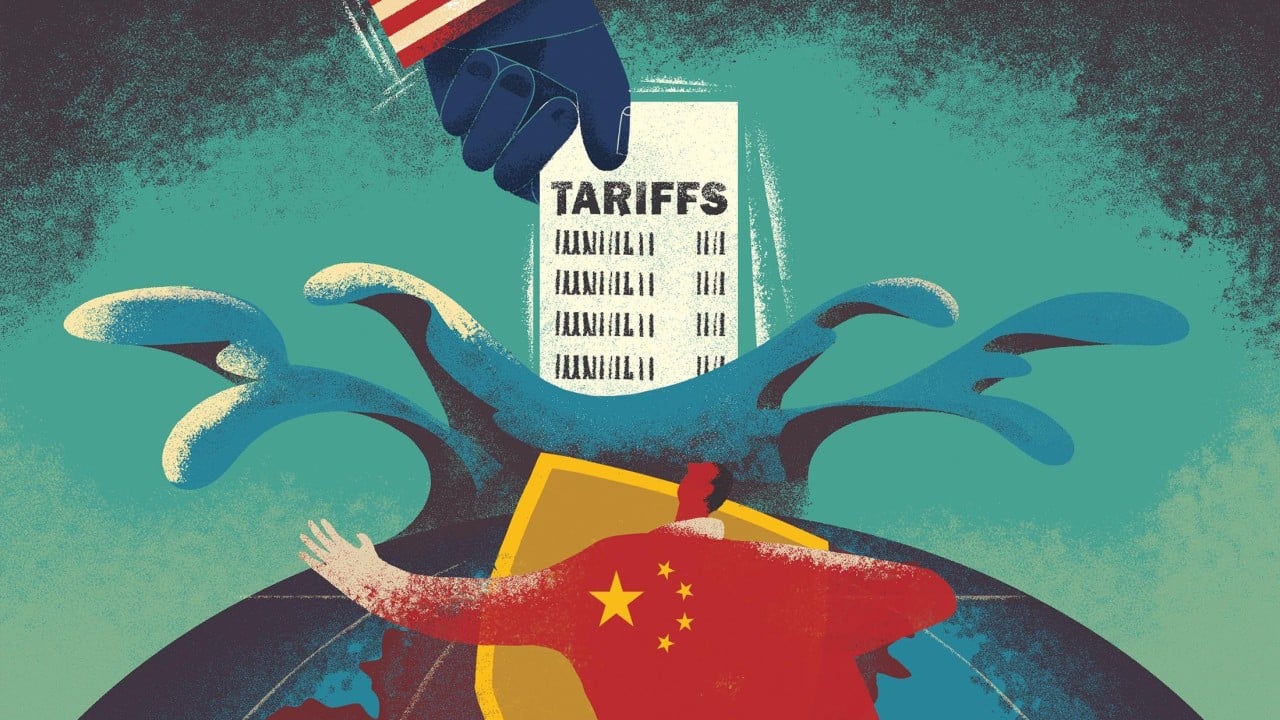
Mainstream media loves the narrative of two giants throwing punches. It makes for good graphics. But the power dynamics are fundamentally lopsided in ways that favor the United States precisely because the US is willing to break its own toys.
China’s entire economic legitimacy rests on the "Great Social Contract": the CCP provides growth, and the people provide compliance. When trade slows, that contract frays. The US, conversely, operates on a system that absorbs volatility. We have a "fail-fast" economy. When a supply chain breaks, we don’t have a politburo meeting to panic about social stability; we have a thousand private equity firms and startups pivoting to Mexico, Vietnam, and domestic automation.
The "upper hand" isn't about who has the bigger surplus. It’s about strategic decoupling. China is desperate to maintain the status quo because they are a manufacturing monoculture. America is the one setting the house on fire because we realized the house was a trap.
The Tariff Trap: Why Inflation Was a Necessary Evil
The loudest complaint against the trade war is that "tariffs are a tax on the domestic consumer." This is the favorite talking point of ivory-tower economists who value a $10 toaster over national security.
Yes, prices went up. But focus on the mechanic, not the price tag. For thirty years, the West subsidized its own deindustrialization by chasing the lowest possible unit cost in Shenzhen. This created a "fragility debt." We traded our manufacturing soul for cheap electronics.
The tariffs acted as a high-interest payment on that debt. They forced companies to do what they should have done a decade ago: diversify. If you are a CEO and you still have 90% of your assembly line in a single province in China, you aren't a victim of a trade war; you are a negligent steward of shareholder value.
I’ve sat in boardrooms where executives lamented the "cost" of moving operations to South Carolina or Guadalajara. My response is always the same: Compare the cost of a 15% tariff to the cost of a total maritime blockade in the Taiwan Strait. One is a line item; the other is an extinction event.
Beijing’s Real Nightmare: The End of Technology Theft
The competitor articles always mention "intellectual property" as a secondary concern. It is the only concern.
For decades, the "cost of doing business" in China was the forced handover of blueprints. It was a slow-motion heist. By restricting high-end chips and lithography equipment, the US isn't just "competing"—it is cutting off the oxygen to a copycat engine.
China’s "Made in China 2025" initiative wasn't a plan for innovation; it was a plan for assimilation. Without access to the bleeding edge of Western silicon and software, the Chinese tech sector hits a ceiling. You can iterate on a smartphone design as much as you want, but if you can't manufacture the 2nm chip inside it, you are playing a different game.
The Subsidy Fallacy
People point to China’s massive state subsidies for EVs and green tech as proof they are winning. This is a classic misinterpretation of "Expertise."
State-directed capital is incredibly efficient at building capacity, but it is miserable at building value. You can build a thousand EV factories with government money, but if the global market rejects your software ecosystem due to security concerns, you’ve just built a very expensive graveyard of lithium and steel.
The US is using the "trade war" to force the world to choose an ecosystem. And despite the hand-wringing, the world still chooses the one with the reserve currency and the rule of law.
The Mexico Pivot is the Real Story
While everyone watches the South China Sea, the real "upper hand" move happened at the US-Mexico border.
Nearshoring isn't just a buzzword; it’s the death knell for Chinese manufacturing dominance. Mexico now holds the position China once held, but with three massive advantages:
- Zero trans-Pacific shipping risk.
- USMCA legal protections.
- Synchronized time zones.
The trade war didn't "stop" trade; it just re-routed it. This isn't a loss for the US. It’s a massive win for North American integration. The "cost" of the trade war is actually a massive investment in a regional fortress economy.
The Reserve Currency Weapon
The most common "contrarian" take you’ll hear from the other side is that China is dumping US Treasuries to "collapse the dollar."
This is amateur hour.
If China dumps the dollar, they destroy the value of their own remaining reserves and kill their best customer. It’s a suicide pact, not a strategy. The US knows this. We have the "Exorbitant Privilege" of the dollar. We can print the currency we owe our debts in. China has to earn it by selling us physical goods.
Who has the upper hand? The guy who can write the checks, or the guy who has to sweat in a factory to cash them?
The Fallacy of "Global Cooperation"
The competitor article likely ends with a plea for "returning to the negotiating table" and "fostering global cooperation."
This is sentimental nonsense.
The era of "Chimerica"—the symbiotic relationship between Chinese production and American consumption—is dead. It died because it was built on an unstable foundation of currency manipulation and IP theft. Trying to "fix" the trade war is like trying to fix a marriage where one partner has been funneling the savings account into a secret bunker for twenty years.
You don't fix it. You divorce. You split the assets. You move on.
The Actionable Reality for Business Leaders
If you are waiting for a "deal" to bring things back to the way they were in 2015, you are failing your organization. There is no "back." There is only the "new bifurcated reality."
- Audit your "China Plus One" strategy. If your "Plus One" is just a warehouse in Vietnam that reroutes Chinese goods, you are still in the crosshairs. Custom agents aren't stupid.
- Bet on Automation over Arbitrage. The reason we went to China was cheap labor. Labor isn't cheap there anymore, and robots are getting cheaper here. The trade war is the greatest catalyst for domestic automation in history.
- Price in the Geopolitics. Stop treating "geopolitical risk" as an asterisk in your annual report. It is the primary driver of your COGS (Cost of Goods Sold).
The US-China trade war isn't an obstacle to be overcome. It is the new environment. The "upper hand" belongs to whoever stops complaining about the weather and starts building the new shelter.
The trade war didn't break the global economy. it revealed that the old one was a facade. The friction is the point. The pain is the signal. The "loss" of trade is the price of freedom from a single-point-of-failure world.
Stop looking for a winner and start looking for the exit.