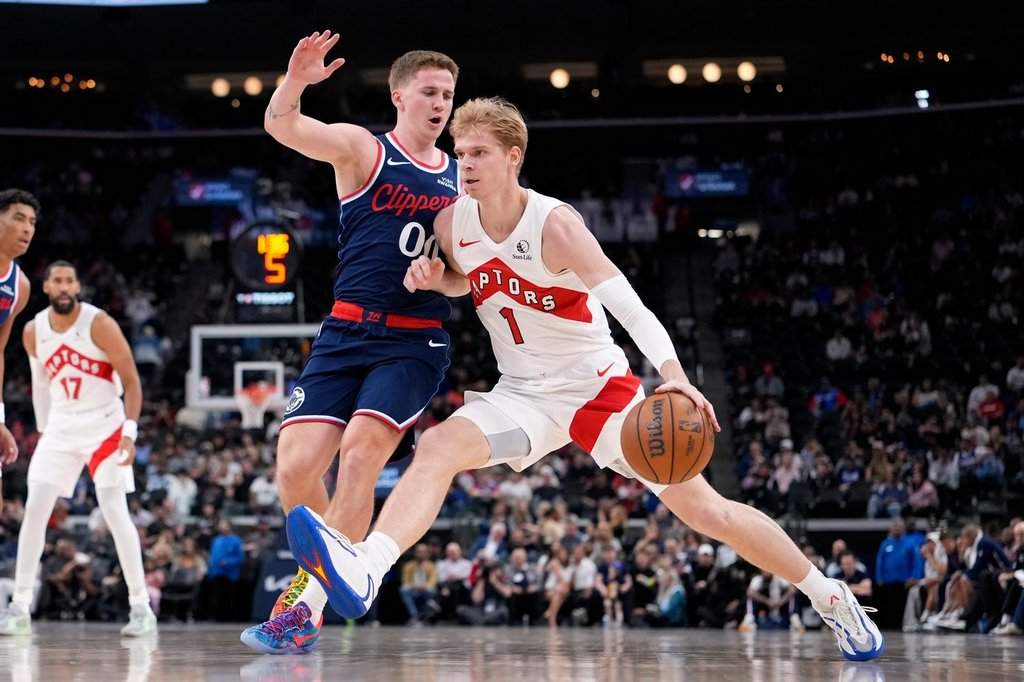
When a young lottery pick runs headfirst into the unforgiving machinery of a rebuilding franchise, the divorce is rarely quiet. For Gradey Dick, stepping onto the hardwood to face the Toronto Raptors for the first time since his departure offered a stark reminder of how quickly professional sports can pivot from high-hope projections to cold, transactional reality. The blockbuster deal that sent him packing to the West Coast wasn't merely a routine roster shuffle; it was a symptom of a broader reckoning inside front offices across the league regarding how long a franchise can wait for a shooter to find his footing when the defensive metrics stubbornly point backward.
Drafted thirteenth overall out of Kansas with the explicit mandate to stretch the floor, Dick walked into an environment that demanded immediate floor-spacing production. Modern basketball requires perimeter threats to offer defensive versatility or elite gravity. When his efficiency dipped and his shooting percentages fluctuated, the margin for error evaporated. Fans and analysts alike spent months dissecting his mechanical release, his physical transformation trying to absorb NBA contact, and whether his developmental arc was being stunted by shifting tactical roles.
The transaction itself, which brought Kawhi Leonard to Toronto while stripping out young assets and draft capital, underscored the Raptors' shifting timeline. Teams chasing immediate competitive edges rarely have the luxury of extended patience. For Dick, landing with a veteran-laden group in Los Angeles under Tyronn Lue provided an immediate change of scenery, yet the underlying questions remained unchanged. Can a perimeter specialist who struggles to anchor against athletic wings carve out a permanent rotation spot when championship aspirations leave zero room for defensive lapses?
Scouts often talk about the psychological toll of a first relocation. Facing the franchise that invested a high draft pick in your future brings a unique brand of pressure. The warm embraces during pre-game warmups quickly fade once the referee blows the whistle. Every missed rotation or contested three-pointer is magnified under the lens of hindsight, fueling the eternal debate between drafting for ceiling versus drafting for floor.
The reality of modern roster construction leaves little middle ground for perimeter shooters. If the three-ball falls at a forty-percent clip, defensive limitations can be masked by scheming and personnel cover. If that percentage slips into the mid-thirties, opposing defenses begin to ignore you entirely, clogging the lanes for primary ball-handlers and forcing coaches into difficult substitution patterns. This razor-thin margin defines the modern wing position.
As the game tipped off, the overarching narrative transcended simple nostalgia. It laid bare the brutal economics of player evaluation. Front offices operate on finite timelines, and patience is a depreciating asset. For every young shooter who blooms after a change of scenery, another drifts quietly toward the fringes of the rotation, victimized by the perpetual arms race for two-way versatility. The box score from that initial meeting against his former team mattered less than the underlying trajectory. The real test is not how a player handles the emotional weight of a reunion game, but whether he can adapt his game before the league decides his archetype is a luxury it can no longer afford.