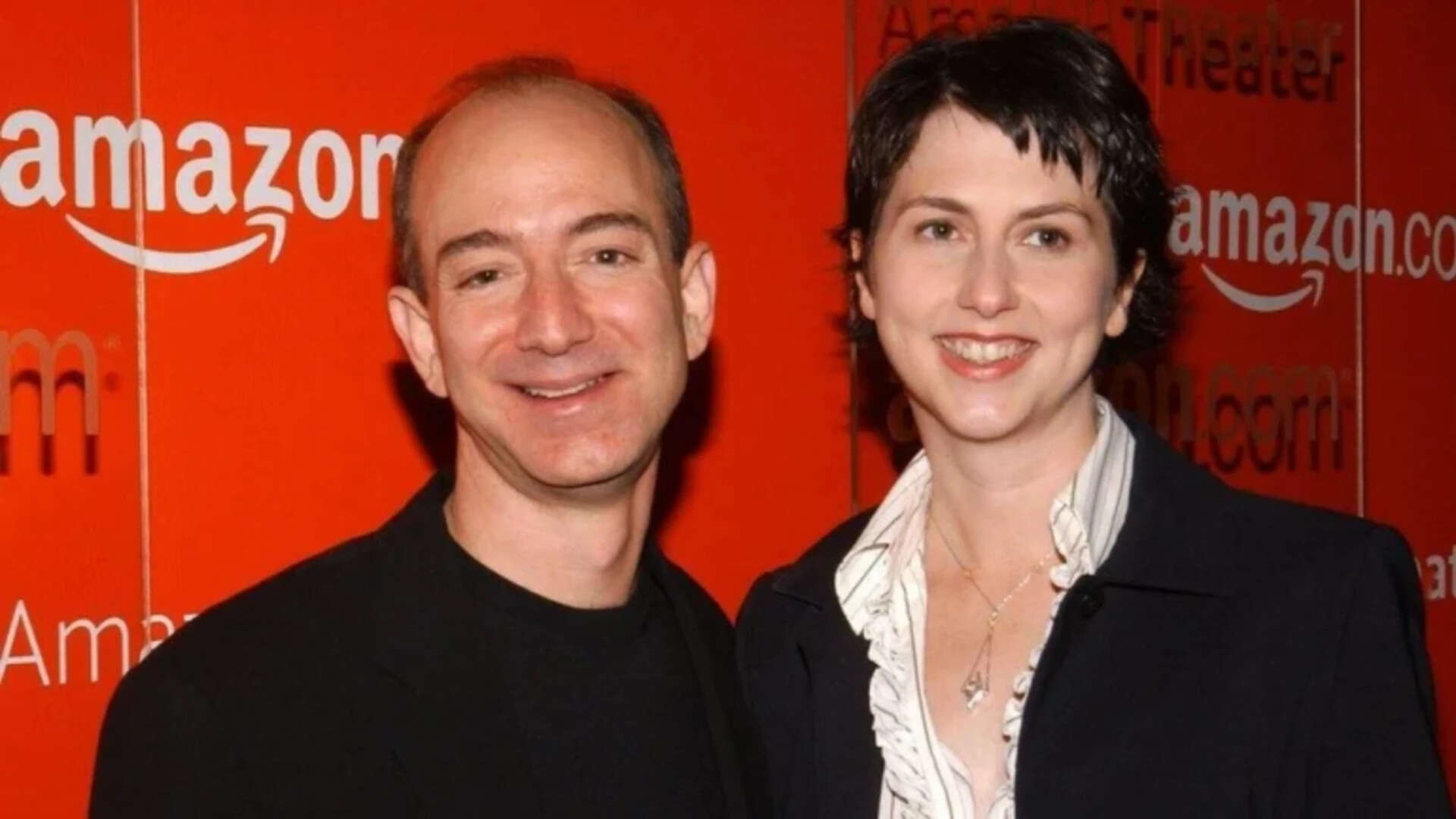
The tech world loves a good origin story. It acts as secular folklore, a modern mythology designed to convince everyone that world-dominating monopolies are born out of pure, unadulterated grit and a single, lightning-bolt moment of genius.
The undisputed holy grail of this folklore is the 1994 road trip.
The story goes that Jeff Bezos clattered away on his laptop in the passenger seat of a Chevy Blazer, drafting the foundational business plan for Amazon, while his then-wife MacKenzie Scott drove them 2,000 miles from New York to Seattle. It is framed as the ultimate romantic gamble. A scrappy underdog couple chasing a dream across the American highway.
It is a beautiful story. It is also an absolute lie that actively damages how we understand modern entrepreneurship.
The "road trip plan" narrative relies on a lazy consensus: that great companies are built on spontaneous inspiration and a willingness to leap without a net. It implies that if you just have enough passion and a Wi-Fi-less laptop in a moving vehicle, you too can build a trillion-dollar empire.
This myth completely ignores the structural realities of capital, risk, and corporate execution. Bezos didn't win because he had a great epiphany on Interstate 80. He won because he understood asymmetric risk, had an institutional pedigree that opened doors to serious capital, and executed a ruthless logistics strategy that had nothing to do with the romance of the open road.
Stop worshiping the road trip. Start studying the spreadsheet.
The Myth of the Unprepared Gambler
The media loves to paint Bezos in 1994 as a wild-eyed dreamer walking away from stability. In reality, he was the youngest-ever senior vice president at D.E. Shaw & Co., a hyper-quantitative Wall Street hedge fund.
He wasn't guessing. He spent his days analyzing the mathematical growth of the internet, which was expanding at 2,300% per year. The decision to leave Wall Street wasn't a reckless gamble; it was a cold, calculated move based on data that almost nobody else was paying attention to at the time.
When people celebrate the "risk" of the road trip, they miss the concept of asymmetric risk—a principle I’ve watched countless founders fail to grasp while sinking their life savings into terrible ideas. True entrepreneurs don't love risk. They seek out situations where the downside is capped and the upside is infinite.
If Amazon failed, Bezos could have walked right back onto Wall Street and commanded a mid-six-figure salary within a week. His downside was a temporary setback. His upside was owning the infrastructure of global commerce.
What People Also Ask: Did Jeff Bezos start Amazon with his own money?
The public wants to believe Amazon was funded by maxed-out credit cards and loose change found under the Chevy's floor mats. It wasn't.
Bezos started with roughly $10,000 of his own cash. But the real engine arrived shortly after the road trip: a $245,573 investment from his parents. To the average aspiring founder, a quarter-million-dollar family safety net isn't a "garage startup"—it’s a massive structural advantage. By 1995, he raised $1 million from a group of elite angel investors.
The road trip story obscures this reality because the tech industry hates admitting that early access to capital is the highest predictor of success. Passion doesn't pay for servers. Capital does.
The Flaw of the Single Epiphany
The narrative implies that Amazon’s business plan was perfected between New York and Idaho. This is a fundamental misunderstanding of how business models actually work.
A startup plan is not a sacred text. It is a hypothesis that usually dies the moment it hits real customers.
Amazon did not survive because of the original plan to sell books online. It survived because Bezos was willing to cannibalize his own ideas to chase margin and scale. The original plan didn't account for AWS (Amazon Web Services), Kindle, or Prime—the actual profit engines that keep the company alive today. Books were simply a wedge strategy. They were easy to ship, didn't spoil, and had a universal catalog.
If you are a founder sitting around trying to draft the "perfect" plan before you launch, you are wasting your time. The value isn't in the plan; it's in the speed of the iteration loop.
The Downside of the Grime-and-Grit Philosophy
Is there a downside to looking at business through this cold, analytical lens? Absolutely.
When you strip away the romance of the road trip, you are left with a brutal, hyper-optimized machine. The same obsession with metrics and efficiency that allowed Bezos to scale Amazon also created a corporate culture known for burning through human capital. The relentless pursuit of optimization works beautifully for a balance sheet, but it can be devastating for the people tasked with executing it on the warehouse floor.
But pretending that Amazon succeeded because of a whimsical road trip ignores the machinery required to build something of that scale. You cannot build a global logistics empire on vibes.
How to Apply the Real Lesson
If you want to build a business that actually survives, stop looking for your road trip moment. Do this instead:
- Audit your asymmetric risk. If your business fails tomorrow, do you lose everything, or do you just go back to a high-paying job? If the downside is catastrophic, change the model.
- Find your wedge product. Don't try to build the "Everything Store" on day one. Find the single, boring product category that has high fragmentation, steady demand, and simple logistics.
- Stop writing long business plans. No one reads them, and the market will change them anyway. Write a one-page document detailing your unfair advantage and your distribution strategy.
The romanticized 2,000-mile drive is a great piece of PR. It creates a consumable narrative for shareholders and the public. But the real work happened in the unglamorous, data-driven execution that followed. The laptop didn't matter. The driver didn't matter. The road didn't matter. Only the math mattered.