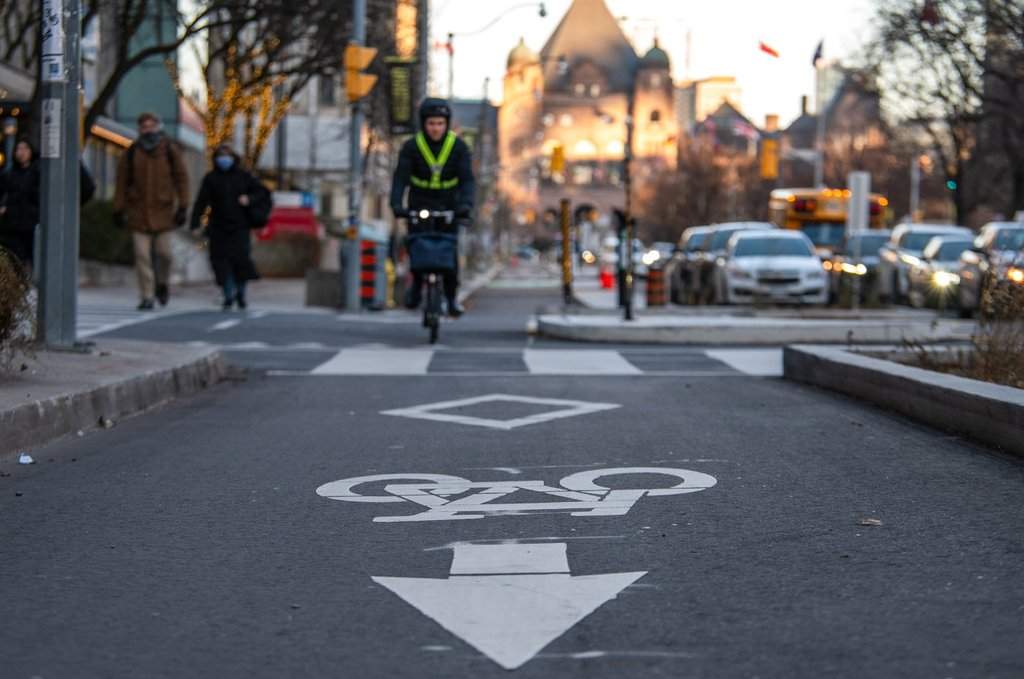
The fight over urban transit in Ontario just reached the highest level possible. Cycling advocates and environmental lawyers aren't backing down after losing at the provincial appellate level. They're officially asking the Supreme Court of Canada to hear their challenge against the provincial government's aggressive plan to rip out protected bike lanes.
If you've been following the ongoing clash between municipal infrastructure and provincial overreach, this next chapter matters. It's about a lot more than paint on pavement or concrete barriers on Bloor Street. It's a high-stakes test of government power, public safety, and how far provincial legislation can go to override local planning.
How the Battle Escalated
Back in late 2024, Premier Doug Ford's government introduced Bill 212—officially titled the Reducing Gridlock, Saving You Time Act—aimed squarely at removing major protected bike lanes on downtown arteries like Bloor Street, Yonge Street, and University Avenue. The rationale was simple on paper: clear out the cyclists to speed up car traffic.
The pushback was immediate. Cycle Toronto, alongside groups backed by environmental law charity Ecojustice, launched a constitutional challenge. They argued that tearing out these protected lanes directly threatens citizens' security of the person under Section 7 of the Charter.
In July 2025, an Ontario Superior Court judge agreed, handing advocates a temporary historic win. But that victory was short-lived. By August 2026, a three-judge panel of the Court of Appeal for Ontario overturned the lower ruling, deciding that the province holds the constitutional authority to change municipal legislation and that no explicit Charter right guarantees bike lanes.
Rather than packing it in, the coalition took their case to the Supreme Court of Canada. As legal representatives point out, the implications stretch far beyond provincial borders or a few kilometres of urban asphalt.
What the Data Actually Says About Safety and Traffic
Proponents of the removals insist that ripping out bike lanes solves gridlock. Yet, independent research and government-commissioned documents tell a different story.
A safety analysis prepared for the Ministry of Transportation by engineering firm CIMA+ estimated that removing these protected lanes could spike collisions among all road users—including drivers, pedestrians, and cyclists—by up to 54 percent. Emergency physicians, transit planners, and engineering associations have repeatedly spoken out, noting that alternative side streets simply cannot absorb the volume or match the safety infrastructure of major arterial lanes.
City officials under Mayor Olivia Chow even presented compromise designs meant to preserve bike infrastructure while maximizing vehicle capacity. Those proposals were rejected by the province, deepening criticisms that the policy is driven by politics rather than transit engineering data.
Why the Supreme Court Bid Matters Now
Right now, the Supreme Court has to decide whether it will grant leave to hear the appeal. If they take the case, they will establish a crucial legal boundary. How much factual evidence must a government present before passing legislation that puts public safety at risk? Can provincial leaders ignore their own internal safety assessments without judicial oversight?
For everyday riders, urban planners, and local politicians, the wait is agonizing. Crews have already started pulling up physical barriers on key stretches like Bloor Street West, and public demonstrations continue to draw massive crowds.
Keep an eye on how the high court handles the application. If they agree to hear arguments, it could redefine the limits of provincial authority over municipal infrastructure across the entire country.
Toronto cyclists ask Canada's top court to weigh in on bike lane removal
This video provides an on-the-ground look at the protests and legal battles surrounding the provincial government's contentious decision to remove protected urban bike lanes.