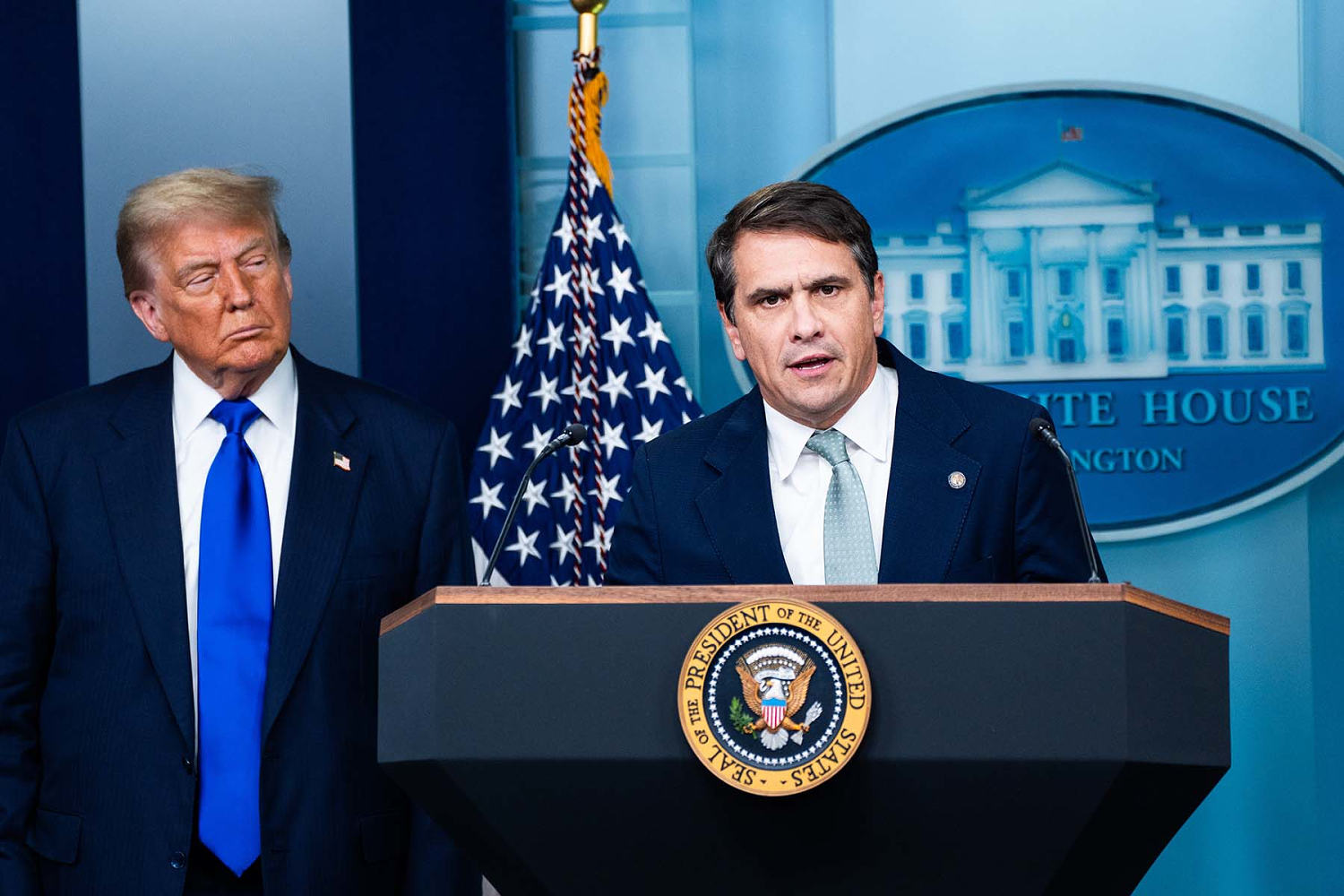
The Washington commentariat is losing its mind over a threat to resurrect an anti-weaponization fund if Todd Blanche hits a confirmation wall. Pundits clutch their pearls. They frame this as an unprecedented escalation, a direct threat to the institutional norms of the Department of Justice, and a dangerous shadow budget for political retribution.
They are missing the entire point.
Focusing on a slush fund or a pool of outside money is looking at the grease while the engine seizes up from the inside. Trump does not need a special fund to shake up the bureaucracy, and Blanche does not need a war chest to alter the trajectory of federal prosecution. The real story isn't about money. It is about executive muscle, institutional inertia, and the brutal reality of who actually holds the keys to the administrative state.
I have watched career bureaucrats weaponize administrative drag for decades. I have seen agencies slow-walk investigations, leak selectively, and protect their own while treating outsider leadership like a temporary weather event to be weathered out. Money does not fix that. Personnel is policy, and Todd Blanche is a structural anomaly in a system designed to chew up outsiders.
The Lazy Consensus on Institutional Norms
Every standard take on this confirmation battle relies on a fairy tale: that the Department of Justice is a neutral arbiter of facts, untainted by political currents until an aggressive executive steps in to break the glass.
That is nonsense. The DOJ has been political since the day it was founded. The difference is that the politics used to belong exclusively to the administrative class—the career prosecutors, the senior executives, and the entrenched offices that treat every change in administration as a minor inconvenience.
When people panic over threats to fund alternative accountability measures or bypass traditional structures, they are projecting a myth of purity onto an institution that long ago abandoned it. The institutionalists want you to believe that keeping career ladders intact preserves democracy. In reality, it preserves insulation. It ensures that no matter how elections turn out, the permanent Washington apparatus retains veto power over the elected branch.
Blanche’s nomination matters precisely because he understands how the defense bar operates inside those very corridors. He is not an ideologue parachuting in from a think tank. He has spent years in the trenches fighting federal prosecutors. Putting a high-level white-collar defense attorney at the head of the DOJ is like putting an apex predator inside the hen house. He knows where the bodies are buried because he helped defend the people accused of burying them.
Why Funding Mechanisms Are a Distraction
Let us address the elephant in the room: the so-called anti-weaponization fund. The media treats this like a sinister parallel government. It is actually a symptom of a deeper frustration.
When oversight fails from within, outsiders look for external pressure valves. But throwing cash at a problem inside the DOJ is the most inefficient way to solve it. Federal agencies do not suffer from a lack of resources; they suffer from a severe excess of unaccountable power.
Imagine a scenario where a private fund is established to bankroll counter-investigations into prosecutorial overreach. Sounds aggressive, right? It also sounds like a logistical nightmare that creates perverse incentives for partisan litigation on both sides. You end up with a perpetual motion machine of tit-for-tat investigations that paralyzes governance entirely.
Trump’s threat to revive such a fund is classic leverage. It is a negotiating posture designed to signal that if the Senate stonewalls his picks through endless procedural delays, he will bypass the traditional gatekeepers altogether. But fixating on the fund misses the administrative reality: the real disruption happens the moment a confirmed Attorney General walks into Main Justice and starts demanding receipts for every grand jury subpoena issued over the last decade.
You do not need a special fund to audit prosecutorial discretion. You just need an Attorney General willing to sign off on massive internal declassifications, personnel reassignments, and policy memos that strip field offices of their unearned autonomy.
The Anatomy of Bureaucratic Resistance
To understand why Blanche terrifies the establishment, you have to look at how the DOJ actually functions day-to-day.
The Attorney General sits at the top of a pyramid consisting of over one hundred thousand employees, the vast majority of whom view themselves as permanent guardians of the state. They outlast presidents. They outlast attorneys general. They rely on the sheer complexity of federal code to bury directives they disagree with.
When a directive comes down from the top to close a line of inquiry or review a controversial prosecution, the resistance rarely takes the form of outright insubordination. Instead, it looks like:
- Endless inter-agency consultations that stall action for months.
- Strategic leaks to friendly reporters framing policy shifts as corrupt interference.
- Procedural foot-dragging designed to run out the clock on an administration's term.
Blanche’s background gives him a unique immunity to this playbook. He has spent his career dissecting federal indictments, poking holes in prosecutorial theories, and identifying overreach. He does not need to learn how a grand jury works on his first day. He knows how line prosecutors think because he has beaten them in court.
That is why the confirmation fight is so vicious. It is not about qualifications. It is about control.
The Contrarian Playbook for Reforming Justice
If you actually want to fix a broken justice system, stop worrying about confirmation threats and start looking at the structural levers that encourage abuse in the first place.
Here is what real reform looks like, stripped of the partisan theatre:
Decentralize Prosecutorial Power
The centralized power concentrated in main justice and high-profile field offices is too easily weaponized. True reform requires decentralizing authority, making individual U.S. Attorneys more accountable to local constituents, and radically lowering the barrier for holding federal prosecutors personally liable for malicious prosecutions or egregious Brady violations.
Weaponize Transparency, Not Politics
Instead of secret funds or backroom pressure, mandate the immediate publication of all internal memos regarding the opening of politically sensitive investigations. Sunlight is not just a disinfectant; it is an administrative brake. If prosecutors know their preliminary case files will face public scrutiny within six months of opening, they will think twice about pursuing speculative theories driven by political pressure.
Restrict the Scope of Federal Criminal Code
The root cause of DOJ weaponization is the sheer bloating of federal criminal law. When there are thousands of vague federal statutes on the books, prosecutors can find a violation for almost anyone, anywhere. Fixing the DOJ requires Congress to do its job and sunset vague regulatory crimes. Until then, any Attorney General is just managing a loaded weapon.
The Downside of the Disruptor Approach
Let us be completely transparent about the risks here. A scorched-earth approach to the Department of Justice carries massive downsides.
When you treat the entire agency as hostile territory, you risk destabilizing legitimate law enforcement functions. Counter-terrorism, intellectual property theft protection, transnational drug cartels, and routine white-collar fraud enforcement rely on career professionals who do their jobs without political bias. If the leadership purges too aggressively or creates an atmosphere of paranoia, competent professionals leave en masse.
You run the risk of replacing an entrenched, arrogant bureaucracy with a demoralized, hollowed-out one. That is the trade-off. Disruption is never clean. Anyone telling you that you can radically overhaul an imperial bureaucracy without breaking vital windows along the way is selling you a political pamphlet.
The Real Battle Ahead
The fight over Todd Blanche’s nomination and the rhetoric around funding mechanisms is just the opening salvo in a much larger war over who controls the administrative state.
The establishment wants a return to quiet, polite control—where the system polices itself, scandals are quietly buried under multi-year inspector general reports, and the public is told to trust the process.
Trump and his allies are offering a chaotic, high-stakes collision course that treats the existing institutional framework as the primary obstacle to reform.
Whether Blanche gets confirmed through standard channels or pushed through via recess appointments is ultimately a tactical detail. The signal has already been sent: the era of business-as-usual at Main Justice is over. The only question left is how much of the old architecture survives the impact.
Stop watching the funding threats. Watch the organizational charts. That is where the war is actually won or lost.