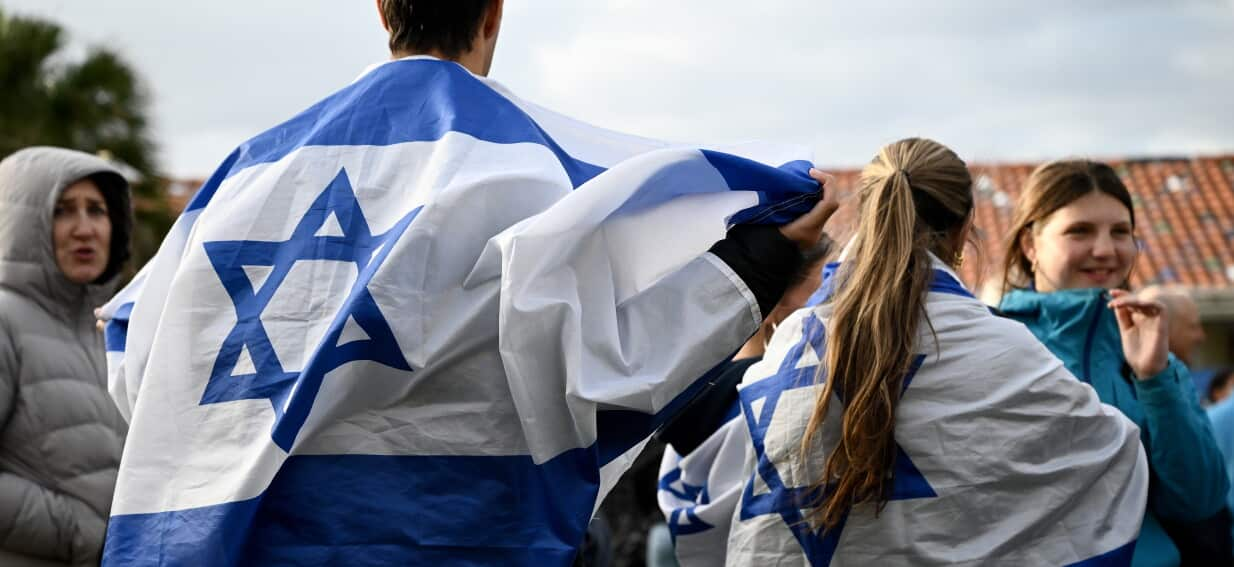
Three years have passed since the morning of October 7, 2023, when an unprecedented assault by Hamas militants shattered the security paradigm of southern Israel, leaving over 1,200 dead—predominantly civilians—and taking hundreds of hostages into the Gaza Strip. The anniversary is not merely a marker of time; it is a forced reckoning with an ongoing trauma that continues to reshape the geopolitical, social, and psychological landscape of the region. While survivors and supporters gather globally to mark the third anniversary under the banner of survival and memory, the underlying reality remains unmoored from simple narratives of closure. The scars of that day are systemic, generational, and inextricably linked to a wider war that shows no sign of a clean architectural finish.
To understand the weight of this third anniversary, one must examine how the aftermath has transformed from immediate emergency response into a permanent state of national hyper-vigilance. The communities surrounding the Gaza envelope—Be'eri, Kfar Aza, Nir Oz, and the site of the Nova music festival—were not just locations on a map; they were ideological experiments in kibbutz socialism and communal living that valued proximity to the border as a statement of coexistence. That geography now carries a different meaning. Rebuilding physical structures is the easy part of the equation. Pouring concrete and hanging drywall takes capital and engineering. Reconstructing the social fabric of communities where entire families were decimated, where neighbors became first responders and victims simultaneously, is a multi-decade burden.
The psychological toll on survivors has mutated as the conflict expanded into a protracted multi-front war. In the immediate aftermath, adrenaline and acute stress responses dominated. Today, the clinical reality is chronic, complex post-traumatic stress disorder, compounded by the prolonged limbo of hostages still held in Gaza and the shifting calculus of a society at war. Mental health infrastructure in Israel, already strained before October 7, has been forced to scale up exponentially, treating not just direct survivors, but soldiers rotating through urban combat zones, displaced families living in temporary hotels for months on end, and a broader public experiencing secondary trauma through a continuous feed of news and military casualty reports.
Simultaneously, the political and international dimensions of the anniversary highlight a deep global polarization. What happened on October 7 triggered a military campaign in Gaza that has resulted in staggering loss of Palestinian life and a catastrophic humanitarian crisis, drawing intense international scrutiny, legal challenges at the International Court of Justice, and widespread protests across Western capitals. For survivors and supporters of Israel, the third anniversary is frequently experienced as a battle against what they perceive as international amnesia or minimization of the initial atrocities. For critics of the war, the anniversary of October 7 is viewed through the lens of subsequent devastation in Gaza, creating an environment where grief has become a contested political commodity rather than a shared human experience.
The economic and structural impacts are equally profound. Entire agricultural sectors in the south lost their seasonal laborers and security confidence. Tourism dropped precipitously. The state budget has been redirected toward defense spending on a scale not seen in generations, altering the fiscal health of the country and forcing difficult conversations about taxation, military service exemptions, and the sustainability of long-term security commitments.
As memorial ceremonies conclude and flags are folded, the fundamental questions raised on October 7 remain unanswered. The illusion of containment is gone, replaced by an uneasy awareness that security is neither permanent nor guaranteed by technology alone. Survivors who chose life three years ago continue to navigate a daily reality where the past is not a chapter in a history book, but the very air they breathe.


