Global markets rarely move because of a single headline, yet the convergence of a Politburo promotion in Beijing, a presidential victory for Luiz Inácio Lula da Silva in Brazil, and a fiercely contested US midterm election cycle created a rare structural realignment in international trade, energy policy, and sovereign risk. For institutional investors and corporate strategists, these three political events did not happen in isolation; together, they redrew the map of where capital feels safe and where supply chains must relocate to survive the next decade of geopolitical friction.
Most financial commentary treats national elections and party congresses as isolated domestic dramas. That is a costly mistake. When the world’s largest manufacturer, the dominant agricultural and commodity powerhouse of South America, and the issuer of the world's reserve currency all experience political inflection points within the same compressed window, the ripple effects hit everything from semiconductor fabrication to soybean futures.
The Architecture of Consolidation in Beijing
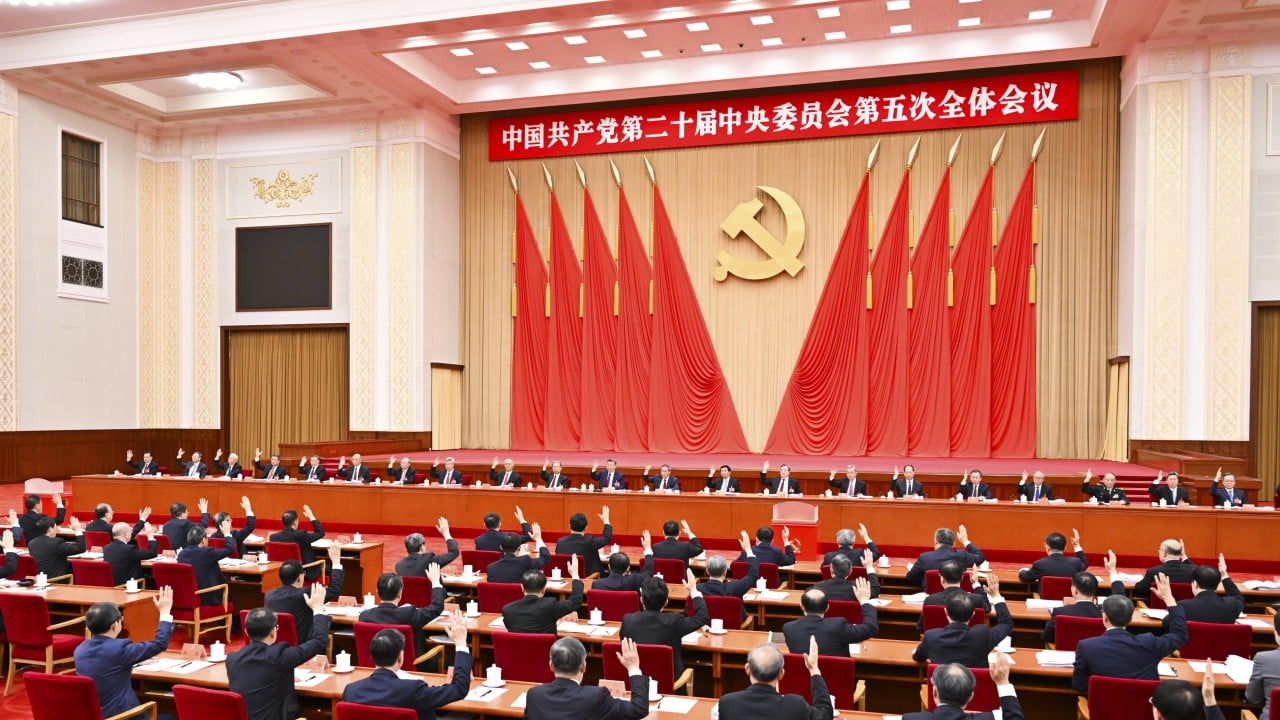
A Politburo promotion is never merely a personnel change. In the Chinese political system, elevation to the Standing Committee or the broader Politburo signals a multi-year commitment to specific economic doctrines and security priorities. When loyalists with deep backgrounds in state security, industrial self-reliance, and crisis management ascend over market-oriented technocrats, the message to multinational corporations is unmistakable.
Growth is no longer the sole metric of political legitimacy. Security has taken the wheel.
For decades, foreign direct investment flowed into coastal Chinese manufacturing hubs under the assumption that economic liberalization would naturally follow market integration. Those days are gone. The elevation of cadres who spearheaded zero-COVID enforcement, state-owned enterprise reform, and indigenous technology drives confirms that Beijing prioritizes supply chain autonomy and ideological discipline over short-term GDP expansion.
Consider what this means for corporate boardrooms in Frankfurt, Tokyo, and New York. When political loyalty outweighs technical market expertise at the highest levels of the Chinese Communist Party, policy predictability shifts. Regulatory crackdowns on private tech platforms or sudden export controls on critical minerals like gallium and germanium are no longer black swan events; they are standard instruments of statecraft.
The Capital Flight Nobody Wants to Name
Institutional asset managers rarely announce a wholesale exit from the world's second-largest economy. Instead, they quietly reallocate. Following major Politburo reshuffles, emerging market equity funds increasingly launched "ex-China" products, allowing pension funds and endowments to capture Asian growth without carrying Chinese political risk.
Manufacturing executives followed the same playbook under the banner of "China Plus One." Factories did not shut down overnight, because replicating the Shenzhen supply ecosystem in Vietnam or northern Mexico takes years and billions of dollars. However, new capital expenditure—the lifeblood of future industrial capacity—began bypassing mainland ports in favor of Southeast Asia and North America. The promotion of security-focused officials accelerated a decoupling process that tariffs alone had failed to complete.
Brazil and the Return of Resource Nationalism
While Beijing tightened its grip on industrial policy, Luiz Inácio Lula da Silva’s return to the Planalto Palace in Brasília shifted the calculus across Latin America. Lula’s victory over Jair Bolsonaro was initially celebrated by environmental advocates and global climate negotiators due to his pledges to halt deforestation in the Amazon. Yet beneath the green diplomacy lies a much more complex reality for commodity markets and foreign investors.
Lula governs with a fundamentally different view of state intervention than his predecessor. Under Bolsonaro, Brazil pursued privatization, central bank independence, and fiscal restraint championed by Economy Minister Paulo Guedes. Lula’s administration immediately signaled a return to state-led development, questioning the autonomy of the Banco Central do Brasil and expanding the role of state-controlled giants like Petrobras and the Brazilian Development Bank (BNDES).
Markets reacted with immediate skepticism. The Brazilian real experienced sharp volatility whenever Lula publicly criticized high interest rates or suggested that Petrobras should prioritize domestic fuel subsidies over shareholder dividends.
The Diplomatic Tightrope Between Washington and Beijing
A Lula victory also reshaped South American geopolitics in ways that directly complicate US trade strategy. Brazil is not an ideological adversary of the United States, nor is it a formal ally of China. It is a pragmatic commodity superpower that feeds China's population while relying on Western financial markets.
Under Lula, Brazil aggressively championed the expansion of the BRICS bloc and openly questioned the dominance of the US dollar in bilateral trade settlement. For Washington, which had hoped to bring Latin American lithium, copper, and agricultural supply chains closer into a "friend-shoring" orbit, Lula’s foreign policy served as a sobering reminder: emerging economies will not choose sides when they can extract concessions from both superpowers.
Hypothetically, consider a European automaker trying to secure lithium and green hydrogen in South America while selling electric vehicles in North America. Under US subsidy rules, battery minerals must be sourced from free-trade partners to qualify for consumer tax credits. Brazil lacks a comprehensive free-trade agreement with Washington, and Lula’s reluctance to align with US export controls against Beijing puts multinational supply chains directly in the crossfire.
Divided Government and Fiscal Brinkmanship in Washington
The third pillar of this geopolitical triad—the US midterm elections—produced a split Congress that locked in domestic legislative gridlock while leaving executive trade authority completely intact. For Wall Street, a divided Washington is traditionally viewed as bullish because neither party can pass sweeping tax hikes or radical regulatory overhauls.
That historical rule of thumb misses the modern reality of executive power.
Even when a narrow partisan majority paralyzes domestic legislation, the White House retains vast unilateral authority over tariffs, sanctions, and export controls through statutes like Section 301 of the Trade Act and the International Emergency Economic Powers Act. Furthermore, a divided Congress often finds bipartisan consensus in exactly one area: taking a harder line on China.
Consequently, the US midterm elections did not slow down the fragmentation of global trade; they institutionalized it. Republican control of the House brought aggressive oversight of federal spending and recurring standoffs over the US debt ceiling, injecting periodic spikes of volatility into Treasury markets. Meanwhile, the administration leaned heavily on industrial policy—deploying hundreds of billions of dollars already authorized under the CHIPS and Science Act and the Inflation Reduction Act—to subsidize domestic semiconductor and clean energy manufacturing.
The Hidden Cost of Industrial Subsidies
Subsidies distort capital allocation just as effectively as tariffs. When Washington offers massive tax credits for domestic battery plants and semiconductor foundries, it pulls capital away from emerging markets and even from traditional European allies.
European leaders complained bitterly that US industrial policy threatened to deindustrialize the continent at the exact moment European factories were struggling with high natural gas prices. Instead of creating a unified Western trade bloc, the post-midterm legislative environment triggered a global subsidy race. Countries that could afford to write massive checks—the United States and China—pulled ahead, while developing nations without fiscal headroom were left watching foreign direct investment dry up.
Where These Three Forces Collide
To understand why a Politburo promotion, a Lula victory, and US midterm elections matter together, look at the physical commodities that power the modern economy. Every electric vehicle, wind turbine, and data center requires vast quantities of copper, lithium, nickel, rare earth elements, and processed silicon.
China controls the midstream refining and processing of nearly all these materials. Brazil and its South American neighbors hold massive upstream reserves of the raw minerals and agricultural staples. The United States controls the primary consumer market, the deepest capital pools, and the advanced semiconductor intellectual property.
When all three political nodes shift simultaneously, the friction at the seams becomes acute:
- Refining bottlenecks tighten. As Beijing elevates security-minded officials, Western firms face growing pressure to build redundant refining capacity outside China, driving up capital costs and compressing corporate profit margins.
- Upstream extraction grows more expensive. Lula’s emphasis on environmental enforcement, indigenous land rights, and state participation raises compliance costs and slows permitting for new mining and infrastructure projects across Brazil.
- Downstream demand becomes politicized. US midterm outcomes ensure that access to American consumers remains tied to strict domestic content rules and geopolitical alignment, forcing global manufacturers to build separate supply chains for Western and Chinese markets.
This is the death of pure efficiency. For thirty years following the Cold War, multinational corporations optimized their operations for a single variable: lowest landed cost. Inventory was kept lean, factories were concentrated in massive Chinese industrial parks, and geopolitical risk was treated as an academic footnote.
Today, resilience outweighs efficiency. Companies are carrying higher inventory buffers, duplicating factories across multiple continents, and paying higher financing costs as central banks keep interest rates elevated to combat the inflationary pressures of deglobalization.
The Myth of the Clean Decoupling
A common fallacy among political pundits is that the global economy is neatly splitting into two self-contained spheres: a US-led democratic bloc and a China-led authoritarian bloc. Reality on the ground is far messier.
Trade data consistently shows that even as direct US imports from China decline as a percentage of total trade, Chinese exports to Mexico and Southeast Asia surge—and those very countries then export finished goods to the United States. The supply chain has not been severed; it has simply grown longer, more opaque, and more expensive.
Similarly, Lula’s Brazil cannot afford to alienate American financial institutions or European buyers, just as Washington cannot suddenly replace Chinese battery cathodes or Brazilian soybeans overnight. What has emerged is not a clean divorce, but a high-friction custody battle over critical resources, technology standards, and trade routes.
What Institutional Investors Are Actually Watching
Experienced risk managers have stopped trying to predict election outcomes or decode obscure speeches from party congresses. Instead, they track concrete operational indicators that reveal how businesses are adapting to this tripolar reality:
- Foreign Direct Investment (FDI) flows into intermediate manufacturing hubs. Rising industrial real estate leases in Monterrey, Mexico, or northern Vietnam tell a clearer story about supply chain migration than any politician’s speech in Washington or Beijing.
- Sovereign debt spreads in resource-rich emerging markets. When Brazil’s fiscal policy clashes with its central bank’s inflation targets, the widening spread on Brazilian government bonds signals exactly how much risk premium global lenders demand for state intervention.
- Corporate capital expenditure guidance during earnings calls. When major industrial conglomerates quietly shift capex budgets from share buybacks into redundant domestic plant construction, it confirms that higher structural inflation is baked into the global economy.
Navigating a Fragmented Era Without Illusions
There is no clean hedge against simultaneous political shifts across Beijing, Brasília, and Washington. Diversification across asset classes provides partial protection, yet traditional correlations break down when geopolitical shocks hit energy and food supplies simultaneously.
Sovereign wealth funds and multinational corporations that thrive in this environment share one defining trait: they treat political risk as an operational cost rather than a temporary market anomaly. They stress-test their suppliers not just for creditworthiness, but for jurisdictional exposure. They assume that export controls will tighten, that fiscal deficits in major democracies will remain structurally wide due to political polarization, and that resource-rich nations will consistently demand a larger share of commodity profits.
If your business model or investment thesis still relies on the low-inflation, frictionless global trade architecture of the 2010s, you are pricing assets for a world that no longer exists.