Two kilometers.
That is the exact width of the Dnipro River where it separates the occupied town of Oleshky from the free city of Kherson, a stretch of water so narrow that on a clear morning you can stand on the eastern bank and see the shattered apartment blocks of the west, close enough to watch the smoke curl from a neighbor's chimney, yet separated by a chasm of artillery fire, mined marshlands, and sniper scopes that makes the distance as impassable as the Atlantic Ocean. Also making headlines in this space: The Anatomy of European Youth Protests and the Mechanics of Sustained Civil Mobilization.
To cross those two kilometers directly is to invite almost certain death. So, to get home, the people of Oleshky have to travel two thousand.
They pack their lives into a single scuffed suitcase, board buses heading deeper into the jaws of the occupation, cross into Russia, wind north through the pine forests of Belarus, and finally arrive at the tightly guarded border crossing at Mokrany-Domanove, stepping back onto Ukrainian soil only after tracing a giant, exhausting semicircle around the war. Additional information on this are explored by The Washington Post.
When a news wire runs a headline stating that civilians from Russian-occupied Oleshky have arrived in Belarus on their way to Ukraine, the words sit on the screen with the cold, bloodless efficiency of a shipping manifest. You read it, nod at the strange geometry of modern conflict, and scroll on. You do not smell the stale diesel of a bus that has been idling at a filtration checkpoint for fourteen hours, nor do you feel the hollow, trembling terror of deleting every text message, photograph, and banking app from your phone while an armed guard watches your thumb hover over the glass.
I have spent years reporting from the edges of displacement corridors, sitting on plastic chairs in transit centers from Lviv to Warsaw, listening to people try to compress years of claustrophobia into a twenty-minute intake interview. You learn quickly that geography in wartime has nothing to do with miles. It is measured entirely in checkpoints, interrogation rooms, and the quiet, suffocating weight of having to pretend you are someone else just to survive until Tuesday.
The Geography of a Trap
To understand why anyone would voluntarily enter Russia and Belarus to escape a Russian occupation, you first have to understand what happened to Oleshky.
Before the full-scale invasion, Oleshky was a quiet, sandy town on the left bank of the Dnipro in southern Ukraine’s Kherson region, famous mostly for its sprawling pine forests and the sweet watermelons grown in the surrounding alluvial soil. Then came February 2022, and the town vanished behind the front line. Nine months later, in November 2022, Ukrainian forces liberated Kherson city on the opposite bank, turning the river into a permanent, roaring scar.
And then, in June 2023, the Kakhovka Dam blew apart.
Water swallowed Oleshky whole. For days, residents clung to the roofs of flooded houses while Russian shelling echoed across the brown tide, waiting for rescue boats that were often barred from reaching them. The floodwaters eventually receded, leaving behind a gray crust of dried silt, collapsed foundations, and a town stripped of functioning hospitals, clean water, and basic sanity.
Imagine living in a house where the front door is locked from the outside, the back door opens onto a minefield, and the only way to reach the street out front is to climb through the attic, cross the neighbor's roof, walk three miles down an alley, and circle back around the block. That is the daily reality of the left bank. With the Antonivsky Bridge lying in twisted concrete ribbons in the river, the direct route west ceased to exist.
For months, the people left behind—mostly the elderly, the stubborn, the caretakers of bedridden parents, and those who simply lacked the cash to pay smugglers—lived in a state of suspended animation. Without a Russian passport, you could not get insulin, collect a pension, or register a car. With one, you risked forced conscription or the quiet suspicion of neighbors.
The Anatomy of a Thousand-Mile Escape
Consider a hypothetical family—let us call them Olena, a retired schoolteacher in her late sixties, and her twelve-year-old grandson, Taras—to trace what this journey actually demands of a human body and mind.
Leaving Oleshky does not begin with packing a bag. It begins weeks earlier with a ritual of digital erasure.
In the quiet of a shuttered kitchen, Olena has to scrub her life clean. Every photo of Taras holding a yellow-and-blue flag at a school assembly in 2021 must be permanently deleted. Every Telegram chat with her daughter in Kyiv, every news channel not sanctioned by Moscow, every receipt showing a donation to a Ukrainian charity—all of it is a potential sentence to a basement detention cell. Yet she cannot wipe the phone completely blank, either, because border guards at filtration points know that a pristine, empty phone is the surest sign of someone hiding something. So she spends days constructing a curated, innocuous digital ghost: recipes, weather forecasts, neutral family photos, a history that looks boring enough to pass inspection.
Then comes the money. Private carriers, operating in a gray market of whispered phone numbers and encrypted messages, charge hundreds of dollars per seat—a fortune in an economy reduced to rubble and meager pensions.
The bus leaves at dawn, heading south and east, deeper into occupied territory, through Melitopol or Crimea, and across the border into mainland Russia. For Olena and Taras, every kilometer feels like a betrayal of instinct. When you are trying to escape a fire, every nerve in your body screams at you to run away from the flames, not straight through the furnace.
Inside the cabin, nobody speaks above a murmur. Strangers sit shoulder to shoulder, bound by a shared, unspoken pact of invisibility. At every checkpoint—and there are dozens—the doors hiss open, boots thud up the aisle, and flashlights sweep across faces. Passports are collected. Men are pulled off the bus to be stripped to the waist, checked for military calluses, bruises from rifle stocks, or patriotic tattoos. Phones are plugged into forensic extraction devices that comb through deleted files in seconds.
You sit still. You keep your hands visible. You answer questions in a flat, polite register, praying that your heart rate does not show in the pulse of your throat.
Why Belarus Became the Only Door Left Open
If you look at a map of Europe, routing Ukrainian refugees through Belarus looks like an absurdity. Since 2022, Minsk has served as a staging ground and staunch ally for Moscow’s war effort, its own borders heavily fortified and its security apparatus tightly integrated with Russia’s FSB.
Yet, in the strange, shifting calculus of wartime diplomacy, the northwestern edge of Belarus became a pressure valve.
Earlier in the war, Ukrainians escaping occupied territories often crossed into the Baltic states—Estonia or Latvia—or looped through Poland before turning south into Ukraine. Over time, border restrictions tightened, wait times stretched into days in freezing weather, and the sheer logistical cost of circling through the European Union became prohibitive for impoverished families without biometric passports.
That left the Mokrany-Domanove crossing, tucked into the dense, marshy woodlands where southwestern Belarus meets Ukraine’s Volyn region.
Here, a narrow, heavily mined strip of asphalt—roughly two kilometers of no-man's-land, mirroring the exact width of the river back in Oleshky—connects two worlds. Because vehicles are barred from crossing the border zone, civilians have to dismount on the Belarusian side and walk.
It is one of the surrealest scenes of the twenty-first century. Elderly women leaning on aluminum walkers, mothers dragging wheeled suitcases over cracked pavement, children clutching stuffed animals, all trudging silently past anti-tank obstacles and razor wire while Belarusian border guards watch from one end and Ukrainian border guards wait at the other.
Why does Moscow allow it? Why does Minsk keep that single narrow corridor open?
The answer is rarely humanitarian. For an occupying power, the departure of stubborn, elderly, or unassimilable civilians removes mouths it does not want to feed and potential informants it does not want to police. And for the state apparatus in Minsk, facilitating a trickle of humanitarian crossings offers a sliver of diplomatic utility—a quiet bargaining chip, a gesture of controlled normalcy on a border otherwise bristling with missiles.
Politics, as always, deals in leverage. People deal in survival.
The Cost of Crossing Over
I still remember speaking with a man from the Kherson region at a reception center two winters ago, a former mechanic whose hands were permanently stained with grease he hadn't touched in months. He had spent four days on buses to travel a distance he used to cover in twenty minutes on a bicycle.
When he finally stepped past the Ukrainian border post, he didn't cheer. He didn't drop to his knees and kiss the ground the way movies teach us people do when they reach safety. He sat down on a concrete curb, pulled a crumpled pack of cigarettes from his coat pocket, and stared at his boots for twenty minutes without saying a word.
"You spend so long holding your breath," he told me quietly, "that when someone finally tells you it's safe to breathe, your lungs don't remember how to move."
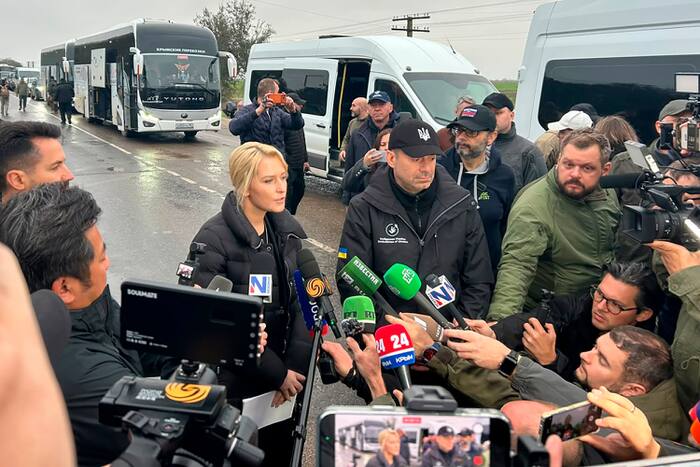
That is the invisible toll that never makes it into the dispatches. When officials announce that a group of civilians—often a dozen, sometimes thirty, predominantly women, children, and the elderly—has safely arrived via Belarus through the coordination of Ukrainian authorities, volunteer networks, and international mediators, the announcement marks the end of the logistical story.
In truth, it is only the beginning of the human one.
Every person stepping off that asphalt at Domanove arrives carrying a profound, disorienting grief. Many are leaving behind homes they built brick by brick over forty years, graves they can no longer tend, and neighbors who were too frail to survive a four-day bus ride. They arrive in a country that is itself bruised, exhausted, and stretched thin, trading the acute terror of occupation for the chronic uncertainty of starting over at seventy with two hundred dollars in a coat pocket.
Yet, watch what happens in the first ten minutes after they clear the Ukrainian checkpoint.
Volunteers in high-visibility vests step forward with paper cups of hot tea and SIM cards. Someone takes the heavy suitcase from an older woman's hand. For the first time in two, three, or four years, people hear Ukrainian spoken openly in the street without lowering their voices or glancing over their shoulders to see who is listening.
The shoulders drop. A woman pulls a crumpled photograph—hidden deep inside the lining of a shoe or sewn into the hem of a winter coat—out into the daylight.
They went north to go south. They entered the territory of the very state that shattered their town in order to escape its grip. They bent themselves around the geography of an entire continent just to cross a river they could have swum across in twenty minutes on a summer afternoon.
And as the transport van pulls away from the border post in Volyn, heading south toward the interior of Ukraine, an elderly woman presses her forehead against the cold glass of the window, watching the birch trees blur past in the gray light, finally breathing out a breath she has been holding since the water rose over Oleshky.