Dust does not care about lines drawn on a map in Europe a century ago. It rises the same way on the Ethiopian side of the Dawa River as it does on the Kenyan side, choking the throat, coating the tongue with the taste of iron and dry scrub, and turning every breath into a small, grating negotiation.
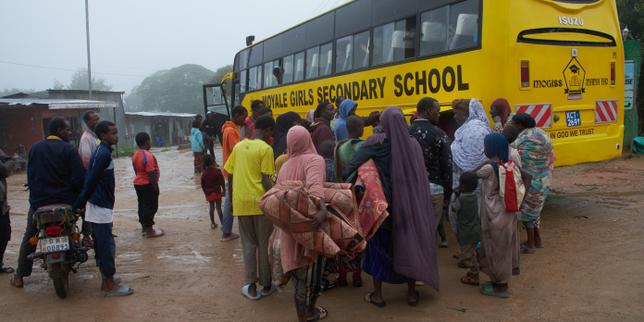
Walk along the red dirt tracks outside Moyale during a border surge, and you quickly learn what thirty-six thousand actually looks like. On a news ticker in Paris or Nairobi, 36,000 is an ink smudge. A tidy, rounded digit wedged between a weather forecast and a stock market update. Out here, under a sky bleached white by relentless sun, thirty-six thousand is not a statistic. It is a continuous, slow-moving river of exhausted human beings carrying mattresses rolled like giant cigars, plastic jerrycans tied with frayed rope, and toddlers asleep against sweat-slicked backs.
Wait. Stop and count to ten.
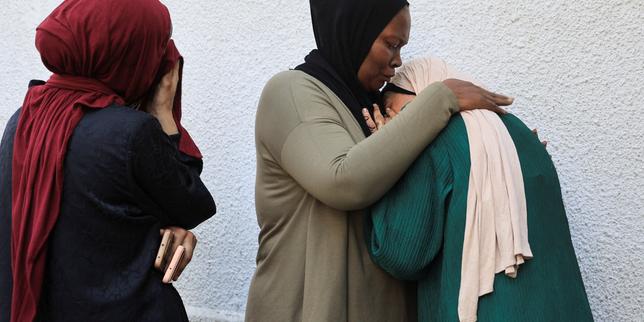
In the time it took you to breathe through those ten seconds, another family—maybe a grandmother leaning on a eucalyptus stick, a mother clutching a laminated birth certificate wrapped in a grocery bag, and two wide-eyed boys—stepped across an invisible threshold from southern Ethiopia into northern Kenya. They did not leave because they wanted to see the world. They left because the world they knew had caught fire.
The Anatomy of a Sudden Exodus
To understand why tens of thousands of people suddenly abandon their goats, their corrugated-iron roofs, and the graves of their ancestors, you have to understand the terrifying speed at which local friction turns into open warfare in southern Ethiopia.
Consider a hypothetical composite—call him Bekele—built from the real accounts of pastoralists and small-scale traders from the Oromia and Somali borderlands and the Guji and Borena zones. Bekele is forty-two. His wealth is not sitting in a bank vault in Addis Ababa; it is walking around on four legs, chewing acacia leaves, and waiting for the seasonal rains that have grown increasingly cruel over the last decade.
For months, rumors have been tightening around his village like wire. Clashes between regional security forces, armed insurgents, and rival communal militias have crept closer. First, the weekly market closes because truck drivers refuse to risk the highway. Then, the clinic runs out of antibiotics. Finally, on a Tuesday night when the moon is dark, the gunfire stops sounding like distant thunder and starts snapping against the mud walls of the neighbor’s compound.
You do not pack a suitcase when bullets start chipping away at your doorframe. You grab the people you love, a handful of roasted barley, and whatever cash is tucked beneath your mattress, and you run toward the only direction that does not echo with Kalashnikovs: south, toward Kenya.
This is the reality behind the headline stating that 36,000 people have fled southern Ethiopia into Kenya following violent clashes. When violence erupts across southern Ethiopia—whether sparked by territorial disputes, administrative boundary tensions, or insurgencies—the fallout does not trickle across the border. It breaks like a dam.
Why the Border Is a Mirage
If you look at a standard political map of East Africa, the border between Ethiopia and Kenya looks solid, authoritative, and permanent. On the ground in places like Moyale, Sololo, and Mandera, that line is an optical illusion.
The Borena, Garre, Gabra, and Somali communities straddle both sides of that frontier. A man born on the Ethiopian side often has an uncle grazing cattle twenty kilometers away on the Kenyan side. They speak the same languages, share the same wells during dry spells, and marry across the divide. Think of the border not as a brick wall, but as a screen door in a farmhouse during a storm: it keeps out the paperwork, mostly, while letting the wind, the rain, and the desperate neighbors pour straight through.
When southern Ethiopia fractures into armed conflict, Kenya is not merely a foreign country offering asylum; it is the extended family’s living room.
Yet that living room is already dangerously crowded. Northern Kenya is itself an arid, marginalized expanse that has endured historic droughts, locust plagues, and its own local resource tensions. When 36,000 people arrive in a matter of weeks—or even days—the sheer arithmetic of survival turns brutal.
The Invisible Arithmetic of Displacement
Let us do the math that rarely makes it into the dispatches.
Thirty-six thousand people require, at an absolute bare-minimum emergency survival standard, roughly fifteen liters of clean water per person every single day for drinking, cooking, and basic hygiene. That is 540,000 liters of water every twenty-four hours in a region where women already walk six miles to scoop muddy liquid from dry riverbeds.
It means over seventy metric tons of food aid every day just to keep children from slipping into acute malnutrition. It means thousands of latrines dug into rocky, sun-baked earth before cholera finds the crowd and turns a refugee settlement into a morgue.
Have you ever smelled a makeshift camp three days after ten thousand people arrive without sanitation? The air turns thick with woodsmoke, unwashed bodies, and the sharp, sweetish rot of human waste baking in forty-degree heat. Flies settle on the corners of infants’ eyes, and the mothers are too dehydrated to keep waving them away.
I have stood in border reception centers across the Horn of Africa where humanitarian coordinators stare at clipboards with the hollow-eyed look of air-traffic controllers watching twenty planes run out of fuel simultaneously. They are not cold bureaucrats; they are overwhelmed human beings trying to divide three blankets among twenty shivering elders and deciding which feverish child gets the last vial of pediatric amoxicillin.
What History Keeps Trying to Teach Us
If this feels horribly familiar, it is because southern Ethiopia and northern Kenya have been locked in this exact cycle for decades.
In 2018, localized ethnic and political clashes in the Moyale area drove tens of thousands of Ethiopians into Kenya within days, overwhelming local host communities in Marsabit County. In 2020 and 2021, waves of instability across Ethiopia sent fresh tremors down the southern corridor. Each time, international agencies sound the alarm, emergency tents go up, water trucks rumble down dusty highways, and eventually, when the guns quiet down, many families drift back north to rebuild their burned homes—only for the fault lines to shift again a few years later.
The deeper tragedy is not just the violence itself; it is the predictability of the amnesia that follows it.
Global attention operates like a lighthouse beam: blindingly intense when it sweeps over a crisis, plunging everything back into total darkness the second it moves on. When 36,000 people cross into Kenya, the event earns a brief paragraph in international bulletins. Within seventy-two hours, the news cycle moves on to elections in Europe, celebrity scandals, or tech earnings.
Meanwhile, out in the scrubland of northern Kenya, the real crisis is just beginning.
The Host Communities Who Carry the First Weight
Before a single United Nations truck arrives, before a single international donor signs a check in Geneva or Washington, who feeds the 36,000?
The locals.
In towns like Moyale and Sololo, Kenyan families who barely have enough maize flour to feed their own households open their doors to exhausted strangers. A Kenyan shopkeeper hands out sacks of rice on credit he knows will likely never be repaid. A local clinic nurse works thirty-six hours straight delivering babies on straw mats because pregnant women went into labor halfway through their flight across the border.
Imagine waking up tomorrow morning to find three complete families—fifteen hungry, terrified people—sitting under the tree in your front yard because their neighborhood was shelled overnight. You do not ask them for asylum paperwork. You boil water, divide your supper into smaller portions, and figure out tomorrow when tomorrow comes.
That quiet, unheralded generosity is the only thing preventing mass death in the first seventy-two hours of a border exodus. Yet generosity is a finite resource. When weeks stretch into months, wells run dry, grazing lands are stripped bare, and prices for sugar, cooking oil, and charcoal skyrocket in local markets. Sympathy begins to fray into exhaustion, and the very host communities that saved lives in week one start wondering who is going to save them in month three.
The Questions Nobody Asks Until It Is Too Late
People reading a brief wire report about 36,000 refugees fleeing southern Ethiopia often wonder why these families do not simply move to major cities like Nairobi or Addis Ababa, or why they do not return home the moment the shooting stops.
The answers expose the cruel traps of displacement.
First, moving to a capital city requires money, documentation, and networks that rural farmers and herders simply do not possess. Furthermore, Kenya’s encampment policies and strict movement regulations generally require refugees and asylum seekers to remain in designated border areas or established camps like Kakuma and Dadaab, both of which are already strained beyond capacity by hundreds of thousands of long-term residents from Somalia, South Sudan, and previous Ethiopian waves.
Second, going home is rarely as simple as walking back up the road. When militias sweep through southern Ethiopian villages, they do not just fire bullets; they burn grain stores, loot livestock, poison or destroy water points, and occupy farmland. Returning to a scorched village without seeds, cattle, or tools is a death sentence. Worse, the psychological terror lingers. If you watched your neighbor’s house burn down because of the language he spoke or the clan he belonged to, you do not trust a sudden announcement on the radio claiming peace has been restored.
What Needs to Happen Before the Dust Settles
Solving the roots of southern Ethiopia’s recurring conflicts requires genuine political dialogue, accountable local governance, and climate adaptation strategies that stop turning every drought into a resource war. Those are slow, generational battles.
Right now, for the 36,000 people sleeping under thorn trees and plastic sheeting along the Kenyan frontier, survival depends on three immediate realities:
- Frontline funding must go directly to local responders. International aid mechanisms often take weeks to mobilize heavy logistics. Empowering Kenyan county authorities, local Red Cross branches, and community-led organizations on the ground puts clean water, mobile clinics, and food rations in place immediately while larger supply chains spool up.
- Host communities must be included in every aid distribution. Feeding refugees while ignoring the impoverished Kenyan neighbors sharing their water and pasture breeds resentment that can ignite secondary conflicts. Every borehole drilled and every clinic stocked must serve both populations equally.
- Cross-border early-warning systems must trigger action, not just reports. Humanitarian monitors almost always see the smoke rising before the mass exodus begins—market closures, small-scale skirmishes, unusual livestock movements. Pre-positioning medical supplies and water bladders in northern Kenya at the first tremor saves lives at a fraction of the cost of an emergency airlift.
The Weight of a Single Pair of Sandals
Late in the afternoon, when the sun finally drops low enough to turn the red dust gold, the border crossing slows down. The noise softens into the low murmur of mothers soothing crying infants and the metallic clank of tin cups hitting plastic buckets.
Near the edge of a temporary registration tent, a boy no older than seven sits on an overturned jerrycan, staring down at his feet. He is wearing mismatched plastic sandals—one blue, one faded yellow—both worn so thin at the heel that the red earth presses straight against his skin. He had grabbed whatever was nearest to the door when his mother pulled him out into the dark.
Thirty-six thousand people crossed that border. Every single one of them left behind a life that made sense, carrying only what could fit in two trembling hands, betting everything on the hope that the strangers waiting on the other side of an invisible line would remember they were human.