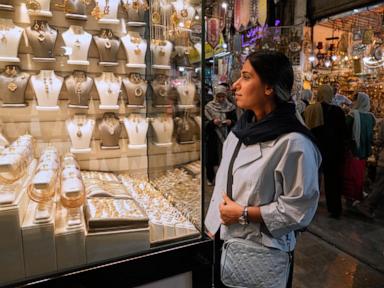
The air in Tehran during the transition from spring to summer has a specific weight. It is thick with the scent of jasmine, exhaust fumes, and an unspoken, vibrating anxiety. On the streets, people don’t just walk; they wait. They wait for the price of bread to shift, for the next headline to drop, and for the shadow of a long-simmering conflict to either recede or engulf them.
Against this backdrop, a piece of paper moved through the diplomatic channels of the world. It wasn't a standard communiqué. It was a countdown. Iran’s proposal to end the war within thirty days arrived not with the flourish of a victor, but with the frantic energy of a nation feeling the walls close in. In similar developments, take a look at: The Silence in the Diner and the Math of a Midterm Storm.
But across the ocean, in a room likely filled with the gold-leafed opulence of Mar-a-Lago or the clinical sterility of a briefing room, Donald Trump looked at the same proposal and saw something else entirely. He saw a bluff. He saw a trap. Or perhaps, he simply saw a deal that wasn't "great" enough yet.
The disconnect between these two points of view isn't just a matter of foreign policy. It is a collision of two entirely different realities. TIME has provided coverage on this important issue in extensive detail.
The Architect of the Clock
To understand why thirty days matters, you have to look at the people who aren't in the news cycles. Imagine a woman named Leila. She is a hypothetical university student in Isfahan, but she represents millions. Leila doesn't care about the intricacies of uranium enrichment levels or the tactical advantages of drone swarms. She cares that her father’s heart medication has tripled in price because of sanctions. She cares that the internet cuts out when the government gets nervous.
For Leila, "thirty days" isn't a diplomatic window. It is a lifeline.
The Iranian leadership knows this. Their proposal to end the hostilities—a sudden, aggressive push for a ceasefire and a return to the negotiating table—is driven by an internal pressure cooker. The economy is gasping. The youth are restless. By putting a hard thirty-day deadline on the table, Tehran is trying to force the world’s hand. They are saying, "We are ready to stop, but the clock is ticking."
It is a high-stakes gamble. If the world ignores the deadline, the Iranian hardliners have their excuse to escalate. If the world accepts it, the regime gets the breathing room it desperately needs.
The Skeptic in the High Tower
Now, shift the lens.
Donald Trump has built a political identity on the idea that he is the only one who can see through the "fog of the swamp." When he expresses doubt about Iran’s thirty-day peace plan, he isn't just being difficult. He is playing to a specific logic of "Maximum Pressure."
From his perspective, why would you let a marathon runner catch their breath when they are only fifty yards from the finish line?
Trump’s skepticism is rooted in a deep-seated belief that Iran only negotiates when they are defeated. To him, a thirty-day proposal looks like a plea for mercy disguised as a gesture of peace. He has seen these cycles before. The grand promises, the signed accords, the televised handshakes—and then, the inevitable slide back into proxy wars and secret facilities.
"We'll see," he says. Those two words are his trademark. They are designed to suck the oxygen out of the room, leaving the other side wondering if they have any leverage at all.
The Geometry of Trust
The problem with a thirty-day deadline is that trust cannot be built in a month. It barely gets past the introductions.
Logistically, the proposal is a nightmare. Ending a war—especially one that has played out in the shadows of Yemen, Syria, and Lebanon—requires more than just a signature. It requires the dismantling of militias. It requires the verification of stockpiles. It requires the kind of "robust" (to use a word the diplomats love, though I find it hollow) oversight that usually takes years to calibrate.
Consider the "Hypothetical General." Let’s call him General Miller. He is sitting in the Pentagon, looking at satellite imagery of the Persian Gulf. If he is told the war ends in thirty days, his first question isn't about peace. It’s about movement. Who is moving where? Are the missiles being crated up, or are they being hidden in the mountains?
Peace is not the absence of gunfire. It is the presence of certainty.
When Trump expresses doubt, he is reflecting the institutional memory of a military and intelligence apparatus that has been burned before. They remember 2015. They remember the JCPOA. They remember the feeling that they gave up everything for a "maybe."
The Human Cost of "We'll See"
While the leaders dither and the skeptics scoff, the reality on the ground remains unchanged.
In the border regions, the soldiers—young men with photos of their mothers tucked into their vests—continue to squint through thermal optics. They don't know about the thirty-day proposal. Or if they do, they don't believe it. Experience has taught them that peace is something talked about in hotels in Geneva, while war is something lived in the mud.
The tragedy of the thirty-day window is that it creates a false sense of hope. It’s like telling a terminal patient there’s a miracle cure, but it’s only available for the next four weeks.
If the proposal fails, the cynicism deepens. Every failed attempt at peace makes the next attempt harder. It builds a layer of scar tissue over the hearts of the populations involved. They stop believing that a different world is possible. They start to accept that the "landscape" of their lives will always be defined by the threat of an incoming strike.
The Invisible Stakes
What is really at play here isn't just the borders of the Middle East. It is the future of international diplomacy.
We are moving into an era where "deals" are replaced by "postures." If Iran’s proposal is a sincere attempt to pivot, and it is rejected out of hand, it signals to every other middle-power nation that diplomacy is dead. It tells them that the only way to get respect is to have a weapon so big that no one dares to doubt you.
On the other hand, if Trump is right and this is a ruse, then accepting it would be a catastrophe. It would fund the next decade of instability.
The tension is unbearable.
One side is offering a sprint to the finish line of a conflict that has lasted longer than many of its participants have been alive. The other side is standing still, arms crossed, waiting for the runner to trip.
The Final Seconds
The sun sets over Tehran, painting the Alborz Mountains in shades of bruised purple. Leila sits in a cafe, scrolling through her phone. She sees the headline. She sees the quote from the American president.
She sighs.
She knows that thirty days is a lifetime in politics, but a heartbeat in history. She knows that by the time the month is up, the world will likely have moved on to a different crisis, a different scandal, a different "game-changer" that changes nothing.
But for those thirty days, she will hold her breath. She will look at the price of bread. She will listen for the sound of planes. She will wait to see if the men in the high towers can see past their own shadows, or if they are content to let the clock run out until it finally hits midnight.
The silence that follows a rejected peace proposal is louder than any explosion. It is the sound of a door being locked from the outside. And as the days tick down, that sound is growing deafening.