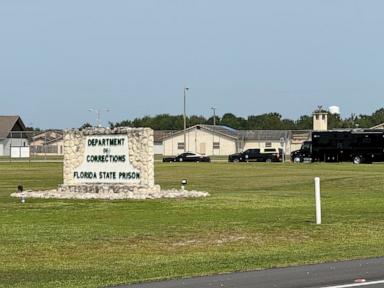
The fluorescent light in Starke does not flicker. It hums. A steady, low-frequency drone that vibrates through the soles of cheap shoes and settles behind the eyes, turning into a dull ache after hour four.
Outside the walls of Florida State Prison, the air is thick with the swampy heat of a late afternoon that refuses to break. Cicadas ratchet up their mechanical scream. Inside, time stops functioning like a clock and starts functioning like a ledger. Names are checked off. Warrants are signed. Numbers accumulate.
This is the thirtieth year I have tracked the machinery of finality, and the numbers have never felt this casual.
Florida is on the verge of carrying out its thirteenth execution of the year. Thirteen. A quiet statistic buried beneath sports scores and weekend weather forecasts, slipped into the digital margins of local feeds. To a bureaucrat sitting in an air-conditioned office in Tallahassee, it is a milestone of efficiency. A backlog cleared. To the men and women who walk these corridors—the guards who rotate through the watch, the spiritual advisers who hold cold fingers in the final twenty minutes, the defense attorneys whose filing cabinets are permanent monuments to defeat—it is something entirely different.
It is an industrial rhythm.
Stop. Listen.
Can you hear it?
That is the sound of a state operating at peak velocity. No other jurisdiction in the country moves this fast, carries this much weight, or clears its docket with such methodical persistence. Florida has become the nation’s busiest death chamber, a title earned through relentless momentum, altered legal thresholds, and a political appetite that treats capital punishment not as a tragic exception, but as routine municipal maintenance.
We talk about the death penalty as an abstract philosophy. We debate the ethics on Sunday morning talk shows, lobbing constitutional citations back and forth like tennis balls. We treat it as a thought experiment for philosophy majors.
It is not an experiment. It is a room with a gurney, a bank of telephones connected to distant judges who rarely answer at midnight, and a sterile concoction of chemicals measured by a technician who goes home to dinner by seven.
Consider what happens next:
A petition is filed. It cites a procedural flaw, a recanted testimony, or an intellectual disability test that missed the threshold by a single point. It lands on a desk. The clock ticks. The margin for error narrows from days to hours, then from hours to minutes. The digital countdown timer on a laptop screen reflects the waning seconds of human life with the clinical detachment of a microwave oven finishing a bag of popcorn.
I stood outside the gates in 2006 during a similar spike in state-sanctioned killings. The crowd was smaller then. A handful of protesters with cardboard signs singing hymns that dissolved into the humidity, flanked by state troopers leaning against cruiser doors, sipping lukewarm coffee from styrofoam cups. A reporter from a regional paper chain smoked nervously against a fender, complaining about his deadline.
The mechanics of state killing rely entirely on this normalization.
If the state executed someone once every five years with agonizing public debate, the shock would tear open the social fabric. But thirteen times a year? That is a monthly newsletter. That is a subscription model. That is a statistic that blends into the background noise of modern governance.
The human mind is remarkably lazy when confronted with repetitive horror. We adapt. We look away. We accept that the busiest chamber must mean the busiest justice.
Except the math does not hold up under a bright light.
Speed is the enemy of truth. When a judicial system accelerates its terminal output, it is not because cases have miraculously become clearer or guilt more absolute. It is because procedural guardrails have been systematically dismantled. Over the past decade, legislative changes have shortened appeal windows, restricted federal habeas review, and lowered the threshold of jury unanimity required to send a man to the box.
You do not build a high-speed rail network for capital punishment without cutting corners on the track maintenance.
I remember sitting across from a prosecutor years ago who spoke about justice with the zealous shine of a true believer. He told me that finality brings closure. He used that word—closure—like a balm. He said it as if a death certificate signed by the state could stitch closed the ragged tear left by a violent crime.
It is a comforting lie.
Ask the families of victims who sit on the other side of the glass. Some nod, their eyes hollow and exhausted, whispering that the ledger has finally balanced. Others look away, shaking their heads, telling anyone who will listen that the execution did not bring back their daughter, did not soften the empty chair at Thanksgiving, and did not erase the terror of the original night. It simply added another layer of blood to a floor that was already soaked.
Vengeance has a way of wearing out its welcome long before the paperwork is finished.
And what of the condemned?
We visualize monsters in handcuffs. We need them to be monsters, because if they are monsters, the machinery makes sense. If the state is killing a rabid dog, no one asks about its childhood, its untreated trauma, or the chaotic, violent foster homes where its brain was permanently rewired before it ever held a weapon.
Hypothetically, imagine a child born into a home where the walls are lined with empty liquor bottles and the air is thick with screaming. Imagine that child at age seven, hiding under a kitchen table while heavy boots stomp overhead. Imagine that brain developing under a continuous cascade of cortisol and adrenaline, hardwired for hyper-vigilance and impulsive violence long before adolescence.
Does that excuse the horrific act committed at twenty-two? No. The law says it does not, and society demands accountability.
But does it complicate the clean, sterile narrative of pure evil that the state relies upon to flip the switch? Absolutely.
Florida’s thirteenth execution of the year will happen quietly. There will be no grand public reckoning. The lights in the viewing room will dim, the chemicals will slide through the IV lines, and within minutes, a spokesperson will step outside to read a brief statement confirming that the sentence has been carried out according to law.
The reporters will pack their laptops. The protestors will fold their signs. The traffic on Route 301 will resume its steady, mindless flow.
The machine will reset. It will wait for number fourteen.
And somewhere in the dark, the fluorescent bulb will keep humming, singing its flat, unchanging note to an empty room.