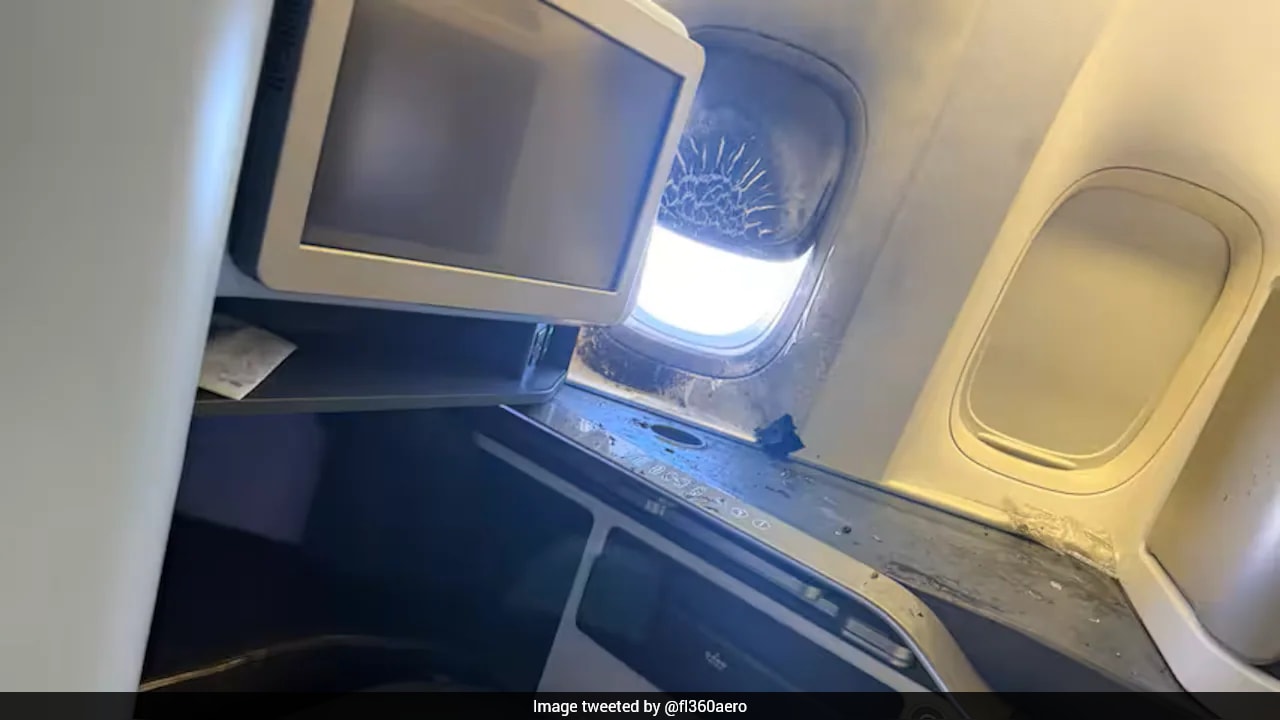
Commercial aviation operates on a margin of safety calculated down to fractions of a percent, yet it remains fundamentally vulnerable to a passenger carrying a pocket-sized energy storage device. When a lithium-ion power bank undergoes thermal runaway inside a pressurized widebody cabin crossing the Atlantic Ocean, the resulting emergency is not merely an inconvenience; it represents a stress test of every containment protocol, regulatory assumption, and operational contingency available to modern airlines. The September incident aboard a KLM Boeing 777 en route to Curaçao—which forced an abrupt turnaround and an emergency return to Amsterdam Schiphol following a battery fire allegedly linked to former chief executive Camiel Eurlings—exposes a critical fault line in aviation security. This event transcends celebrity gossip or executive hypocrisy. It lays bare the structural friction between the insatiable consumer demand for portable power and the unforgiving thermodynamic realities of high-altitude flight.
The Thermodynamics of Failure
To understand why a portable charger poses an existential threat inside an aircraft cabin, one must examine the electrochemistry of lithium-ion cells. Modern power banks pack high energy density into compact enclosures, utilizing lithium cobalt oxide or similar cathode chemistries coupled with organic liquid electrolytes. These electrolytes are volatile and flammable. When a battery is subjected to mechanical stress, internal short-circuiting, manufacturing defects, or external heating—such as being left to charge unattended while compressed against upholstery or bedding—the internal temperature begins to rise.
This temperature spike triggers a self-sustaining exothermic reaction. The solid electrolyte interphase layer breaks down, releasing oxygen gas that reacts violently with the organic solvent inside the cell. As internal pressure mounts, the separator membrane melts, causing adjacent cells to short-circuit in a cascading domino effect known as thermal runaway. Temperatures inside the burning cell can exceed six hundred degrees Celsius within seconds.
At ground level, this phenomenon produces toxic smoke, intense localized heat, and explosive off-gassing. At thirty thousand feet, inside a sealed aluminum tube recirculation air systems rely upon, the hazard multiplies exponentially. Cabin pressure differentials and limited oxygen replenishment capabilities mean that toxic vaporized lithium, copper, and cobalt compounds circulate rapidly through the passenger space before air filtration systems can purge them. The flight crew cannot simply pull over and evacuate the passengers onto a hard shoulder; they are locked in a high-altitude crucible where thermal energy must be manually intercepted using specialized containment bags and fireproof gloves before the fire compromises structural wiring or composite cabin panels.
The Regulatory Enforcement Gap
International civil aviation authorities, including the International Air Transport Association and the International Civil Aviation Organization, maintain strict statutory frameworks governing lithium batteries. Current regulations dictate that power banks must be carried strictly in carry-on baggage, never in checked cargo holds where automated fire suppression systems struggle to detect and extinguish runaway lithium fires. Furthermore, standard airline safety policies universally prohibit the active use or recharging of power banks while on board the aircraft.
Despite these clear prohibitions, an extensive compliance gap persists across the global commercial fleet. Airlines rely almost entirely on voluntary adherence. Cabin announcements instruct passengers to refrain from charging external devices via auxiliary power packs, but these warnings are routinely ignored by business travelers, digital nomads, and passengers dependent on continuous electronic connectivity. The physical layout of modern premium cabins exacerbates this hazard. Seats equipped with integrated USB charging ports and heavy-duty power outlets invite passengers to plug in secondary charging hubs. When a passenger connects a high-capacity power bank to an in-seat power source and falls asleep, the monitoring loop is broken. Without automated circuit interrupters sensitive enough to detect the micro-fluctuations of a failing battery management system, the device remains an active hazard until catastrophic failure occurs.
The KLM incident highlights the failure of deterrence. When an executive who once managed the airline's own operational safety standards violates core protocols, it demonstrates that institutional familiarity breeds complacency. The assumption that educated or experienced frequent flyers inherently respect safety thresholds fails empirical testing. The risk vector is human behavior, and the regulatory framework possesses no real-time enforcement mechanism capable of policing individual battery usage seat by seat during a twelve-hour intercontinental transit.
The Economic Calculus of Mid-Air Diversions
An emergency diversion is an extreme operational and financial disruption for an airline. When the KLM Boeing 777 turned back over the Atlantic Ocean, the economic machinery of long-haul aviation ground into reverse. The direct financial cost comprises several distinct variables.
First is direct fuel burn and weight penalty economics. A widebody aircraft heavily fueled for an intercontinental sector must often dump fuel or burn excessive reserves to land safely under maximum landing weight limits, creating immediate fuel wastage costs. Second is asset utilization loss. The aircraft is removed from its scheduled rotation, stranding downstream flights, forcing schedule adjustments, and degrading fleet schedule reliability. Third is passenger compensation and duty-of-care expenditure. Managing three hundred and twenty-two displaced passengers requires emergency hotel accommodations, ground transfers, meal vouchers, and rebooking logistics across alternative carrier networks. Fourth is crew duty-time legal limits. The flight crew and cabin crew exceed maximum legal working hours due to the diversion delay, necessitating mandatory rest periods, reserve crew activations, and additional operational overhead.
When accumulated, a single diversion sparked by a consumer electronic accessory can easily inflict hundreds of thousands of dollars in direct losses, excluding indirect brand damage and passenger churn. For legacy carriers operating on razor-thin net margins, the cost function of a single thermal runaway event outweighs the lifetime ticket revenue of the offending passenger by orders of magnitude. This economic asymmetry explains why airlines are increasingly willing to adopt aggressive legal remedies against violators.
Institutional Retribution and Deterrence Signaling
KLM's decision to file a formal police report against the passenger involved—regardless of his former corporate title—signals a calculated shift in carrier posture. Historically, airlines treated in-flight safety infractions through administrative warnings or informal blacklisting. The civil aviation sector now faces an escalation in disruptive incidents, ranging from unruly passengers to safety-critical equipment violations.
Filing criminal complaints under aviation safety laws transforms a private operational nuisance into a public legal liability. By pressing charges, KLM achieves two strategic objectives. First, it establishes absolute institutional neutrality, proving that internal corporate immunity does not apply to former executives. Second, it creates a high-visibility deterrent precedent. Publicizing criminal prosecution alters the risk-reward calculation for passengers who might otherwise treat battery charging restrictions as bureaucratic suggestions rather than life-safety mandates. The threat of criminal prosecution introduces legal friction that social norms alone failed to maintain.
Structural Interventions for Future Cabin Safety
Relying on voluntary compliance and punitive prosecution after an event occurs represents a reactive posture. Eliminating the lithium-ion threat vector requires architectural redesign across three operational pillars.
The first pillar is hardware restriction at airport security checkpoints. Current scanning technology detects lithium batteries by capacity ratings in Watt-hours, but screening protocols do not verify physical integrity. Security screening checkpoints must integrate automated visual and thermal inspection units capable of flagging swollen, dented, or degraded power banks before passengers enter the sterile boarding area. Any power bank exhibiting structural deformation must be confiscated at the checkpoint.
The second pillar is smart-cabin power management. Airlines must collaborate with seat manufacturers to install intelligent in-seat charging ports equipped with diagnostic telemetry. If a charging port detects an anomalous current draw, irregular voltage resistance, or sustained temperature elevation indicative of battery distress, the system must automatically cut power to that specific seat port and alert the cabin crew via their electronic flight bag interface before thermal runaway initiates.
The third pillar is mandatory onboard containment protocol training and equipment upgrades. Cabin crews currently rely on thermal containment bags designed to smother fires after ignition. Aircraft interiors must transition toward flame-retardant seat construction and designated fireproof storage bins where high-risk electronics can be isolated immediately upon detection of smoking or unusual odors.
The structural tension between high-density mobile electronics and high-altitude aviation security will intensify as battery capacities increase. Treating lithium-ion volatility as a personal behavioral quirk rather than a systemic engineering vulnerability guarantees future emergency diversions. Mitigating this risk demands an uncompromising shift from passive passenger trust to automated, hard-wired prevention.


