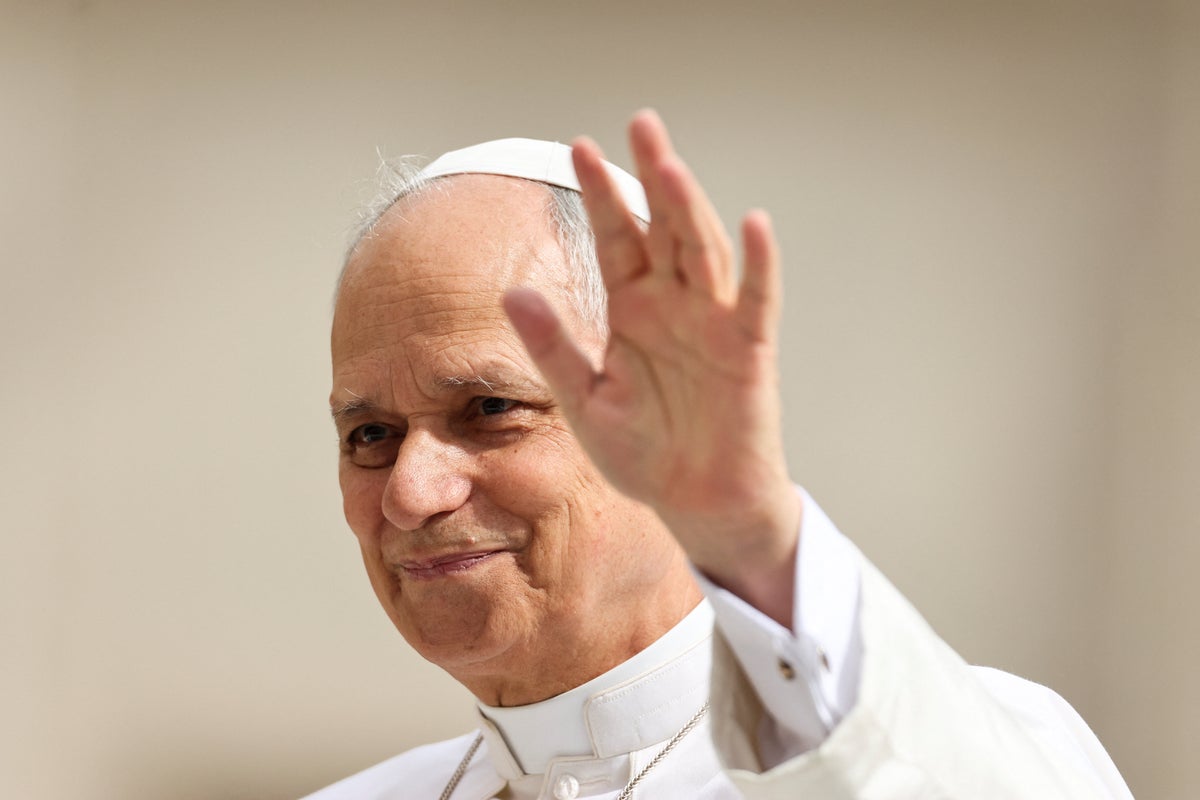
Twelve months into a papacy defined by sharp elbows and even sharper rhetoric, Pope Leo has fundamentally rewired the diplomatic circuit between Rome and Washington. While his predecessor maintained a cautious, almost surgical distance from American partisan brawling, Leo has leaned into the fray. He isn't just commenting on policy; he is challenging the moral architecture of the current administration. This isn't a misunderstanding or a series of gaffes. It is a deliberate, high-stakes gamble to reclaim the moral high ground for a Church that has spent decades on the defensive.
The tension centers on a direct ideological clash with Donald Trump. On issues ranging from border security to economic inequality, Leo has positioned the Holy See not as a neutral mediator, but as an active antagonist to the "America First" doctrine. For the White House, this is an unwelcome intrusion into sovereign politics. For the Vatican, it is a necessary defense of the marginalized. The result is a cold war of words that has fractured the American Catholic vote and forced a rethinking of how faith influences the ballot box.
The End of Vatican Neutrality
For decades, the standard Vatican playbook was built on "soft power" and quiet diplomacy. Papal visits were choreographed to avoid direct confrontation with host governments, focusing instead on broad spiritual themes. Leo has shredded that playbook. His first year has been marked by a series of unscripted moments that have targeted specific U.S. policies with surgical precision.
This shift isn't accidental. Leo views the rise of populist nationalism as a direct threat to the universalist mission of the Catholic Church. When he speaks about "walls" or "exclusion," he isn't just talking about physical barriers on the southern border. He is attacking the underlying philosophy that prioritizes national identity over human dignity. By doing so, he has effectively turned the Vatican into the world's most visible opposition party.
This aggressive stance has consequences. It has alienated a significant wing of the American clergy who feel the Pope is overstepping his bounds. Conservative bishops in the United States, many of whom found common ground with the Trump administration on judicial appointments and religious liberty, now find themselves caught in a pincer movement between their spiritual leader in Rome and their political reality at home.
The Border as a Theological Battleground
Nowhere is the friction more visible than the U.S.-Mexico border. To the White House, the border is a matter of national security and law enforcement. To Leo, it is a "scandal." During his travels and his weekly addresses, he has consistently reframed the migrant crisis from a legal issue to a humanitarian emergency that demands a religious response.
The administration views this as a simplistic take on a complex geopolitical problem. They argue that a nation without borders is not a nation at all, and that the Pope’s rhetoric ignores the safety and economic concerns of American citizens. Leo’s response has been to double down, suggesting that any political movement built on the exclusion of the "other" is fundamentally incompatible with Christian teaching.
This isn't just a disagreement over policy details. It is a fight over the definition of morality in the public square. By framing border enforcement as an act of "cruelty," Leo forces Catholic voters to choose between their national loyalty and their religious identity. It is a wedge driven deep into the heart of the American electorate.
Economics of the Forgotten
Beyond the border, Leo has taken aim at the very heart of American capitalism. While Trump touts deregulation and tax cuts as the engine of prosperity, Leo warns of an "economy that kills." He argues that the obsession with GDP growth and stock market performance masks a growing rot of inequality that leaves the poorest behind.
This critique hits a nerve because it bypasses the usual left-right divide. Leo isn't advocating for a specific economic system; he is calling for a "moral economy" where the dignity of the person takes precedence over the profit of the corporation. In the context of the American "Rust Belt," this message resonates in ways that traditional political rhetoric often misses.
However, critics argue that the Pope’s economic views are rooted in a Latin American experience that doesn't translate to the globalized markets of the 21st century. They point out that the very system Leo criticizes has lifted more people out of poverty than any other in history. This creates a fascinating paradox: a Pope who champions the poor, attacking the economic engines that often provide the only viable path out of poverty.
The Fracture of the American Pew
The most significant impact of Leo’s first year isn't found in the halls of the State Department, but in the pews of American parishes. The "Leo Effect" has created a visible rift within the U.S. Catholic population. On one side are the "social justice" Catholics who feel energized by a leader who finally speaks their language. On the other are the "traditionalist" Catholics who feel betrayed by what they see as a radical, politicized papacy.
This internal division is a nightmare for the American hierarchy. For years, the U.S. Conference of Catholic Bishops (USCCB) tried to maintain a united front on issues like abortion and religious freedom. Leo’s focus on climate change, migration, and inequality has shifted the goalposts. It is no longer enough for a politician to be "pro-life" in the narrowest sense; they must now answer for their stance on carbon emissions and refugee quotas.
Data suggests that younger Catholics are increasingly drawn to Leo’s more inclusive and activist tone. Meanwhile, older, more affluent donors—the people who keep the lights on in many dioceses—are growing increasingly wary. This financial and generational tension is a ticking time bomb for the American Church.
Diplomacy by Bullhorn
Standard diplomacy happens behind closed doors. It relies on nuance, trade-offs, and the slow build of trust. Leo has opted for a different path: diplomacy by bullhorn. By making his grievances public and frequent, he bypasses the traditional diplomatic channels and speaks directly to the global public.
This approach makes it nearly impossible for the White House to ignore him, but it also makes it harder to find common ground. When the Pope calls a policy "inhumane" on a global stage, the administration’s natural instinct is to dig in and defend itself. The space for compromise shrinks. The rhetoric hardens.
The administration's response has been a mix of strategic silence and pointed rebuttals. They often frame the Pope as a well-meaning spiritual leader who simply doesn't understand the realities of governing a modern superpower. It is a polite way of telling Rome to stay in its lane. But Leo has made it clear that, in his view, the entire world is his lane.
The Injustice Narrative
Leo has spent his first year constructing a broad narrative of global injustice. He links disparate issues—the environmental crisis, the arms trade, the plight of refugees—into a single, coherent critique of modern power structures. In this narrative, the United States is often cast as the primary driver of these systemic failures.
This is a stark departure from the Cold War era, when the Vatican and Washington were often aligned against a common atheist enemy in the East. Today, the enemy, in Leo’s eyes, is a "culture of indifference" that he believes is championed by the West. By targeting "indifference," he is calling out the apathy of the comfortable and the powerful.
The danger for Leo is that this broad-brush approach can lack the specificity needed to effect real change. It is easy to condemn "injustice" in the abstract; it is much harder to propose a viable alternative to the complex trade agreements and security alliances that keep the world functioning. Leo’s critics often dismiss him as a "perpetual protester" who lacks a constructive agenda.
Religious Liberty vs. Social Responsibility
A major point of contention between the Vatican and the current administration involves the definition of religious liberty. For the White House, this is a legal shield used to protect religious institutions from government overreach. They have made this a centerpiece of their judicial strategy, winning significant praise from conservative Catholic groups.
Leo, however, seems to view religious liberty through a wider lens. To him, the ultimate expression of religious freedom isn't the right to be left alone by the government, but the freedom to serve the poor and the marginalized without interference. This leads to a fundamental disagreement: Does religious liberty protect the right to refuse service to certain groups, or does it demand that the Church be allowed to welcome the very people the government seeks to exclude?
This isn't a dry legal debate. It has real-world implications for Catholic charities and hospitals that receive government funding. If the Vatican continues to push a "welcoming" agenda that conflicts with federal immigration or healthcare policy, we could see a series of legal showdowns that redefine the relationship between Church and State in America.
The Global South Ascendant
To understand Leo’s first year, one must understand that he is the first Pope from the Global South. His perspectives are not shaped by the cathedrals of Europe or the universities of the United States. They are shaped by the slums and the "peripheral" realities of the developing world.
When he looks at Washington, he doesn't see the "Leader of the Free World." He sees a source of economic pressure and military intervention that has often destabilized his home region. This fundamental shift in perspective is what makes his papacy so jarring to the American establishment. He is not interested in maintaining the Western-led order; he is interested in disrupting it in favor of those who have been marginalized by it.
This "de-centering" of the West is perhaps the most lasting legacy of Leo’s first year. He is effectively telling the American Church that it is no longer the center of the Catholic universe. The future of the faith, in his view, lies in Africa, Asia, and Latin America. The political and economic concerns of the United States are secondary to the survival and dignity of the global poor.
The Reality of the "Outspoken" Pope
Calling Pope Leo "outspoken" is an understatement. He has weaponized the papacy in a way that few expected. But being outspoken is not the same as being effective. While he has dominated the headlines and forced the White House onto the defensive, it remains to be seen if he can translate that rhetorical heat into actual policy shifts.
The Trump administration has shown a remarkable ability to weather international criticism. They have a base of support that is largely insulated from papal pronouncements, and in some cases, thrives on them. For many Trump supporters, a critique from a "globalist" Pope is a badge of honor, not a cause for soul-searching.
This leaves Leo in a difficult position as he enters his second year. He has burned many of his bridges with the American political establishment. He has deeply divided his own flock in the United States. He has raised expectations for a "revolution" within the Church that may be impossible to deliver given the glacial pace of Vatican bureaucracy.
The collision between these two men—one leading a superpower, the other a spiritual empire—is more than just a personality clash. It is a fundamental disagreement about the direction of the human project. Leo has spent twelve months setting the stage for a prolonged conflict. He has defined the terms of the engagement. He has identified the enemy. Now, he has to prove that his moral authority is a match for the hard power of the modern state.
There is no middle ground left. You are either with the "walls" or you are with the "bridge-builders." Leo has made his choice, and he is betting that history—and a higher power—will prove him right. The next three years will determine if this was a moment of prophetic clarity or a strategic blunder that permanently diminished the Vatican’s influence in the world’s most powerful nation.
Stop looking for a compromise that isn't coming. The theological and political lines have been drawn in permanent ink. The Vatican isn't just watching Washington anymore; it is actively trying to rewrite the American moral code from the outside in. Whether that results in a more "just" society or a more fractured Church is a question that won't be answered in a press release. It will be answered in the ballot boxes of the Midwest and the parish halls of the South.