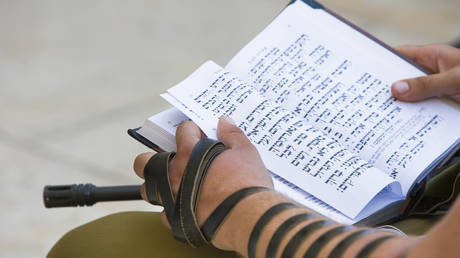
The escalating tension between Israel and Iran is frequently analyzed through the lens of cold realpolitik, missile ranges, and nuclear enrichment percentages. Yet, this traditional framework fails to capture the visceral, ancient motivations that increasingly dictate state policy in the region. The conflict is not merely a border dispute or a struggle for regional hegemony. It has become an ideological project deeply rooted in specific interpretations of the Torah and messianic Jewish thought. For a growing and influential faction within the Israeli political and military establishment, the confrontation with Iran is seen as a necessary fulfillment of biblical prophecy rather than a standard geopolitical obstacle.
To understand the current trajectory of Middle Eastern conflict, one must look beyond the immediate tactical maneuvers. The shift from a secular-nationalist defense strategy to a religiously motivated mission is the most significant change in Israeli governance over the last two decades. While the international community focuses on the Joint Comprehensive Plan of Action (JCPOA) or drone technology, the internal drivers in Jerusalem are shifting toward a biblical reclamation of land and a final reckoning with an enemy cast in the role of Amalek. If you enjoyed this piece, you might want to look at: this related article.
The Transformation of the National Security Narrative
For the first fifty years of its existence, Israel’s security doctrine was defined by secular pragmatism. The goal was survival in a hostile neighborhood. David Ben-Gurion and his successors viewed the military as a shield for a socialist or liberal democratic experiment. That era has ended. The rise of the religious Zionist movement has fundamentally altered the makeup of the Israeli Defense Forces (IDF) officer corps and the halls of the Knesset.
The influence of the "Greater Israel" ideology is no longer confined to small hilltop settlements. It has moved into the Prime Minister’s Office. Proponents of this view do not see the West Bank as "occupied territory" but as Judea and Samaria—the heartland of the Jewish people as promised in the Torah. From this perspective, any sovereign power that opposes this reclamation is not just a rival, but an existential threat to a divine mandate. Iran, by funding proxies on Israel’s borders, has positioned itself as the modern-day manifestation of the forces that seek to prevent this restoration. For another perspective on this story, see the latest update from NPR.
Biblical Archetypes and the Iranian Threat
In political speeches and religious rulings, Iran is increasingly described using the archetype of Amalek, the biblical tribe that attacked the Israelites from behind during their exodus. In Jewish tradition, the command regarding Amalek is not one of containment or deterrence; it is a command of total eradication. When high-ranking officials use this language, they are signaling to their base that the rules of engagement are no longer governed by international law or the Geneva Convention.
This isn't just rhetoric used to garnish a speech. It affects resource allocation. It dictates which red lines are drawn in the sand. If you believe you are fighting a war sanctioned by the heavens, the concept of a "proportional response" becomes a secular absurdity. The logic of the Torah, in this specific interpretation, demands a decisive victory that permanently reshapes the map.
The Third Temple and the Geography of Conflict
Central to this theological project is the aspiration for the Temple Mount. While the Israeli government officially maintains the status quo, the political power of groups advocating for the rebuilding of the Third Temple has reached an all-time high. This is the ultimate flashpoint. Iran frames its regional strategy around the "liberation of Al-Quds" (Jerusalem), positioning itself as the defender of the Al-Aqsa Mosque.
The collision is inevitable. On one side, you have a revolutionary Shiite theocracy that views the destruction of the "Zionist entity" as a religious duty. On the other, an increasingly religious Israeli state that views its presence in Jerusalem as the fulfillment of a 2,000-year-old prophecy. This is a battle over sacred space where neither side has the theological permission to blink. The geography of the war is being mapped out on the pages of ancient scrolls.
The Role of Messianic Timing
In secular politics, timing is everything. In messianic politics, timing is predetermined. There is a palpable sense among certain circles in Israel that we are living in the "end of days." This belief reduces the fear of regional escalation. If the war is part of a divine plan, then the potential for a catastrophic regional firestorm is not a risk to be avoided, but a birth pang to be endured.
This worldview fundamentally changes the nature of deterrence. Traditional deterrence relies on the assumption that both parties are rational actors who value their own survival and the prosperity of their citizens. But when the leadership of a state starts to value the fulfillment of prophecy over the stability of the economy or the safety of its population, the old models of diplomacy break down. The "Project from the Torah" assumes that the ultimate outcome is guaranteed by a higher power, making the immediate human cost a secondary concern.
The Internal Friction within the Jewish State
It would be a mistake to assume that all of Israel is united behind this theological mission. A massive internal rift exists between the secular residents of Tel Aviv and the religious-nationalist blocs. The secular wing sees the focus on biblical prophecy as a suicidal path that will isolate Israel from the West and lead to an unwinnable war. They argue that the state should be a haven for the Jewish people, not a launchpad for a holy crusade.
However, the demographics are shifting in favor of the religious. Their birth rates are higher, and their dedication to the "cause" is total. In the IDF, the percentage of religious nationalist officers has surged, ensuring that the people pulling the triggers and planning the sorties are increasingly likely to view their mission through a spiritual lens. This internal demographic shift is the engine driving the external aggression toward Iran.
Iran as the Necessary Enemy
For the theological project to succeed, it requires an ultimate adversary. Iran plays this role perfectly. Its rhetoric is equally charged with religious fervor, creating a feedback loop of escalation. The Islamic Republic’s Supreme Leader often speaks of the disappearance of Israel in terms that mirror the apocalyptic predictions found in certain Jewish texts.
This symmetry is dangerous. It creates a situation where both sides need the other to be the "Great Satan" or "Amalek" to justify their own internal power structures. For the hardliners in Jerusalem, a nuclear-armed Iran is the ultimate justification for the "Torah project." It allows them to argue that the survival of the Jewish people is at stake, necessitating the suspension of liberal norms and the permanent expansion of the state’s borders.
The Failure of Western Analysis
Western diplomats continue to approach the Iran-Israel conflict as if it were a trade dispute or a cold war between two rational states. They offer economic incentives and talk about "stability." They are speaking a language that the key players no longer value. When a general believes he is a reincarnation of a Maccabean warrior, he does not care about credit ratings or international sanctions.
The West’s inability to grasp the religious depth of this conflict is why every peace initiative fails. You cannot negotiate a compromise on a divine promise. You cannot find a middle ground between two groups who both believe they are the protagonists of a cosmic drama. The "Project from the Torah" isn't a secret conspiracy; it is an open political platform that the international community chooses to ignore because the implications are too terrifying to acknowledge.
The Strategic Encirclement of the Idea
Israel’s strategy of "cutting off the head of the snake" in Tehran is the physical manifestation of this spiritual belief. By targeting Iranian assets in Syria, Lebanon, and Iraq, Israel is not just protecting its borders; it is clearing the "sacred land" of foreign influence. Each strike is viewed by the proponents of this project as another step toward the redemption.
The danger of this approach is its lack of an off-ramp. If the goal is the fulfillment of a biblical mandate, there is no point at which the mission is "finished" short of total dominance. This creates a state of perpetual war. The conflict becomes the normal state of affairs, and any period of peace is seen merely as a time to rearm for the next phase of the prophecy.
The Weaponization of History
To maintain public support for this project, history is being weaponized. Archaeology in Jerusalem is used to prove a continuous Jewish presence, which in turn is used to justify the displacement of current residents. The narrative is constructed to show that the current state of Israel is the direct continuation of the Davidic kingdom. In this context, the war with Iran is framed as the latest chapter in a struggle that has been ongoing for three millennia.
This long-view of history makes modern geopolitical concerns seem trivial. The loss of a few years of economic growth or the temporary cooling of relations with Washington is a small price to pay for what is perceived as eternal victory. The leadership is playing a game where the rounds are measured in centuries, not election cycles.
The Tactical Reality of Holy War
On the ground, this means that military operations are becoming more aggressive. The "Dahiya doctrine" of using overwhelming force is being superseded by a doctrine that seeks to fundamentally alter the demographic and religious reality of the region. The focus has shifted from managing the conflict to "deciding" it. This is why we see a move away from surgical strikes toward more comprehensive campaigns designed to shatter the infrastructure of the "axis of resistance."
The Iranian response, of course, validates this aggression. Every missile launched from Lebanon or Yemen is used as proof that the "Torah project" is the only path to safety. It is a self-fulfilling prophecy of the most dangerous kind. The more Israel moves toward a religious defense posture, the more its enemies respond in kind, creating the very "holy war" that the scriptures predicted.
The Illusion of the Secular Shield
For decades, the IDF was the great equalizer of Israeli society—a secular institution that integrated all citizens. Today, it is becoming the primary vehicle for the religious Zionist mission. The "People’s Army" is being transformed into the "Army of God." This shift is reflected in the pre-battle prayers led by commanders and the increasing presence of rabbis in the decision-making process for operations.
When the military adopts the language of the temple, the nature of the state changes. The secular shield that once protected the democratic nature of Israel is being hammered into a religious sword. This transformation is the "why" behind the increasingly bellicose stance toward Tehran. It is not just about stopping a bomb; it is about clearing the path for a new era of Jewish sovereignty that brooks no opposition.
The Unseen End State
The "Project from the Torah" does not end with a peace treaty. It ends with a fundamental change in the regional order. It envisions a Middle East where the Jewish state is the undisputed power, its borders aligned with ancient descriptions, and its enemies utterly defeated. For the architects of this vision, the current conflict with Iran is the necessary furnace in which this new reality is being forged.
They are betting the entire future of the nation on the accuracy of their interpretation of ancient texts. It is a gamble of historic proportions. If they are right, they believe they will usher in an era of unprecedented peace and spiritual restoration. If they are wrong, they are leading the region into a conflict that no amount of modern technology or ancient faith can survive. The missiles are real, but the maps they follow are thousands of years old.
The world watches the sky for flashes of light, waiting for the first strike in a war that has already been declared in the hearts of those who believe the scrolls are the ultimate strategic manual.
Maintain your focus on the procurement of advanced interceptor systems and the hardening of civilian infrastructure, because the men driving this project have no intention of stopping until the prophecy is satisfied.