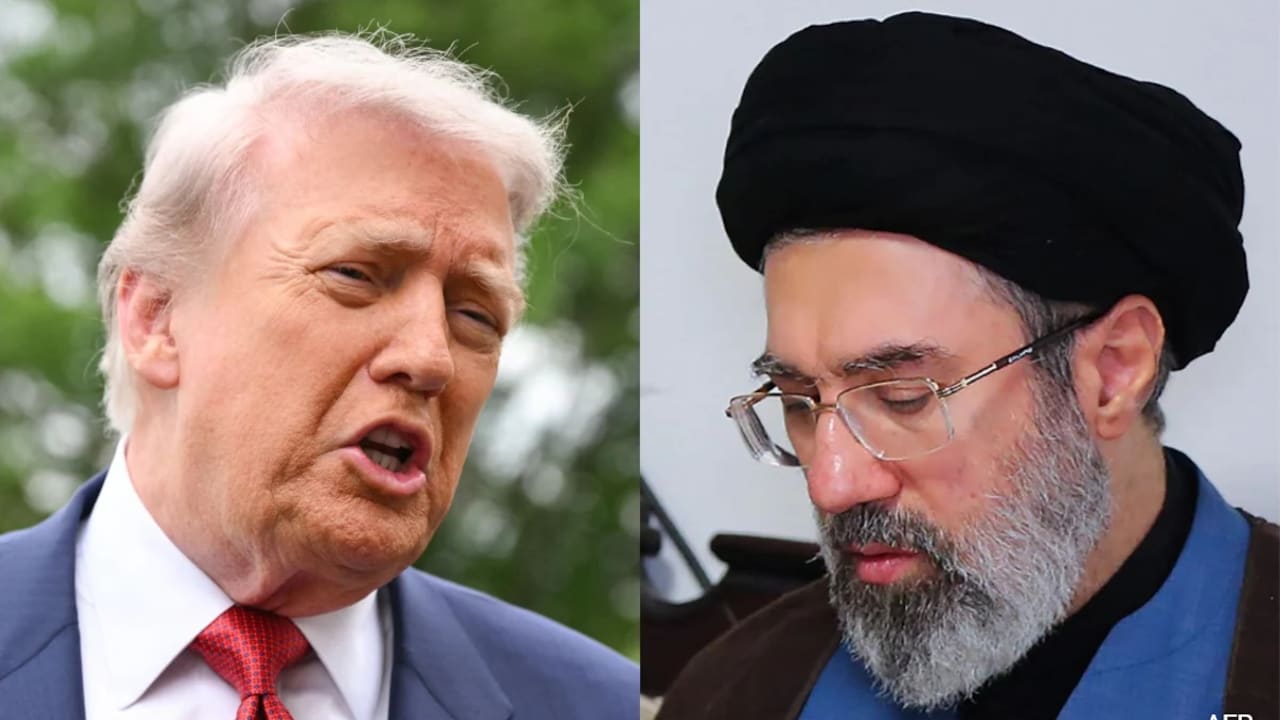
The ink on the diplomatic parchment was barely dry when the banners went up across Tehran. To a casual observer navigating the gridlock of Valiasr Street, the message was unmistakable. Victory. The state-sanctioned billboards broadcasted a clear narrative of American capitulation, framing the newly minted bilateral agreement as a monumental win for the Islamic Republic.
But look closer. Look at the lines forming outside the exchange bureaus. Watch the way an elderly shopkeeper grips his ledger, counting digits that seem to lose value by the hour.
Diplomacy is often an exercise in split screens. On one screen, the public ritual of triumph. On the other, the quiet math of survival. To understand why a government would claim a historic win while sustaining staggering economic and geopolitical losses, one must understand the unique mechanics of political survival in a pressure cooker. This is not a story about numbers. It is a story about how a regime trades tangible assets for the only currency that truly keeps it alive: time.
The Calculus of the Ledger
Imagine a merchant who walks into a marketplace with a chest full of gold and walks out with a single piece of bread. On paper, it is a ruinous exchange. A catastrophic failure of negotiation. Yet, if that merchant was on the absolute brink of starvation, that piece of bread represents something gold never could. It represents tomorrow.
This is the metaphorical reality under which Iranian negotiators operated. The standard policy analysis of the agreement reads like a post-mortem of a bad deal. Tehran agreed to caps on uranium enrichment that roll back years of hard-won leverage. They permitted intrusive, snap inspections of facilities that had previously been locked tight behind layers of military security. They even agreed to the quiet monitoring of secondary supply chains.
By any conventional metric of international relations, the concessions are sweeping. The losses are heavy.
Yet, the state media apparatus rolled out the celebratory rhetoric with practiced ease. Supreme leaders and military commanders spoke of a breakthrough, a forcing of the Western hand, a validation of the "resistance economy."
This disconnect is not an error; it is the strategy. For a government facing a volatile domestic landscape, a diplomatic outcome is rarely judged by the objective balance of the ledger. It is judged by how the outcome can be weaponized at home. The primary target audience for this agreement was never the policymakers in Washington, Paris, or London. The audience was the standard citizen standing in the bread lines of Isfahan.
The Anatomy of the Manufactured Win
To construct a victory out of a retreat, a state must master the art of selective emphasis. Consider the specific mechanics used to reshape the narrative.
First, focus entirely on the recognition of status. In the official state narrative, the very fact that the United States sat across a table to sign a formal document is presented as an existential validation. The messaging avoids the granular details of centrifuges and inspections. Instead, it hammers home a singular point: the superpower was forced to negotiate. By reframing a retreat as a mutual recognition of power, the bitter pill of concession is coated in national pride.
Second, the regime leverages the immediate, if marginal, financial relief to claim proof of concept. When billions of dollars in frozen oil revenues are unfrozen—even when restricted to humanitarian escrow accounts—the immediate injection of liquidity provides a fleeting sense of stabilization. The state media attributes this not to a compromise, but to a lifting of the "unjust siege."
It is a psychological magic trick. The audience watches the flashing lights of the unblocked assets while the structural concessions disappear into the background.
But the real problem lies elsewhere. The gap between state theater and economic reality is a chasm that cannot be bridged by billboards alone.
The Invisible Stakes
Walk down into the Grand Bazaar of Tehran, where the scent of saffron mixes with the sharp tang of industrial cleaning fluid. Here, the rhetoric of victory faces its ultimate stress test.
A carpet dealer sits under a faded fluorescent bulb. He does not read the diplomatic dispatches from Geneva or Vienna. He watches the price of meat. He watches the cost of imported silk thread. For him, and for millions like him, a "victory" that does not stabilize the rial is a ghost.
The structural rot of the Iranian economy—compounded by decades of mismanagement, systemic corruption, and banking isolation—cannot be cured by a single diplomatic handshake. The heavy losses sustained in the agreement mean that the fundamental architecture of sanctions remains largely intact. The core restrictions on primary oil exports and global banking access were not erased; they were merely paused, suspended on a thin wire of compliance.
This is the hidden cost of the deal. By trading deep, systemic concessions for temporary economic breathing room, the state has bought a brief respite at the expense of its long-term strategic leverage. It is a high-stakes gamble that assumes domestic frustration can be managed through temporary relief until the geopolitical winds shift again.
Consider what happens next when the initial euphoria wears off. The citizen who was told that the country triumphed will eventually look at their bank account. They will wonder why a historic victory still feels so much like poverty.
The Currency of Survival
National pride is a powerful narcotic, but it has a finite half-life.
When a state chooses to view a compromised agreement through the lens of absolute victory, it creates a dangerous expectation management problem. The narrative of triumph demands a corresponding rise in the standard of living. If that rise fails to materialize—if the inflation rate remains stubbornly high and the factories remain choked for lack of spare parts—the cynicism of the street deepens.
The true victory claimed by Tehran is not geopolitical dominance, nor is it economic liberation. It is the preservation of the status quo. In the high-stakes theater of modern diplomacy, sometimes avoiding total collapse is wrapped in the flag and called a win.
The banners on Valiasr Street will eventually fade under the harsh summer sun. The music from the state broadcasts will quiet down. And out in the markets, under the ancient brick arches where reality is weighed by the gram, the people will continue to quietly calculate the true price of the deal.