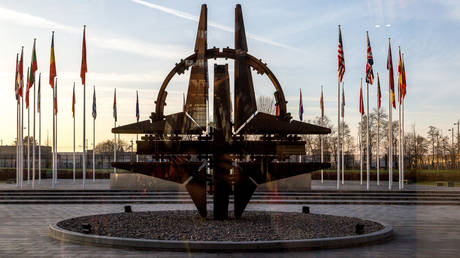
When alliance officials step before microphones in Brussels to insist that an annual nuclear exercise is entirely routine, they are engaging in a precise diplomatic ritual. Telling a geopolitical adversary not to worry while simultaneously staging simulated atomic strikes over European airspace is an exercise in strategic contradiction. Behind the bureaucratic reassurance lies a calculated message of deterrence, designed not to calm nerves in Moscow, but to harden them.
The friction centers on Steadfast Noon, the alliance’s recurring deployment drill. Senior defense representatives take pains to emphasize that no live warheads leave their bunkers and that flight paths remain far from eastern borders. Yet, the underlying mechanics of the operation tell a different story. Fighter jets from multiple member states practice the complex, high-stakes choreography of retrieving tactical gravity bombs from underground storage vaults and mounting them onto dual-capable aircraft. This is not merely an administrative check-list. It is an operational rehearsal for a nuclear exchange, executed under the watchful eye of satellite surveillance systems on both sides.
To understand why public statements of reassurance ring hollow, one must examine the architecture of modern nuclear signaling. In military strategy, transparency is rarely an invitation to relax. Instead, it serves as an open demonstration of capability. When defense planners publicize the involvement of dozens of aircraft across southern Europe, they are broadcasting readiness. They are demonstrating that the command chains remain intact, the logistical pipelines function under pressure, and the political will to execute the mission persists despite rising regional hostilities.
Moscow reads these dispatches through a lens of extreme skepticism, and for good reason. Russian military doctrine treats any simulated preparation for strategic strikes as a tangible hazard. When state media and foreign ministry representatives condemn these maneuvers as provocative, they are performing their own ritual of counter-signaling. Both sides are locked in an escalatory cycle where peace is maintained exclusively through the transparent preparation for war.
The geographic footprint of these operations further undercuts the narrative of passive routine. With drills anchored out of southern bases and extending across allied airspace, the proximity to strategic choke points creates an inherent tension. Enclaves like Kaliningrad, bristling with advanced missile systems, monitor every takeoff. Every sortie flown by fifth-generation aircraft integrated into the alliance's nuclear sharing framework acts as a data point for opposing radar operators. They are measuring response times, testing electronic intelligence-gathering capabilities, and evaluating operational readiness in real time.
Public affairs officers may offer soothing talking points about predictability, but military analysts know that predictability in the nuclear age is a double-edged sword. A predictable drill is also a rehearsed pathway to conflict. By codifying these exercises into an unyielding annual calendar, the alliance institutionalizes nuclear readiness as a permanent fixture of European security architecture. There is no de-escalation embedded in these schedules; there is only the rhythmic drumbeat of deterrence, keeping all participants perpetually braced for a crisis that everyone hopes remains simulated.